

When is the best time to visit Venice? A month-by-month, season-by-season guide to weather, crowds, festivals, and the autumn floods — so you catch the city at its best and dodge it at its worst.
The best time to visit Venice matters more than you would think, because Venice is beautiful year-round, but when you go changes the trip completely. The same canals that feel romantic in May can feel like a theme park in July, flood in November, and sparkle nearly empty in February. Pick the right window and you’ll get the postcard; pick the wrong one and you’ll spend two days shuffling through crowds in the heat.
Here’s how the seasons really shake out — the weather, the crowds, the festivals worth planning around, and the two wild cards (cruise ships and acqua alta) that matter more than the calendar.
The Short Answer: When to Visit Venice
For the best balance of pleasant weather and thinner crowds, aim for the shoulder seasons — April to early June, and late September through October. You’ll get mild days, long light, and a city that still breathes between the peak-summer waves. If you want Venice at its quietest and most atmospheric (and cheapest), come in winter and pack a coat. The one stretch we’d steer first-timers away from is July and August, when the heat, humidity, mosquitoes, and crowds all peak at once.
Venice Season by Season
Spring (March–May)
Arguably the best window. Temperatures climb from the low 50s°F (10–12°C) in March to a lovely 70°F (21°C) by May, gardens bloom, and the light stretches long into the evening. Crowds build through spring but haven’t yet hit their summer peak. Late spring is deservedly popular, so book ahead — and note that Easter week spikes both crowds and prices.
Summer (June–August)
Peak everything. Days are long and warm (highs around 82–86°F / 28–30°C), which is great for island-hopping — but the midday heat and humidity can be draining, mosquitoes appear near the water at dusk, prices are at their highest, and the crowds around St. Mark’s and Rialto are at their thickest, especially when cruise ships are in. If you come in summer, lean hard on early mornings and evenings and take the afternoons slow.

Fall (September–November)
Early fall is a sweet spot — warm, golden, and calmer as the summer crowds thin, with September highs still around 75°F (24°C). The trade-off comes later: from roughly mid-October into winter, Venice enters acqua alta season, when high tides can temporarily flood the lowest parts of the city (more on that below). September and early October give you the best of fall without much flood risk.
Winter (December–February)
Quiet, moody, and genuinely magical — mist over the canals, few tourists, and the lowest prices of the year (outside the holidays and Carnival). It’s cold and damp, with highs in the mid-40s°F (7°C), and some smaller businesses take a seasonal break, but if you want Venice nearly to yourself, this is it. Carnival, usually in February, is the big, glittering exception.
Venice’s Festival Calendar
Venice throws some of Europe’s most spectacular events — worth either planning around or planning to avoid, depending on your appetite for crowds:
- Carnival (February): two weeks of elaborate masks and costumes before Lent. Stunning, and the busiest and priciest time outside summer.
- Vogalonga (May): a joyful 30-km rowing “marathon” where thousands of oar-powered boats fill the lagoon.
- Venice Biennale (roughly April–November): the world-famous art exhibition (in odd years) and architecture edition (in even years) that draws culture crowds for months.
- Festa del Redentore (third weekend of July): a beloved local festival with a pontoon bridge across the Giudecca Canal and a massive Saturday-night fireworks display.
- Historical Regatta (first Sunday of September): a pageant of ornate historic boats and gondola races down the Grand Canal.
- Venice Film Festival (late August–early September): red carpets on the Lido and a definite bump in glamour and hotel prices.
- Festa della Salute (November 21): a heartfelt local pilgrimage across a temporary bridge to the Salute church, giving thanks for the end of a 1630 plague.
The Two Things That Matter More Than the Month
Cruise Ships and Day-Trippers
Venice’s crowds aren’t constant — they arrive in waves. When large ships and tour buses unload, the streets between St. Mark’s and Rialto can become a slow-moving river of people; a few hours later, the same lanes empty out. The fix is timing, not just season: be at the big sights early morning or early evening, and use the crowded midday hours for a long lunch, a nap, or the quiet back canals. Staying overnight is the single best way to enjoy the city before and after the day-trippers.

Acqua Alta (High Water)
From autumn through early spring, unusually high tides can push lagoon water up into the streets — the famous acqua alta. It’s usually brief (a few hours around high tide), predictable a day or two out, and mostly affects the lowest spots, starting with St. Mark’s Square. It’s more inconvenience than danger: shops sell cheap rubber overshoes, elevated walkways (passerelle) go up along key routes, and the water recedes with the tide. Download a tide-forecast app, pack waterproof shoes if you’re visiting October–March, and you can travel the flood season just fine.
Did You Know? Venice now fights back against the tides with MOSE — a system of 78 mobile barriers at the lagoon’s three inlets that rise from the seabed to seal the lagoon during exceptional high tides. Operational since 2020, it has already spared St. Mark’s Square from flooding that would once have soaked it, though everyday minor high water can still bubble up through the square’s ancient drains.
A Closer Look at Carnival
Venice Carnival — usually the two weeks before Lent (February into early March) — is a bucket-list spectacle of hand-made masks, period costumes, and masked balls. It’s unforgettable, but expect peak crowds and peak prices, and book your room far ahead.
Did You Know? Those Carnival masks were once everyday wear. For centuries Venetians donned masks for months at a time, letting nobles and commoners mingle anonymously — a social leveler that also enabled plenty of mischief. The tradition was largely stamped out in the 18th century and only revived in 1979, when the modern Carnival was reborn.

What to Pack by Season
- Spring/Fall: layers, a light rain jacket, comfortable walking shoes, and (in late fall) waterproof footwear for possible acqua alta.
- Summer: breathable clothing, sun protection, a refillable water bottle, and insect repellent for the evenings.
- Winter: a warm coat, scarf, gloves, and waterproof shoes — the damp cold cuts deeper than the thermometer suggests.
So, When Should You Go to Venice?
Our honest pick: late April to early June, or late September into October. You get comfortable weather, long days, manageable crowds, and little flood risk — Venice at its most livable. Come in winter if quiet and low prices matter more than warmth, plan carefully around Carnival if that’s your goal, and if you must come in high summer, get up early and let the city be yours before the boats arrive.
Best Time to Visit Venice FAQ
What is the best month to visit Venice?
May and late September/early October are the sweet spots — mild weather, long daylight, manageable crowds, and little flood risk. April and June are also excellent shoulder-season choices.
What is the worst time to visit Venice?
July and August combine the heaviest crowds, the highest prices, and hot, humid weather. If you can avoid high summer, do — or plan around early mornings and evenings.
When does Venice flood?
Acqua alta (high water) season runs roughly from October through early spring. Floods are usually brief and predictable, affecting the lowest areas like St. Mark’s Square first. The MOSE barriers now hold back the most extreme tides.
Is winter a good time to visit Venice?
Yes, if you don’t mind cold and damp. Winter brings the fewest crowds, the lowest prices, and a moody, atmospheric city — just watch out for Carnival in February, when crowds and prices spike.
When is Venice Carnival?
Venice Carnival takes place in the run-up to Lent, usually across February into early March. It’s a spectacular masked festival, but it draws big crowds and high prices, so book well in advance.
What is the cheapest time to visit Venice?
Winter, outside the Christmas holidays and Carnival — roughly mid-November to early February. Hotel prices drop, crowds thin, and the city takes on a quiet, atmospheric charm.
Nic’s Pick: Venice Before Breakfast
My favorite discovery had nothing to do with the season and everything to do with the hour. One morning I woke up early and we stepped out before the crowds — just us, a few locals walking to work, and the sound of water against stone. St. Mark’s Square was practically empty, gulls instead of tour groups. Whatever month you visit, give yourself one early morning like that. It’s when Venice stops performing and just is.
Keep Exploring Venice
Ready to plan your trip? Start here:
- Venice Travel Guide: What to See, Eat & Do — our full first-timer’s guide.
- 2 Days in Venice: A First-Timer’s Itinerary — the perfect 48-hour plan.
- Getting Around Venice — vaporettos, walking, and beating the crowds.
When did you visit Venice, and would you go back the same time of year? Tell us in the comments.
Wear the trip. Take Venice home with our new Venice tee — plus a Tuscan companion for the rest of your Italy dreams. Printed on demand in the USA, free shipping, and 25% off right now:
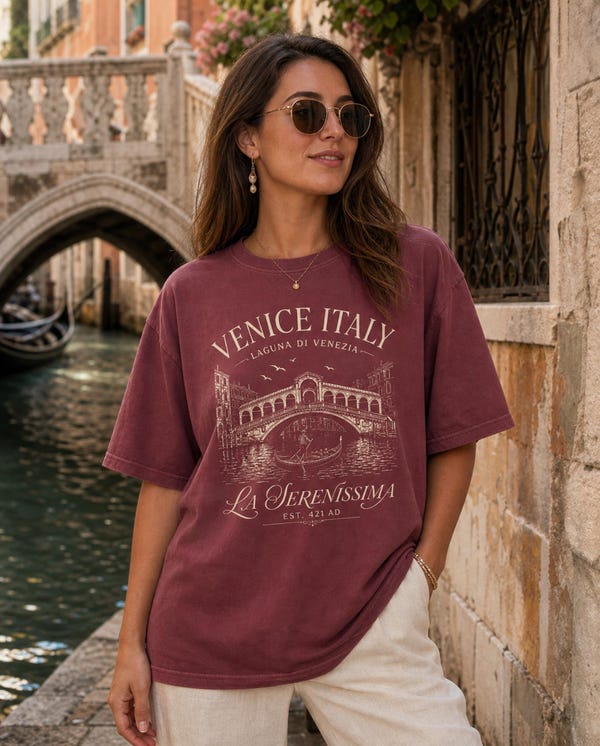

More from the shopBrowse the full travel collection — St. Augustine, Paris, Iceland, Venice and Tuscany on shirts, ceramic mugs and canvas totes, all original designs.

Ben & Nicole Mathews
We’re based in St. Augustine, Florida, sharing the places we’ve actually been — from our home turf to corners of the U.S. and abroad. Ben is an attorney and a retired Air Force JAG (22 years), and a private pilot, which is why aviation and military history shows up here too.