

Cicchetti are Venice’s answer to tapas — tiny, cheap, delicious, and the best way to eat in the city. Here’s how to do a bàcaro crawl like a local: what to order, what to drink, where to go, and the etiquette that keeps you from looking lost at the counter.
Here’s the secret to eating well in Venice: skip the sit-down restaurants with laminated menus and photos of the food, and eat cicchetti in Venice standing up instead. The best, most affordable, most fun meals in Venice happen at the bar of a bàcaro — a tiny, old-school wine bar — over a plate of cicchetti and a glass of local wine. It’s how Venetians actually eat, and once you get the rhythm, you’ll never want to sit down again.
This is our complete guide to eating cicchetti in Venice: what the food actually is, how to order it without fumbling, what to drink alongside it, a neighborhood-by-neighborhood route, and the little rules that separate the locals from the lost tourists.
What Are Cicchetti and Bàcari?
Cicchetti (chi-KET-tee) are small bites — Venice’s version of tapas. Think toasted bread topped with whipped salt cod, a skewer of fried seafood, a slice of soft cheese, half a hard-boiled egg with anchovy, tiny meatballs, a spoon of creamy baccalà. Most cost just €1.50–€4 each, so a whole meal of them runs a fraction of a restaurant dinner.
A bàcaro is the wine bar where you eat them — usually small, often standing-room-only, with trays of cicchetti lined up behind the counter and bottles of local wine ready to pour. You order a few bites and a glass of wine, eat at the bar or spill out into the alley, then move on to the next one. That hop-from-bar-to-bar ritual is a bàcaro crawl — the giro d’ombre, or “tour of shadows” — and it’s the single most enjoyable thing we did with our stomachs in Venice.
Did You Know? The little glass of house wine you order with cicchetti is called an ombra — literally “a shadow.” The name is said to come from the wine sellers in Piazza San Marco who kept shuffling their carts to stay in the moving shade of the bell tower. To go “for an ombra” came to mean going for a glass of wine — in the shade.
How to Order Cicchetti Like a Local
The bàcaro can feel intimidating on your first try — there’s rarely a menu, and everyone seems to know the drill. They don’t, really; you just point. Here’s the flow:
- Walk up to the counter. Don’t wait to be seated — there usually isn’t any seating. Head straight for the bar.
- Point at what looks good. The cicchetti are on display for a reason. “Uno, per favore” and a finger-point works fine, language barrier or not.
- Order an ombra or a spritz. A small glass of house wine (red or white) is a couple of euros. Or get the Venetian classic — an Aperol or Select spritz.
- Stand and eat. Elbow up to the bar or step outside. Cicchetti are meant to be eaten quickly, standing, in good company.
- Pay before you leave. Some places tally your plates and glasses on the spot; others keep a casual running tab. Just ask “quanto?” when you’re done.
Insider Tip: Watch the counter, not a menu. The freshest, most popular cicchetti sell out and get replaced through the evening, so what looks best right now usually is best right now. And beware the “sitting” surcharge — at some bàcari, taking a seat costs more than standing at the bar.

What to Order: The Cicchetti You Shouldn’t Miss
A few of our favorites and the classics worth seeking out:
- Baccalà mantecato — whipped salt cod, creamy and mild, spread on grilled bread or soft polenta. The signature Venetian cicchetto, and our favorite.
- Sarde in saor — sardines marinated with onions, pine nuts, and raisins in a sweet-sour glaze. A dish born from sailors who needed food that would keep.
- Polpette — little fried meatballs (or tuna balls), crisp outside and soft within.
- Crostini — small toasts topped with everything from prosciutto and soft cheese to marinated vegetables or a curl of anchovy.
- Folpetti — tender boiled baby octopus, dressed simply with oil and parsley.
- Mozzarella in carrozza — a fried, molten cheese sandwich that is exactly as good as it sounds.

Did You Know? That beloved whipped salt cod exists thanks to a shipwreck. In 1432, Venetian merchant Pietro Querini wrecked near the coast of Norway and came home with dried stockfish — cod preserved without salt. Venetians embraced it, and centuries later it became baccalà mantecato, the cicchetto on nearly every bàcaro counter.
Beyond Cicchetti: Venetian Plates Worth a Sit-Down
If you want a proper meal too, Venice has its own specialties well beyond pizza and pasta — most built on seafood, rice, and the lagoon:
- Risotto al nero di seppia — dramatic, jet-black risotto colored and flavored with cuttlefish ink.
- Bigoli in salsa — thick, rough-textured pasta in a savory anchovy-and-onion sauce.
- Fegato alla veneziana — Venetian-style calf’s liver with sweet slow-cooked onions.
- Fritto misto — a paper cone of mixed fried seafood, perfect for eating on the move.
- Risi e bisi — a soupy rice-and-pea dish that was once served to the Doge each spring.

What to Drink: From Ombra to Spritz
Drinks are half the ritual. Knowing what to order helps you fit right in:
- Ombra — a small glass of house wine, red or white, usually just a couple of euros.
- Spritz — the Venetian classic of prosecco, soda, and a bitter aperitivo. Order it with Aperol (sweeter), Campari (more bitter), or Select (the original Venetian version).
- Hugo — a lighter, floral spritz with elderflower and mint, lovely in warm weather.
- Regional wines — prosecco from the nearby Veneto hills, crisp Soave whites, and bold Valpolicella and Amarone reds.

Did You Know? The spritz has an Austrian accent. When the Veneto was under Habsburg rule in the 1800s, Austrian soldiers found the local wines too strong and asked for a “spritz” — a splash (spritzen) of water. Bubbles and a bitter liqueur were added over the years, and Venice’s signature drink was born.
A Bàcaro Crawl Route, Neighborhood by Neighborhood
The beauty of a crawl is the walking between stops. Three areas do it best:
Around the Rialto Market (San Polo)
The historic heart of the crawl, where bàcari cluster thick around the old market:
- Cantina Do Mori — the city’s oldest bàcaro, open since 1462. Order sarde in saor and a red ombra where Venetians have stood for 500 years.
- All’Arco — tiny and famous for its crostini, especially the baccalà. Get there early; it fills fast and closes in the afternoon.
- Cantina Do Spade — a touch roomier, known for fried meatballs and calamari.
Cannaregio (the Fondamenta della Misericordia)
The locals’ evening strip, lined with canal-side bars that spill into the street:
- Al Timon — a lively canal-side stop with a boat moored out front used as extra seating; great later in the evening.
- Vino Vero — a natural-wine favorite with creative, beautiful cicchetti.
Dorsoduro (near Campo Santa Margherita)
A younger, student-friendly quarter with a buzzy square and canal-front bars:
- Osteria al Squero — across the canal from a working gondola boatyard; grab a spritz and a plate and watch the boats.
Order two or three cicchetti at each stop, pair with a glass, and keep moving. Start around 6–7 p.m., follow the crowd spilling into the alleys with spritzes in hand, and you’ll have found the best dinner in Venice.

Etiquette, Costs & Common Mistakes
- Stand, don’t sit unless you want to pay a table surcharge.
- Order as you go rather than all at once — the point is to graze and move.
- Cash is handy at the smaller, older bàcari, though many now take cards.
- Don’t over-tip — it isn’t expected; a rounded-up coin is plenty.
- Budget wise: a filling evening of five or six cicchetti and a couple of ombre often runs €15–€25 a head — less than a single restaurant main.
Vegetarian? You’ll do fine — look for cheese, egg, marinated vegetable, and grilled polenta cicchetti — though be aware that many toppings are seafood- or anchovy-based, so it’s worth a quick “senza pesce?” (“without fish?”) if you need to avoid it.
So, Is a Cicchetti Crawl Worth It?
It’s the thing we’d tell you not to miss. A bàcaro crawl is cheap, delicious, and the closest you’ll get to eating the way Venetians actually do — no tourist markup, no rushed waiter, just great little plates and a glass of wine among locals. We left Venice thinking the standing-up dinners beat every sit-down meal we had. Do it at least one night; you’ll want a second.
Cicchetti FAQ
What are cicchetti?
Cicchetti are Venetian small bites — like tapas — served in wine bars called bàcari. They range from crostini and fried seafood to meatballs and whipped salt cod, usually €1.50–€4 each.
What is a bàcaro?
A bàcaro is a traditional Venetian wine bar serving cicchetti and small glasses of local wine. They’re typically tiny and standing-room-only, and hopping between them is called a bàcaro crawl, or giro d’ombre.
How much does a cicchetti crawl cost?
Very little. Cicchetti run about €1.50–€4 each and a glass of house wine (an ombra) is a couple of euros, so a filling evening of bar-hopping often costs €15–€25 a head — far less than a single restaurant dinner.
What should I order at a bàcaro?
Start with baccalà mantecato (whipped salt cod), sarde in saor (sweet-sour sardines), and polpette (fried meatballs), paired with an ombra of house wine or an Aperol or Select spritz.
When should I do a bàcaro crawl?
Early evening, around 6–7 p.m., is the sweet spot. That’s when locals gather, the cicchetti are freshly set out, and the bars around the Rialto Market and Cannaregio come alive.
Where are the best bàcari in Venice?
Cluster your crawl around the Rialto Market in San Polo (Do Mori, All’Arco, Do Spade), the Fondamenta della Misericordia in Cannaregio (Al Timon, Vino Vero), and Campo Santa Margherita in Dorsoduro.
Nic’s Pick: The Whipped Cod That Won Me Over
Salt cod was not on my list of foods I expected to love — it sounds like something you’d be dared to eat. But baccalà mantecato is a completely different thing: cloud-soft, gently salty, whipped until it’s almost like a mousse on a little piece of grilled bread. I took one polite bite to be a good sport and then quietly ordered three more. It’s the taste that comes back to me whenever I think about our nights in Venice.
Keep Exploring Venice
Hungry for more? Start here:
- Venice Travel Guide: What to See, Eat & Do — our full first-timer’s guide.
- 2 Days in Venice: A First-Timer’s Itinerary — where the bàcaro crawl fits into a perfect 48 hours.
- Getting Around Venice — how to walk your crawl between neighborhoods.
What’s the best cicchetto you’ve ever had? Tell us in the comments — we’re always building our next crawl.
Wear the trip. Take Venice home with our new Venice tee — plus a Tuscan companion for the rest of your Italy dreams. Printed on demand in the USA, free shipping, and 25% off right now:
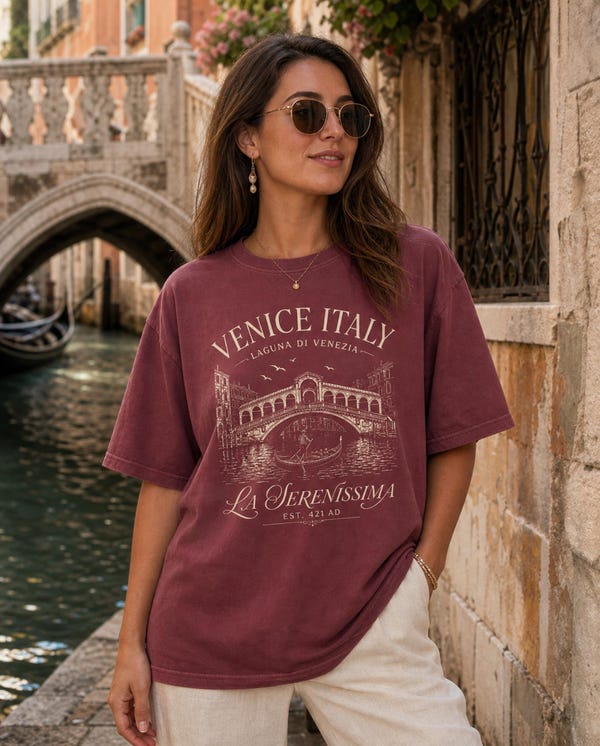

More from the shopBrowse the full travel collection — St. Augustine, Paris, Iceland, Venice and Tuscany on shirts, ceramic mugs and canvas totes, all original designs.

Ben & Nicole Mathews
We’re based in St. Augustine, Florida, sharing the places we’ve actually been — from our home turf to corners of the U.S. and abroad. Ben is an attorney and a retired Air Force JAG (22 years), and a private pilot, which is why aviation and military history shows up here too.