

Driving in Iceland: What to Expect
Driving in Iceland isn’t just a way to get around — it’s part of the adventure itself. The scenery shifts from black sand beaches to mossy lava fields, the weather changes without warning, and once you leave Reykjavík, services grow sparse.
That’s why understanding Iceland’s F-roads, knowing when to refuel, and relying on road condition apps are essential for a safe and memorable journey.
Planning an Iceland Road Trip?
Want our full itinerary, tips, and highlights? Check out our complete post:
BenThere in Iceland: Ring Road Adventure Guide
It covers everything from where we stayed to must-see stops, and it’s the perfect companion to this driving guide.
What Are Iceland’s F-Roads?


F-roads are Iceland’s rugged mountain tracks into the highlands. They’re unpaved, open only in summer, and lead to some of the country’s most spectacular natural wonders.
F = Fjallvegur (mountain road in Icelandic)
4×4 required – illegal and uninsured to drive them in a 2WD
Unpaved and rocky – with steep climbs and rough terrain
River crossings – no bridges, you ford glacial rivers directly
Open seasonally – usually June through September, depending on weather
Popular F-Road Routes
F208 to Landmannalaugar – colorful rhyolite mountains and hot springs
F35 Kjölur Route – a cross-country trek between Gullfoss and Akureyri
F26 Sprengisandur – long, remote, and for experienced drivers only


How to Track Road Conditions in Iceland
Weather and conditions change daily. A road open in the morning can close by afternoon due to flooding, snow, or high winds. Before setting out, we always checked these official resources:
Road.is: Live road status, webcams, and F-road openings (Icelandic Road & Coastal Administration).
SafeTravel.is: Safety alerts, traveler advisories, and route updates.
Vedur.is: Iceland’s official weather service with storm warnings and forecasts.
Making this part of our morning routine saved us from major detours more than once.
How Long Do F-Roads Take?
Driving times vary, but always budget more than you think:
F208 to Landmannalaugar: ~3–4 hours from the south
F35 Kjölur Route: ~6–7 hours across the interior
F26 Sprengisandur: ~7–9 hours, extremely remote
Even “short” drives can take a full day when you factor in weather, terrain, and photo stops.
Driving Tips for Iceland’s F-Roads
If you’re heading into the highlands, here are the must-knows:
Check Road.is daily before leaving.
Rent a true 4×4 with clearance — think Toyota Land Cruiser or Dacia Duster, not a small crossover.
River crossings: Go slow, follow marked fords, and never attempt deep water.
Pack supplies: Food, water, warm layers, and a first aid kit.
Travel with others when possible for safety.
Expect slow speeds — 12–18 mph is common on rough terrain.
Gas Stations


How Far Apart Are Gas Stations?
Fuel stops become less frequent the farther you go from Reykjavík:
South Coast (Vík to Höfn): Every 50–60 miles
Eastfjords: Sparse — expect 60–90 miles between stations
North Iceland (Akureyri to Mývatn): More frequent, but still worth topping off
Highlands (F-roads): None — fill up before entering
Stopping at every station we saw kept our stress low — and saved us from nervously watching the gas light come on.
How to Pay for Gas in Iceland
Most stations are self-serve with automated pumps, and payment is straightforward.
Contactless (tap-to-pay) cards worked everywhere. We never had to enter a PIN — just tapped our chip card, and it processed.
Visa and Mastercard are widely accepted. American Express is less reliable outside Reykjavík.
Prepaid fuel cards (sold at N1, Olís, Orkan) are handy backups.
Larger stations often have staff during business hours if you’d rather pay inside.
We used our chip Visa contactless card at every stop — from big towns to remote pumps — without a single issue.
Iceland Gas Stations: More Than Just Fuel
One thing that surprised us the most? Gas stations in Iceland are basically community hubs. In remote areas, they’re not just a place to fill up your tank — they double as restaurants, cafés, and mini grocery stores all in one.
At chains like N1, Olís, and Orkan, you can expect:
Restaurant-style food:
Iceland’s famous hot dogs (pylsur) with all the toppings
Burgers, pizza, and sandwiches made to order
Soup of the day (often lamb or vegetable, served with bread)
Breakfast items like eggs, bacon, and pastries if you stop early
Mini grocery store:
Shelves stocked with basics: bread, milk, snacks, pasta, cereal
Fresh fruit and vegetables (not a huge selection, but enough to keep you going)
Frozen goods and dairy essentials
Toiletries and household items — handy if you’re staying in an Airbnb or camper
Café-style perks:
Espresso machines and good drip coffee (better than you’d expect!)
Pastries, muffins, and cinnamon rolls
Cozy tables where you can sit down and eat
Other essentials:
Free restrooms (clean and well-kept)
Wi-Fi, which comes in handy if you lose service on the road
ATM machines in larger locations
Why This Matters for Travelers
Outside Reykjavík, you won’t see many restaurants, grocery stores, or cafés along the road. In some towns, the gas station is the town’s restaurant and grocery store.
We got into the habit of:
Filling up the car and ourselves whenever we stopped.
Grabbing a few snacks (trail mix, fruit, or Skyr yogurt) for the road.
Ordering hot food when we didn’t know where the next proper restaurant would be.
It turned out that some of our most memorable meals weren’t in sit-down restaurants — they were at Iceland’s surprisingly good gas station cafés.
Our Experience: Why It Was Worth It


One of the best parts of driving in Iceland was how dramatically the landscapes changed from one region to the next. Even though we stayed mostly to the South Coast, Jökulsárlón, and the highlands, the variety of scenery made the hours behind the wheel fly by.
Along the South Coast, waterfalls like Seljalandsfoss and Skógafoss appeared right off the road. It felt like every few miles another cascade came into view, and we’d pull over just to take it in.
Driving across the black sand deserts near Vík, the landscape looked otherworldly — endless stretches of flat, windswept volcanic sand broken only by jagged sea cliffs and moss-covered lava flows.
At Jökulsárlón Glacier Lagoon, we stood in awe watching bright blue icebergs drift silently past, then walked to nearby Diamond Beach, where chunks of crystal-clear ice sparkled on the black sand like glass sculptures.
Venturing into the highlands on F-roads, the scenery shifted again: colorful rhyolite mountains, steaming geothermal valleys, and wide open volcanic plains crossed by glacial rivers.
And those were just the “big” sights. Everywhere we drove, there were moments that stopped us in our tracks:
Sheep wandering lazily across the road.
Herds of Icelandic horses grazing in fields, their manes blowing in the wind.
Rainbows arching over mossy cliffs.
Little roadside waterfalls tumbling down hillsides we hadn’t even heard of before the trip.
The sheer variety made driving not just easy, but exciting. We never felt like we were slogging through long stretches of highway. Every curve brought something new, and before we knew it, hours had gone by. Driving in Iceland didn’t feel like a chore — it felt like the adventure itself.
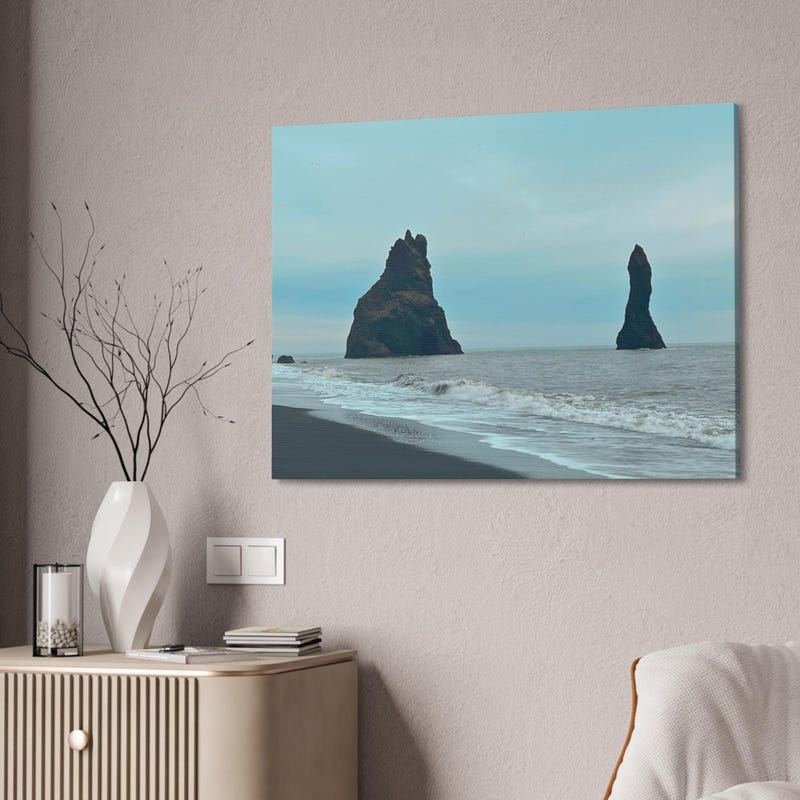
More from the shopBrowse the full travel wall art collection — canvas prints and posters of Iceland’s south coast, Paris and Eilean Donan.
Bring Home a Piece of Iceland
Original designs by BenThere Travel — 25% off right now, always free shipping on Etsy.



Ben & Nicole Mathews
We’re based in St. Augustine, Florida, sharing the places we’ve actually been — from our home turf to corners of the U.S. and abroad. Ben is an attorney and a retired Air Force JAG (22 years), and a private pilot, which is why aviation and military history shows up here too.