

There is a specific kind of embarrassment that only engineers understand: designing something that’s theoretically perfect and then watching it fail in the messiest possible way in front of the entire world. That’s more or less what happened to the F-4 Phantom II over North Vietnam in 1965 and 1966. The United States Air Force and Navy had built the most powerful fighter in the world, loaded it with the most advanced missile technology money could buy, stripped out the gun because guns were obsolete, and sent it to war — where it promptly started losing dogfights to Soviet-era MiG-17s with machine guns.
What came out the other side of that disaster was a completely rebuilt approach to air combat, a fighter pilot named Robin Olds who became the only man in history to score aerial victories in both World War II and Vietnam, and eventually an entire school dedicated to teaching Americans how to fight in the air again. The F-4 didn’t just fight a war. It broke the Air Force’s assumptions, rebuilt its doctrine, and forced the creation of TOPGUN. That’s a pretty full career for something that looked like two people arguing over a flying brick.

An F-4C Phantom II of the 557th Tactical Fighter Squadron over Vietnam in 1969. The distinctive anhedral (downward-bent) outer wing panels and upturned stabilizer were design fixes added after early test flights. Photo: National Museum of the U.S. Air Force / Wikimedia Commons (public domain).
How the Phantom Was Born — and Why It Looked Like That
The F-4 started as a Navy project. McDonnell Aircraft was pitching an advanced fleet defense fighter to the Navy in the mid-1950s, and the original design went through more revisions than most people realize before it became the jet we know. Early versions were single-engine, then twin-engine. The nose changed. The wing changed. What didn’t change was the core requirement: a big, fast, powerful interceptor built to shoot down Soviet bombers before they could get close enough to release their weapons against the fleet.
The resulting airplane was large for a fighter — 63 feet long, a 38-foot wingspan, 58,000 pounds gross weight fully loaded. Two General Electric J79 turbojet engines, one of the most capable powerplants of its era, pushed it past Mach 2.2. It could carry an enormous load of missiles and still go faster than most things in the sky trying to catch it. The Navy was thrilled. The Air Force, which had initially refused to consider the Phantom because they hadn’t designed it themselves, eventually caved and ordered it too. By the early 1960s, it was the primary frontline fighter of both services and had set multiple world speed and altitude records.
And then someone looked at it — really looked at it — and pointed out that it was, aesthetically, a catastrophe. The wings were bent at a noticeable downward angle at the tips. The stabilizer was cocked upward at a jarring angle. The nose was blunt and bulbous. The exhaust left a fat, visible trail of black smoke in burner that you could see for miles in a clear sky. It was — and this was the nickname that stuck in certain circles — the Flying Pig. Or just the Pig. Or, in more colorful moments, the Double Ugly.
Did You Know?
The F-4’s bent wingtips and angled stabilizer weren’t original to the design — they were aerodynamic fixes added after test flights revealed handling problems. The anhedral outer wing panels reduced roll problems at high speed, and the stabilizer was canted upward to reduce pitch sensitivity. In other words, the Phantom looked the way it did because the engineers had to keep correcting a fast-moving argument with the laws of physics.
Missiles Only: The Decision That Cost Lives
When the F-4 was being designed in the mid-1950s, the dominant military aviation theory was that aerial combat had evolved past dogfighting. Jets flew too fast and too high for close-in maneuvering. The future was missiles — radar-guided, longer-range, fired from miles away before the enemy could even see you. The gun was a relic of a slower, closer era. McDonnell and the Navy had originally included a gun in some design iterations, but by the time the F-4B entered production, the thinking had shifted: the Phantom flew with no internal gun at all. Just missiles. Four AIM-7 Sparrows in semi-recessed fuselage wells and four AIM-9 Sidewinders on the wing pylons.
On paper, this was sound doctrine. In Vietnam, over the skies of North Vietnam, it was a disaster. The AIM-7 Sparrow was a radar-guided missile that required the launching aircraft to keep its radar locked on the target continuously until impact — which meant flying a straight, predictable path during the engagement. The rules of engagement in Vietnam also required visual identification of targets before firing, which brought engagement ranges down to exactly where a gun would have been useful. And the AIM-9 Sidewinder needed a minimum arming distance and worked best from behind the target — fire it too close and it didn’t work.
The early missile reliability rates over North Vietnam were genuinely awful. Somewhere between 8 and 10 missiles were fired for every MiG actually shot down. Phantoms were being outmaneuvered by MiG-17s — a late 1940s design with guns and excellent low-speed handling — because the Phantom couldn’t turn tightly enough at low speed to keep an aging Soviet fighter in its missile envelope. Crews started bolting improvised gun pods to the centerline hardpoint just to have something to shoot at close range. The gun pod worked better than the missiles. That was embarrassing in a way that required serious institutional introspection.

A USAF F-4E Phantom II loaded with bombs en route to a target. The E-model, which arrived later in the war, finally added an internal M61 Vulcan gun — a direct response to the lesson that missiles alone couldn’t win a close-range fight. Photo: U.S. Air Force / Wikimedia Commons (public domain).
Robin Olds and the Art of the Ambush
If the F-4’s early struggles over Vietnam were the low point, Robin Olds was the inflection. Olds arrived in Vietnam in 1966 as the commander of the 8th Tactical Fighter Wing — the Wolfpack — at Ubon Royal Thai Air Force Base. He was 44 years old. He had 12 aerial victories from World War II, had flown P-38s and P-51s over Europe, and was one of the most naturally gifted fighter pilots the Air Force had ever produced. He also had a mustache so magnificent that it became a minor tactical situation of its own, but that’s a separate story.
What Olds understood, and what he spent his time in Vietnam proving, was that the problem wasn’t the Phantom. The problem was how Americans were using it. The F-4 was fast, had powerful radar, and could carry a serious weapons load. What it needed was not to be flown like a missile truck — fly straight, shoot from range, assume the technology will work. It needed to be flown like a fighter, with energy management, aggressive positioning, and a pilot who wasn’t afraid to get close and get creative.

Brigadier General Robin Olds in Vietnam. Olds was a WWII ace who shot down 12 aircraft over Europe and then returned to aerial combat in Vietnam — making him the only American pilot to score air-to-air victories in both wars. His leadership of the Wolfpack fundamentally changed how the Air Force fought with the Phantom. Photo: U.S. Air Force / Wikimedia Commons (public domain).
Operation Bolo: The Greatest Ambush in Air Combat History
On January 2, 1967, Robin Olds executed what is widely considered the most tactically sophisticated air combat operation of the Vietnam War: Operation Bolo. The setup was elegant in its deception. North Vietnamese MiG-21 pilots had learned to avoid engaging the F-4 Phantom directly, because the Phantom had speed, radar, and enough missiles to be dangerous at range. But the MiG-21s loved to attack the F-105 Thunderchief — the Thud — which was the primary strike aircraft carrying the bombs, and which had a worse turn rate than the MiG and less energy to spare in a fight.
Olds’ plan was to make his F-4s look exactly like F-105 strike packages. The Wolfpack flew the same routes, at the same altitudes, at the same speeds, using the same radio call signs and electronic signatures as the Thuds. The North Vietnamese scrambled their MiG-21s to intercept what they thought was an easy target. Instead they flew into a wall of Phantoms flown by pilots who were ready, positioned correctly, and not flying in a straight line.
In about 15 minutes of combat over the Hanoi area, seven MiG-21s were shot down. No American aircraft were lost. It was the largest single-day kill total of the air war, and it essentially gutted the North Vietnamese MiG-21 force for months. Olds himself shot down one MiG-21 that day, giving him four aerial victories in Vietnam and a permanent place in aviation history as the only American to shoot down enemy aircraft in two separate wars.
Did You Know?
Robin Olds grew his famous handlebar mustache in Vietnam specifically because regulations prohibited it — and his commanding general let him keep it as a morale gesture for the Wing. When Olds rotated back to the States and had to report in at the Pentagon, he was ordered to shave it. He did, but only after the photo of him in full mustache glory had been published worldwide and become one of the most recognized faces of the air war. The mustache outlived the regulation that banned it.

Colonel Robin Olds is congratulated after completing his 100th combat mission over North Vietnam. Olds flew all his Vietnam missions in the F-4 Phantom and finished with 4 aerial victories — bringing his career total to 16, across two wars. Photo: U.S. Air Force / National Archives / Wikimedia Commons (public domain).
The Missile Kill Rate and the School That Fixed It
Operation Bolo was a tactical victory, but it didn’t solve the underlying problem. Throughout the air war, the overall kill ratio for American fighters over North Vietnam hovered around 2:1 — dramatically worse than the 10:1 ratio achieved in Korea. The missiles were still unreliable. The tactics were still wrong. Pilots were going into combat without training in close-in maneuvering — the visual dogfighting that missile doctrine had written off as obsolete — and they were dying for it.
The Navy convened a study in 1968 called the Ault Report, named for Captain Frank Ault, to figure out exactly what was going wrong. The report was brutal: missile reliability was abysmal, training was inadequate for the actual threat environment, and pilots who had never practiced close-range visual dogfighting were being sent against MiG pilots who did little else. The recommendations were sweeping, and the most important one led directly to the establishment of the Navy Fighter Weapons School at NAS Miramar in 1969. Everyone knows it by its unofficial name: TOPGUN.
The Phantom’s embarrassment built the school that fixed the problem. The F-4 was the aircraft TOPGUN instructors flew and the aircraft the first students trained in. The kill ratio for Navy pilots jumped to 13:1 after TOPGUN graduates went back to the fleet. The F-4 hadn’t changed. The training had. And it had changed specifically because the Phantom, for all its power, had revealed exactly what happens when a military convinces itself that technology has replaced skill.

F-4C Phantom IIs of the 558th Tactical Fighter Squadron in formation over Vietnam, December 1968 — each carrying a centerline gun pod, the improvised solution to the “missiles only” problem. The F-4E, which finally included an internal gun, would arrive in theater the following year. Photo: National Museum of the U.S. Air Force / Wikimedia Commons (public domain).
Things Even Aviation Nerds Don’t Always Know About the Phantom
The smoke trail was a legitimate combat liability. The J79 engines in afterburner produced a thick black smoke plume that was visible from 30 to 40 miles on a clear day. North Vietnamese ground observers and MiG controllers could track incoming Phantom flights by their smoke trails and vector intercepts accordingly. It was such a well-known problem that the F-4E and later variants incorporated engine modifications to reduce the signature — though the Phantom never fully lost its reputation for advertising its location before it arrived.
It held world records before it ever went to war. In the early 1960s, the F-4 set 15 world speed and altitude records, including a zoom climb to 98,557 feet, a sustained low-altitude speed record of 902 mph, and an absolute speed record of Mach 2.6. The record flights were partly genuine performance demonstrations and partly explicit messaging to the Soviet Union: the United States had an airplane that could outrun and outclimb anything in your inventory.
It was the last American fighter flown by a pilot who scored aerial victories in two wars. Robin Olds’ four Vietnam kills, added to his 12 from WWII, made him a 16-kill ace across two conflicts. No American pilot has scored five or more aerial victories in combat since Vietnam. The F-4 era was the last time that was even possible.
More than 5,000 were built, and it served with 11 countries. The Phantom remained in frontline service with some air forces for more than 50 years. Iran flew F-4s operationally into the 2010s. Greece retired its last Phantoms in 2024 after decades of frontline service — making the F-4 one of the longest-serving combat aircraft in any Western air force’s history. For a jet derided as ugly and embarrassed on its country’s behalf over North Vietnam, it had remarkable staying power.
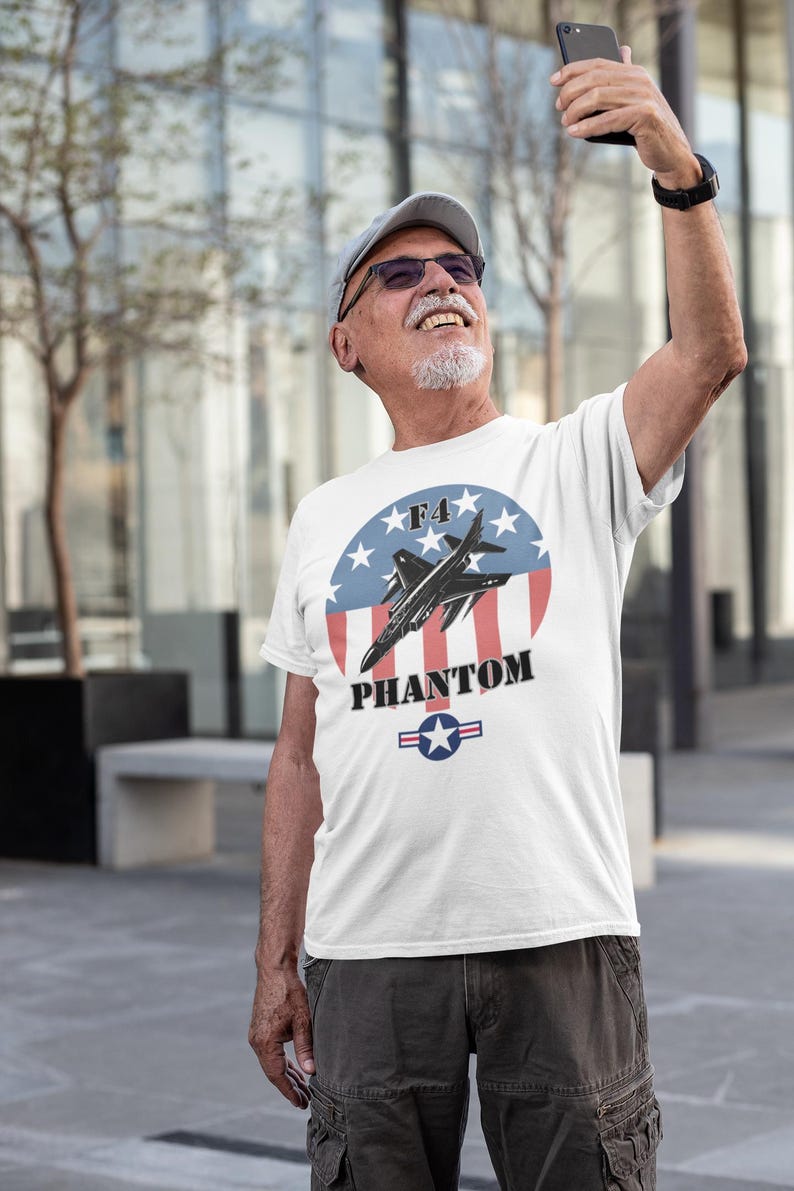
From the Shop
F-4 Phantom Fighter Jet Tee Shirt: Vintage Military Aircraft Graphic Tee
A vintage-style military graphic tee for anyone who knows that the Phantom was ugly, loud, smoky, and still one of the most important combat aircraft of the 20th century. Because the Double Ugly deserves a shirt. Available S–3XL.
$27.99+ Shop on Etsy
Why the Flying Pig Hits Different
Most iconic aircraft earn their reputation by being excellent at the thing they were designed to do. The SR-71 was the fastest. The P-51 was the most capable long-range escort. The A-10 is the best close air support airplane ever built. The F-4 Phantom is different. The Phantom earned its place in history partly because it failed — and then the Air Force and Navy had to reckon with what that meant.
The missiles-only decision wasn’t stupidity. It was a logical extrapolation of where technology was heading. The problem was that war didn’t read the doctrine. The North Vietnamese MiG-17 pilots didn’t care about the theoretical engagement envelopes of the AIM-7 Sparrow. The range restrictions and rules of engagement didn’t cooperate with the theory that guns were obsolete. And the F-4’s genuine qualities — speed, power, huge radar, enormous payload — didn’t matter if the crew didn’t know how to use them against a maneuvering opponent at close range.
What the Phantom forced was intellectual honesty about what air combat actually is, as opposed to what it’s supposed to be. TOPGUN exists because the F-4 embarrassed the U.S. Navy badly enough that it had no choice but to teach people how to fight again. The internal gun was added to the F-4E because the evidence became overwhelming that the theory was wrong. Modern U.S. fighter tactics — the energy management, the positional awareness, the emphasis on trained pilots over technology alone — trace directly back to the lessons the Phantom paid for over North Vietnam.
Robin Olds understood this instinctively, which is why Operation Bolo worked when pure technology hadn’t. He treated the Phantom as a tool, not a doctrine. He flew it with aggression and creative deception, not by the book. The Wolfpack’s kill ratio under his command was dramatically better than the Air Force average, entirely because of how he trained and led his pilots — not because the airplane was different.
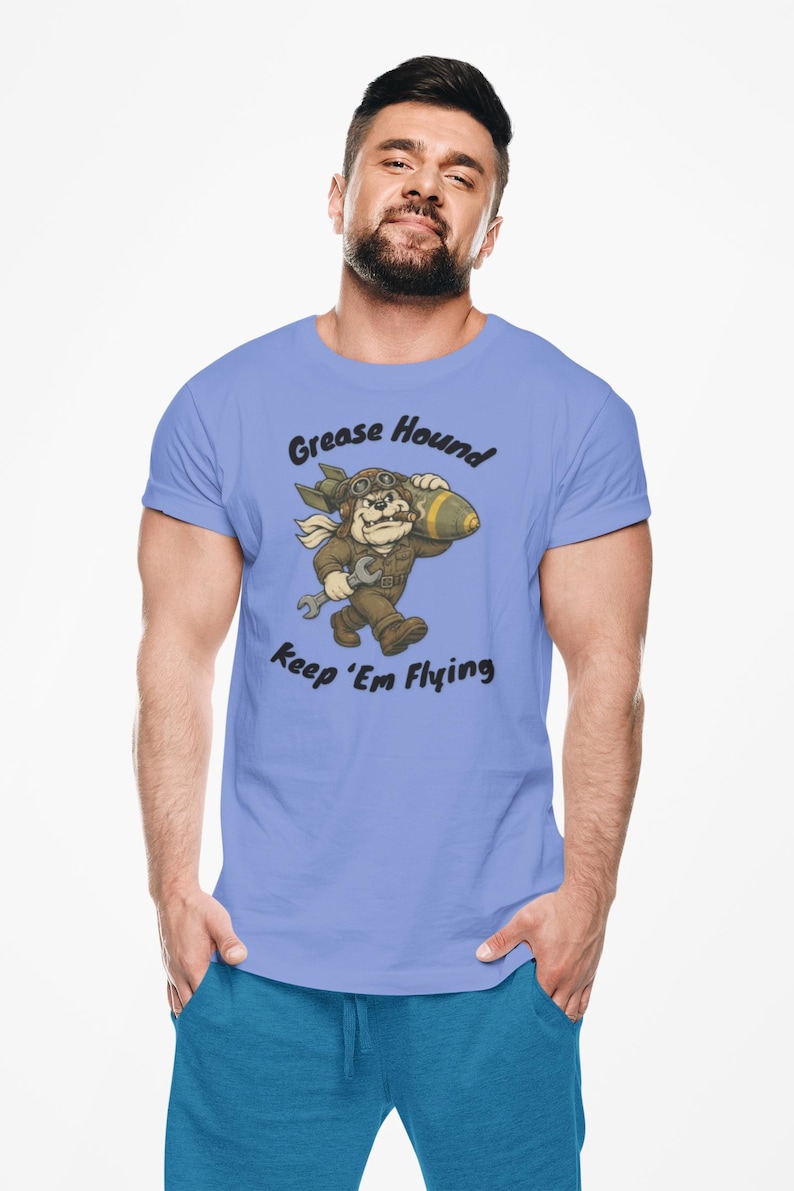
From the Shop
Grease Hound Keep Em Flying Shirt
A vintage aviation mechanic tee for the crew chief who kept the Phantom flying. The J79 engines didn’t maintain themselves. Available S–3XL.
$27.99+ Shop on Etsy

Browse more military aircraft stories in the Aviation section — from WWII fighters to modern air superiority jets.
Keep Reading: More Aviation History
The F-4 Phantom’s story doesn’t exist in isolation — it’s part of a longer arc of American military aviation that connects WWII to the jets flying today.

Next Generation Fighter
F-15E Strike Eagle: How a Pure Dogfighter Became the Air Force’s Deadliest Bomber
The jet that replaced the Phantom’s doctrine — and got the gun right from day one.

Built Because the Phantom Couldn’t Do It
A-10 Warthog: The BRRRRT Heard Across Fort Leonard Wood (And Why Soldiers Love It)
The close air support gap the F-4 couldn’t fill is exactly why the Hog was built.

WWII Aviation Lore
Lil Bastard: The WWII Gremlin Origin Story Pilots Still Tell
The mischievous gremlins Robin Olds’ generation grew up hearing about — and where the legend actually came from.
F-4 Phantom FAQ
Why was the F-4 Phantom called the Flying Pig?
The Phantom’s bulbous nose, blunt fuselage, and thick wing gave it an ungainly silhouette compared to more graceful jets of the era. Pilots and ground crews nicknamed it the Flying Pig, the Double Ugly, or the Rhino. The names were affectionate — the Phantom was fast, capable, and survivable, and crews who flew it tended to defend it fiercely despite its looks. The nickname stuck partly because it was accurate and partly because the airplane kept flying long enough for multiple generations of crews to repeat it.
Why didn’t the F-4 have a gun?
The original F-4 was designed in an era when military planners believed guided missiles had made guns obsolete in air combat. At the speeds and altitudes jet aircraft could reach by the late 1950s, the theory was that engagements would happen at distances where guns were useless. In Vietnam, restricted rules of engagement requiring visual target identification brought engagement ranges down to exactly where a gun would have been useful, and early AIM-7 Sparrow missiles were notoriously unreliable in real combat conditions. The F-4E, introduced in 1968, incorporated an internal M61 Vulcan 20mm cannon — a direct response to the lesson Vietnam taught.
What was Operation Bolo?
Operation Bolo, executed on January 2, 1967, was a deception operation led by Colonel Robin Olds of the 8th Tactical Fighter Wing. USAF F-4 Phantoms flew using the same routes, altitudes, speeds, and radio call signs as the F-105 Thunderchiefs the North Vietnamese MiG-21s preferred to attack. When the MiGs scrambled expecting an easy intercept, they encountered a full complement of Phantoms in a prepared ambush. Seven MiG-21s were shot down with no American losses — the highest single-day aerial kill total of the air war.
How did the F-4 lead to the creation of TOPGUN?
The Navy’s poor kill ratios in air combat over Vietnam prompted a comprehensive review led by Captain Frank Ault in 1968. The Ault Report found that missile reliability was poor and pilot training in visual dogfighting was inadequate. Its recommendations led directly to the establishment of the Naval Fighter Weapons School — TOPGUN — at NAS Miramar in 1969, which used F-4 Phantoms as its primary aircraft. After TOPGUN graduates returned to fleet squadrons, Navy kill ratios jumped to approximately 13:1.
How many aerial victories did Robin Olds score in Vietnam?
Robin Olds shot down four enemy aircraft over North Vietnam, adding to his 12 aerial victories from World War II flying P-38s and P-51s with the 479th Fighter Group in Europe. His combined total of 16 aerial victories made him one of the highest-scoring American aces of the jet age, and he remains the only American pilot to achieve aerial victories in both World War II and Vietnam. He was grounded from further combat when his commanders determined he was too high-profile and too valuable to risk losing.
The Bottom Line
The F-4 Phantom II is one of the most consequential aircraft in American military aviation history — not because it was perfect, but because it was perfectly situated to expose a profound mistake and force a correction. The missiles-only decision seemed rational in 1955 and was catastrophically wrong in 1966. Robin Olds showed what the airplane could do when flown by someone who refused to let doctrine substitute for combat aggression. The Navy’s kill ratios showed what happened when pilots trained for the fight they were actually in, not the one the theorists imagined.
What came out of the Phantom era — TOPGUN, modern air combat maneuvering training, a renewed emphasis on close-in fighting skills even in the missile age — is still the foundation of how the United States trains fighter pilots. Every F-16 and F-22 pilot flying today trains in a system that was built because the F-4 Phantom proved, definitively and at considerable cost, that speed and missiles alone don’t win a dogfight.
The Double Ugly earned its place. Twice over.
If you liked this one, the whole aviation rabbit hole is open: the SR-71 Blackbird and how it outran every missile fired at it for thirty years, the F-15E Strike Eagle and how a pure dogfighter became the Air Force’s best bomber, or the A-10 Warthog and why soldiers still love the BRRRRT. If your interest runs more to the WWII lore, the gremlin origin story and the Lucky 13 nose art history are both worth a read.
Follow along on Instagram @bentheretravel for more aviation, travel, and Pittsburgh content.
A Note from Ben
The F-4 Phantom II story is the one I keep coming back to when people ask how good military equipment actually gets made and refined. The short answer is: through painful lessons, usually in combat. As an Air Force JAG, I spent a career working inside the institutional culture that produced aircraft like this, and the story of how Vietnam forced the Air Force and Navy to confront the limits of their doctrine — and then create TOPGUN and the Aggressor program to fix it — is exactly the kind of institutional self-correction that’s easy to celebrate in retrospect and almost impossible to push through in real time.
Sources & Further Reading
This article draws on official U.S. Navy and U.S. Air Force historical records, the National Museum of the U.S. Air Force’s F-4 Phantom II history, McDonnell Douglas program background, and historical accounts of Operation Bolo and the founding of the TOPGUN school. The Naval Aviation Museum maintains additional records on the F-4’s service history.
For readers who want to explore further, these are reliable starting points:
- U.S. Air Force official website — aircraft fact sheets and news
- National Museum of the U.S. Air Force — aircraft histories and exhibits
- Smithsonian National Air and Space Museum — aviation history resources
More from the shopBrowse the full WWII aviation & nose art collection — tees, prints, glassware and gifts, all original designs.

Ben & Nicole Mathews
We’re based in St. Augustine, Florida, sharing the places we’ve actually been — from our home turf to corners of the U.S. and abroad. Ben is an attorney and a retired Air Force JAG (22 years), and a private pilot, which is why aviation and military history shows up here too.