

There are days in Iceland that feel like a highlight reel of the entire planet — waterfalls, geysers, ancient parliament sites, and geological drama all packed into a single loop. The Golden Circle is that day. We drove it on a raw October morning out of Reykjavík with low clouds over the lava fields and a thermos of coffee, and by the time we got back to the city that evening, we had stood inside a continental rift, watched the ground spit boiling water forty feet into the air, and hiked to the edge of a waterfall so powerful you can feel it in your chest from fifty meters away. It is one of the great drives on earth, and it fits in a single day.
The Golden Circle is a roughly 300-kilometer loop from Reykjavík into the southern uplands and back. The three main stops are Þingvellir National Park, the Geysir geothermal area, and Gullfoss waterfall. You can do them in about seven to nine hours, or you can linger at each one and let the day stretch. We leaned toward lingering. Iceland rewards that.

Þingvellir: Where the Vikings Built a Democracy and the Earth Is Pulling Apart
Þingvellir is the first stop on most Golden Circle itineraries, and it earns the opening slot. The national park sits in a rift valley where the North American and Eurasian tectonic plates are slowly pulling apart — about two centimeters a year — which has produced a landscape of dramatic fault canyons, a vast flat plain, and a lake that is the largest natural body of water in Iceland. The geology is extraordinary. But the history is what makes Þingvellir genuinely unlike anywhere else on the planet.
In 930 AD, Icelandic chieftains gathered at this site and founded the Alþingi — one of the world’s oldest parliaments. The assembly met here every summer for nearly 900 years, until 1798, with chieftains traveling from as far as 17 days’ ride to take part. Laws were recited from memory by the Lawspeaker at the Lögberg — the Law Rock — a natural platform above the plain. Disputes were settled. Alliances were made. Iceland was, in a real sense, invented here.

Today you can walk along the Almannagjá fault canyon — a veritable canyon that marks the edge of the North American plate — and follow the path that Viking chieftains would have walked to reach the Lögberg. There is a visitor center that puts the history in context, and walking trails that let you cover as much or as little as you want. The most adventurous option is the Silfra fissure, where you can snorkel or scuba dive in the crystal-clear glacial water between the two tectonic plates. The visibility is over 100 meters and the water temperature stays just above freezing year-round. It is cold. It is also remarkable.

UNESCO designated Þingvellir a World Heritage Site in 2004 based on its cultural significance — the first Icelandic site to receive the designation. The park was also Iceland’s first national park, established in 1930 to mark the 1,000th anniversary of the Alþingi. Walking through it feels like standing inside Icelandic history while also standing inside a geological textbook. The two things coexist without any awkwardness.
Geysir: The Word the World Borrowed From Iceland
The word “geyser” — as in every geyser in every national park in every country on earth — comes from Iceland. It comes from Geysir, the specific hot spring in the Haukadalur valley, whose name derives from the Old Norse verb geysa, meaning “to gush.” This is one of those etymological facts that sounds like a pub trivia answer until you are standing in front of the thing, watching Strokkur throw boiling water forty feet straight up while everyone around you gasps and reaches for their camera, and you realize that the word always made perfect sense.

The Great Geysir itself — the one the area is named for — has been mostly dormant for years. It erupts occasionally after earthquakes, sometimes spectacularly, but you cannot count on it. What you can count on is Strokkur, about 50 meters to the south, which erupts every five to ten minutes to heights of up to 35 meters. The routine is the same each time: the water surface in the vent shimmers and bulges into a dome, and then it explodes upward in a column of boiling water and steam. You think you have seen it. Then it does it again five minutes later and somehow surprises you.

The entire Haukadalur geothermal field has around 30 smaller geysers and hot pools scattered across the area, plus a boardwalk system that lets you explore them safely. The ground is visibly steaming. Pools bubble in colors ranging from pale turquoise to sulfurous yellow-green. There is a visitor center and a café here, which makes this the natural lunch stop on the Golden Circle loop. Allow at least an hour, more if you want to watch Strokkur go through several cycles from different angles.
Gullfoss: Iceland’s Most Famous Waterfall and the Woman Who Saved It
Gullfoss means “Golden Falls” in Icelandic, and the name either refers to the golden glow the water takes on in low light, or to a legend about a farmer who threw his gold into the falls rather than let it be seized. Either origin suits the place. Gullfoss is one of those waterfalls that exceeds its photographs. You round a corner in the parking lot path and hear it before you see it. Then you step to the edge and it drops away — two stages, first 11 meters and then 21 meters, into a canyon 32 meters deep — with a volume of water averaging 141 cubic meters per second. In summer floods, it has reached 2,000 cubic meters per second. The spray soaks you from 50 meters out.

But the history of Gullfoss has a human dimension that makes it more than just a spectacular natural feature. In the early 20th century, foreign investors tried repeatedly to harness Gullfoss for hydroelectric power. The falls were rented to these investors by the landowners, and the exploitation plans were serious. What stopped them — partly — was a woman named Sigríður Tómasdóttir, daughter of one of the co-owners. She campaigned fiercely against the hydroelectric development, repeatedly made the 120-kilometer journey on foot to Reykjavík to meet with authorities, and reportedly threatened to throw herself into the falls rather than allow them to be destroyed. The development plans ultimately fell through due to lack of funding, and the waterfall was eventually purchased by the Icelandic government and permanently protected in 1979. A stone memorial above the falls now bears her profile.

There are two main viewing areas at Gullfoss — an upper platform with a wide panoramic view and a lower path that takes you along the edge of the canyon and very close to the edge of the second drop. The lower path is wet, loud, and extraordinary. We stood there for a long time. The roar of the water is physical — you feel it in your sternum. The mist soaks through waterproofing you thought was adequate. The canyon swallows the river and the noise bounces off the walls and comes back at you from every direction. It is everything.

We Were There: Our Golden Circle Day
We drove the loop counterclockwise — Þingvellir first, then Geysir, then Gullfoss — which put the most dramatic stop at the end of the day. The morning light at Þingvellir was gray and moody, the fault canyon half in shadow. At Geysir we arrived early enough to have Strokkur almost to ourselves for the first few eruptions, before the tour buses pulled in. By the time we reached Gullfoss in the early afternoon, the mist from the falls was catching whatever light the clouds were offering, and the whole canyon had a silver quality to it that photographs only partially captured.

The drive itself is part of the experience. The route from Þingvellir to Geysir crosses a stretch of Icelandic highland that is completely open — lava fields, steam vents, the occasional horse standing in a field looking unbothered by the weather. Iceland’s horses are everywhere once you leave Reykjavík, and they have a way of materializing exactly when you need the scenery to do something interesting. The landscape between the stops is as good as the stops themselves.
Why the Golden Circle Hits Different
The Golden Circle works as a single day because it layers three completely different kinds of wonder. Þingvellir is geological and historical at the same time — you are standing on a continental boundary inside a 1,000-year-old parliamentary site. The Geysir area is pure elemental drama, the earth doing something chaotic and reliable simultaneously. Gullfoss is sheer overwhelming scale — the sound, the spray, the volume of water disappearing into a canyon. None of them feel like the same experience.
What stays with you after is the density of it. Iceland in general does this — compresses more geological and historical drama into a single day than most countries offer in a week. The Golden Circle is the single day where that compression is most concentrated. It is the version of Iceland that tourists do first and then spend the rest of the trip trying to top. Some of them never quite manage it.
Practical Information
Getting there: All three stops are within 300 kilometers of Reykjavík and well-signed from the city. The typical route is Route 1 to Route 36 toward Þingvellir, then Route 37 to the Geysir area, then continuing to Gullfoss on Route 35. Total drive time for the full loop is around 7–9 hours including stops. A rental car gives you maximum flexibility; organized tours from Reykjavík run daily and depart from the BSÍ bus terminal or major hotels.
Cost: The attractions themselves are free to visit. Parking is free at most sites as of our visit, though Iceland has been gradually introducing parking fees at high-traffic locations — confirm current status before you go. Budget for fuel, meals, and any activities like snorkeling at Silfra (guided tours required, typically $100–$150 per person).
When to go: The Golden Circle is accessible year-round. Summer (June–August) offers the longest daylight and most reliable road conditions. Autumn (September–October) brings smaller crowds, dramatic skies, and — if you are lucky — the first appearances of the Northern Lights on the drive home. Winter visits are possible with the right vehicle and conditions awareness; check road.is for real-time updates before driving.
What to wear: Waterproof everything, especially at Gullfoss. The spray at the lower viewing area will defeat any jacket that isn’t genuinely waterproof. Wind is constant across all three sites. Even in summer, temperatures at the highland sites can be significantly colder than Reykjavík. Dress in layers and bring a full rain kit.
How long to allow: A minimum of 7–8 hours for a complete loop with stops. Budget 1.5–2 hours at Þingvellir, 1 hour at Geysir (including lunch), and 1.5–2 hours at Gullfoss. If you want to add Silfra snorkeling or additional stops like Kerið volcanic crater, add 2–3 hours.
Golden Circle FAQ
Can you do the Golden Circle in one day?
Yes, comfortably. The full loop is about 300 kilometers and takes 7–9 hours including driving, stops, and lunch. Starting from Reykjavík by 8–9am puts you back in the city by early evening. If you want to add stops like Kerið crater or do a snorkeling tour at Silfra, allow a full day and start early.
Do you need a guide for the Golden Circle?
No — the route is entirely self-driveable and all three main sites are well-signposted with visitor infrastructure. That said, guided tours from Reykjavík are a good option if you want local historical context delivered at each stop, or if you don’t have a rental car. Some tours also include Silfra snorkeling or other add-ons.
Is Þingvellir worth the stop, or can you skip it?
Do not skip it. Many visitors treat it as a quick photo stop, but it deserves at least 90 minutes. The fault canyon walk, the historical context of the Alþingi, and the view across the Þingvallavatn lake are all excellent. If you are interested in snorkeling or diving at Silfra, it is located here and requires a full half-day. Even a short walk through the Almannagjá canyon justifies the stop entirely.
Can you snorkel at Þingvellir?
Yes, at the Silfra fissure — a crack in the earth filled with glacial water filtered through lava rock for decades, producing visibility over 100 meters. You are snorkeling between the North American and Eurasian tectonic plates. Guided tours are required (you cannot snorkel or dive here independently) and the water is just above freezing year-round — drysuits are used. Book tours in advance through operators like Dive.is or Arctic Adventures.
What is the best stop on the Golden Circle?
Ask anyone who has done it and you will get three different answers, because all three main stops are genuinely excellent for different reasons. Þingvellir wins on historical and geological depth. Strokkur at Geysir wins on pure spectacle — watching the earth throw boiling water into the sky on a schedule. Gullfoss wins on sheer overwhelming physical scale. If forced to choose: Gullfoss. The sound alone is worth the drive.
How far is the Golden Circle from Reykjavík?
The closest stop, Þingvellir, is about 40 km northeast of Reykjavík — roughly 45 minutes by car. The full loop returns you to the city after about 300 km total, much of which you have already covered getting to the stops. Budget 20–30 minutes of driving between Þingvellir and Geysir, and another 30–40 minutes between Geysir and Gullfoss.
The Bottom Line
The Golden Circle earns every superlative written about it. It is the single most concentrated stretch of Icelandic wonder on the map, and it fits in a day that most people could drive comfortably starting after breakfast. Þingvellir gives you 1,100 years of parliamentary history and the literal edge of a tectonic plate. Strokkur gives you the earth erupting on a schedule you can set your watch to. Gullfoss gives you a waterfall that soaks you from 50 meters away and makes your chest vibrate.
Do it in autumn if you can. The crowds thin out, the light turns dramatic, and there is a chance — not guaranteed, never guaranteed — that you will be driving back toward Reykjavík in the dark when the Northern Lights decide to show up. That particular version of the day is one for the permanent memory.
Read next: Iceland Glacier Ice Cave: What It’s Actually Like to Stand Inside a 10,000-Year-Old Glacier
Keep Reading: More Iceland

ICELAND
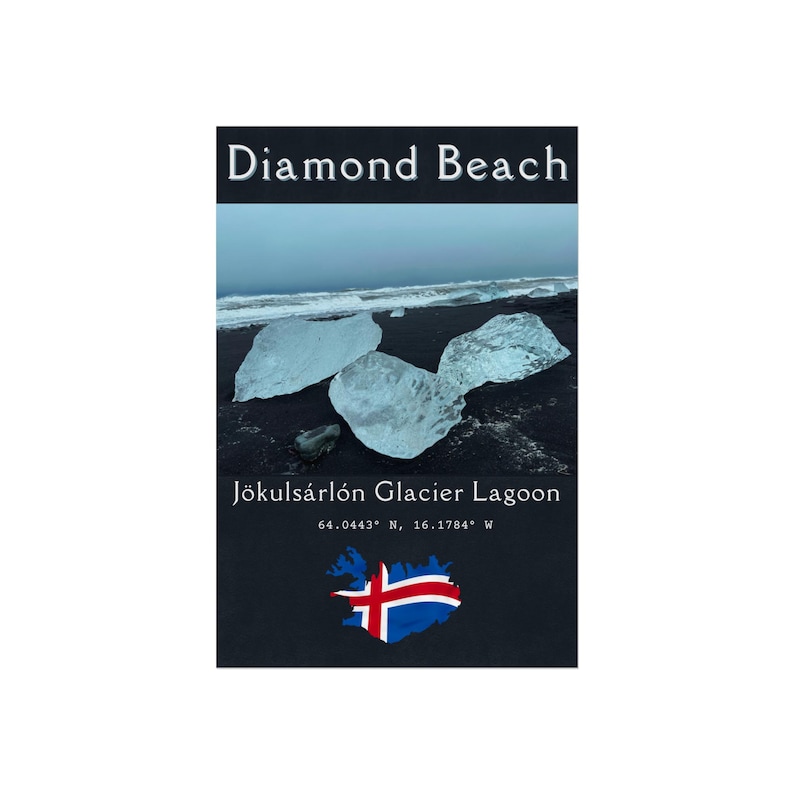
Diamond Beach: Why the Ice Is Ancient and the Lagoon Is Young
How thousand-year-old glacier ice ends up as glittering diamonds on a black sand beach.

ICELAND
Iceland Glacier Ice Cave: Inside a 10,000-Year-Old Glacier
Standing inside Vatnajökull with Troll Tours — even in hurricane winds, it was worth every step.

ICELAND
Reynisfjara: Iceland’s Most Dangerous Beach and Why It’s Worth It Anyway
Basalt columns, sea stacks, and sneaker waves on Iceland’s south coast.
What We’d Do Differently
We did the Golden Circle in a single day, which is entirely doable — but we rushed Þingvellir. We’d give it two hours minimum on the return visit. The geology and the history deserve more than a quick walk around the rift valley. We’d also start earlier (8am instead of 10am) to beat the tour buses at Strokkur, and we’d pack lunch instead of eating at the tourist restaurants near Gullfoss. The food isn’t bad, but the lines at peak hours are real.
More Iceland from BenThere Travel
Planning your Iceland trip? These posts cover the rest of the Ring Road and the highlights we remember most:
- Iceland Ring Road: A 10-Day Adventure Guide From a Couple Who Actually Drove It
- The Golden Circle, Iceland: Geysers, a 1,000-Year-Old Parliament, and Europe’s Most Powerful Waterfall
- Reynisfjara Black Sand Beach: Iceland’s Most Dangerous Beach
- Skógafoss: The Waterfall, the Viking Treasure, and the 527 Steps Most Visitors Skip
- Iceland Glacier Ice Cave: What It’s Actually Like to Stand Inside a 10,000-Year-Old Glacier
- Northern Lights in Iceland: What We Learned From Searching Every Night
- Iceland Travel Costs: What We Actually Spent and How to Budget Honestly
- Driving in Iceland: F-Roads, Gas Stations & Safety Tips
More from the shopBrowse the full travel wall art collection — canvas prints and posters of Iceland’s south coast, Paris and Eilean Donan.

Ben & Nicole Mathews
We’re based in St. Augustine, Florida, sharing the places we’ve actually been — from our home turf to corners of the U.S. and abroad. Ben is an attorney and a retired Air Force JAG (22 years), and a private pilot, which is why aviation and military history shows up here too.