

Everyone who visits Pittsburgh ends up in the same three places. Mt. Washington for the view. The Strip District on a Saturday morning. A Primanti’s sandwich because somebody told them they had to.
Those spots are great. They’re great for a reason. But if you want to see the Pittsburgh that locals actually love — the weird, beautiful, slightly-off-the-map version of this city — you have to dig a little deeper.
This is the list I give friends when they fly in for the weekend and say, “We’ve already done the touristy stuff.” These are the places that make yinzers feel proud. The ones tucked behind a bridge, hidden in a basement, or sitting on a hilltop nobody told you about.

1. The West End Overlook (a.k.a. The View Locals Actually Use)
Mt. Washington is gorgeous. Nobody’s arguing that. But on a Friday night in summer? Good luck finding parking, good luck getting a table on the Grandview strip, and good luck taking a photo without ten other tourists in it.
So here’s the secret — the West End Overlook gives you a better view of the Point. You’re looking straight down the rivers as they merge. Three Rivers, all in one frame. The fountain at the Point shooting up the middle. The whole skyline laid out like somebody arranged it for a postcard.
It’s free. Parking is easy. There’s a little stone wall to lean on, picnic tables in the grass, and at sunset it’s just locals walking their dogs and a few couples sharing a bottle of wine on the bench.
Bring a beer. Bring your camera. Don’t tell anyone.
Did You Know?
The West End Overlook sits on what used to be a German immigrant neighborhood called Westend. The overlook itself was developed as a city park in 1895 — making it older than Mt. Washington’s modern lookouts. Locals have been bringing dates here for over a hundred years.
2. Randyland — The Most Cheerful Block in the City

Tucked into the Mexican War Streets on the North Side, Randyland is exactly what it sounds like: a guy named Randy turned his house into a kaleidoscopic outdoor folk-art museum, and now it’s free for anyone to wander through.
Randy Gilson started painting his courtyard in the 1990s — bright pinks, yellows, turquoise, with mannequins, plastic flamingos, hand-painted signs that say things like “Live, Love, Laugh.” It sounds like it could be tacky. It is not. It’s joyful. The kind of place that resets your mood whether you wanted it reset or not.
And if Randy himself is around — he often is — he’ll talk to you. He’ll hug you. He’ll tell you about every piece in the courtyard. The whole thing is a love letter to the city, built one yard-sale find at a time.
It’s free. It’s open most days. And it’s three blocks from the National Aviary if you want to make an afternoon of it.
3. Bicycle Heaven — The World’s Largest Bike Museum

On the surface, Bicycle Heaven looks like a bike shop. It is a bike shop. But it’s also — somehow, miraculously — the largest bicycle museum on planet Earth, with over 4,000 bikes packed into a warehouse in Pittsburgh’s Manchester neighborhood.
Pee-wee Herman’s actual bike from Pee-wee’s Big Adventure? It’s here. The bicycles from the movie Super 8? Here. Banana-seat Stingrays from the ’60s, weird futuristic Bowden Spacelanders from the ’50s, a wall full of bicycle license plates, lunchboxes, and pedal cars that look like they were salvaged from someone’s grandparent’s basement?
All here. All free. You can walk in off the street and spend two hours wandering past objects that should be in the Smithsonian.
Owner Craig Morrow is usually around, and if you ask a question, you’re getting a tour. Bring kids. Bring your dad. Bring anyone who has ever loved a bike.
4. The Mattress Factory — Art You Walk Inside Of
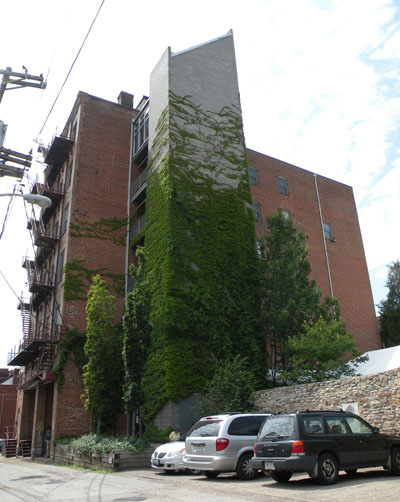
If you tell a Pittsburgher you’ve never been to the Mattress Factory, expect a lecture. It’s that kind of place — locals are protective of it.
Founded in 1977 in an actual abandoned mattress warehouse on the North Side, it’s a contemporary art museum where every exhibit is a room-sized installation. You don’t look at the art. You walk into it. Yayoi Kusama has a permanent infinity-mirror room here that she made decades before her dot rooms became Instagram-famous.
James Turrell did installations here. So did Greer Lankton. The whole museum feels like a series of secrets — climb a staircase, push open a door, and suddenly you’re in somebody’s dreamscape.
Pro tip: there’s a second building across the street. Most first-time visitors miss it. The locals know.
5. The Cathedral of Learning’s Nationality Rooms

You’ve probably seen the Cathedral of Learning. It’s a 42-story Gothic stone tower in the middle of the University of Pittsburgh campus — the second-tallest university building in the world, and impossible to miss.
What most visitors miss is what’s inside. Tucked along the first three floors are 31 working classrooms — each one designed and decorated by a different cultural community in Pittsburgh. The Czech Room. The Lithuanian Room. The Syrian-Lebanese. The Scottish. Each one is a tiny portal into another country, with hand-carved wood, stained glass, and architecture flown in from the homeland.
You can walk in for free during the academic year (when class isn’t in session) or pay a few bucks for a guided tour. Around Christmas they decorate every single room for that country’s holiday traditions, and it’s one of the most underrated December experiences in the city.
The Commons Room itself — the four-story Gothic study hall on the ground floor — looks like Hogwarts. Bring a coffee, sit at one of the wooden tables, and watch students study under stone arches.
6. Trundle Manor — The House of Oddities

Out in Swissvale there’s a Victorian house owned by a couple named Mr. Arm and Velda von Minx. They call it Trundle Manor. It is a private home that doubles as a museum of curiosities, and you can tour it.
Taxidermy. Antique medical equipment. Two-headed animals in jars. A 1953 Pontiac hearse. A working pipe organ. The whole thing is part haunted house, part Victorian fever dream, part performance art.
You book a tour through their website (donations encouraged), and the owners will personally walk you through their home in costume, telling stories about every piece. It is unhinged in the best possible way. It is also exactly the kind of weird, wonderful thing Pittsburgh is full of and refuses to advertise.
7. Bayernhof — A Music Box Mansion Above the Allegheny

This one’s so off-the-radar that even most lifelong Pittsburghers don’t know it exists. The Bayernhof is a 19,000-square-foot Bavarian-style mansion perched on a cliff above O’Hara Township, built in the 1980s by an eccentric millionaire named Charles Brown III, who collected antique automated music machines.
When he died, he left the entire house — and his collection of 100+ rare music boxes, orchestrions, and player pianos — as a museum.
Tours run by appointment only. They’re two hours long. They take you through hidden passages, secret bars, a cave-like wine cellar, an indoor swimming pool, and rooms where the guide cranks up century-old music machines that fill the whole mansion with sound. You walk out of there feeling like you got away with something.
Nic’s Pick
“I grew up in Kennedy Township, so my Pittsburgh isn’t downtown — it’s the hills above McKees Rocks. The perfect Saturday is breakfast at a diner in the Rocks, a drive up Kennedy Avenue past the houses I knew growing up, then over to the McKees Rocks Indian Mound — one of the largest prehistoric burial mounds east of the Mississippi, sitting right there off Munson Avenue. Half the people who live two blocks away have no idea it’s a 2,000-year-old sacred site. End the day with pierogies at Pierogies Plus and a sunset over the Ohio from the bluffs above the Bottoms. That’s my Pittsburgh.” — Nicole
8. The Center for PostNatural History

In a small storefront on Penn Avenue in the Garfield neighborhood, there’s a museum dedicated to organisms that humans have intentionally altered. We’re talking GMO mosquitoes, glow-in-the-dark fish, lab mice, sea-monkeys, and the famous BioSteel goats.
It’s part natural history museum, part contemporary art piece, part philosophical statement. Admission is free (donations welcome), the curators are passionate, and the entire place takes about thirty minutes to see — which means it’s a perfect stop on a date or before dinner in nearby Bloomfield.
It’s the kind of museum that exists in exactly one city, and it makes a lot of sense it ended up in this one.
9. Allegheny Cemetery — Pittsburgh’s Other Park

Stay with me here.
Allegheny Cemetery in Lawrenceville is one of the oldest rural cemeteries in the country — 300 acres of rolling hills, century-old oaks, Gothic mausoleums, and winding stone-paved lanes. Locals walk it. They run it. They picnic in it. (Respectfully.)
Stephen Foster is buried here — the guy who wrote “Oh! Susanna” and “Camptown Races.” So is Lillian Russell. So are dozens of Civil War generals. The cemetery offers free walking tours that turn the whole place into a living history lesson.
In fall, the trees go gold and orange and red, and it’s one of the most photogenic spots in the city. Bring a coffee. Bring a sketchbook. It’s the kind of quiet that’s hard to find anymore.
10. Allegheny Observatory — Stargazing in the City

Up on a hill in Riverview Park on the North Side sits a beautiful turn-of-the-century domed observatory that the University of Pittsburgh still actively uses. From April through October, they offer free public tours on Friday nights — a guided talk plus, weather permitting, a real look through the antique 30-inch Thaw refractor telescope.
You have to register ahead. The tours fill up. But it’s free, the building looks like something out of a Hayao Miyazaki film, and you walk out having seen Saturn through a 100-year-old telescope. Hard to beat.
11. The Strip District — Just Not on Saturday

The Strip District is on every “things to do in Pittsburgh” list, so calling it a hidden gem is cheating. But locals know something tourists don’t: do not go on a Saturday morning unless you enjoy parking thirty minutes away and shuffling shoulder-to-shoulder past a guy yelling about Steelers t-shirts.
Go on a weekday morning. Or — even better — late afternoon, when the wholesalers are wrapping up and the restaurants are getting busy. Wholey’s Fish Market still has the giant fish on the wall. Pennsylvania Macaroni Company smells like every Italian grandmother’s kitchen at once. Stamoolis Brothers has feta in barrels. La Prima Espresso has guys arguing about soccer in three languages.
That’s the Strip locals love. Not the t-shirt stalls. The food halls and the family-run businesses that have been there since before Pittsburgh was cool again.
12. The Duquesne Incline (At Night, From the Bottom)

I know — the inclines aren’t a secret. But here’s what locals do that tourists don’t: ride them at night, and ride them from the bottom up.
Park at the lower station of the Duquesne Incline (free lot, easy in and out). Pay your $5, climb into the original 1877 wooden cable car, and ride up the side of Mt. Washington as the city lights come on below you. At the top there’s a tiny museum about the incline’s history, plus the overlook on Grandview.
It’s $5. It’s a hundred-and-forty-eight-year-old machine. It is, full stop, the most charming way to see Pittsburgh.
From the Shop: Yinzer Pride for the Locals on Your List
If you’ve made it this far, you’ve earned yinzer status. And if you’re shopping for someone who’s actually from Pittsburgh — not somebody who got a Terrible Towel at the airport — these are the pieces that hit. They’re part of the Yinzer Collection in our shop, where every design is made to give Pittsburgh the artistic reverence it deserves.

Yinzer Skyline Velveteen Plush Blanket
Pittsburgh’s skyline rendered with the love it deserves — Three Rivers, the Point, the bridges — printed on a velveteen plush throw that’s soft enough to live on the couch year-round. The kind of gift that makes a transplanted yinzer homesick in the best way.

Pierogi Stained Glass Blanket
The pierogi reimagined as cathedral glass. A plush throw for the yinzer who treats Pittsburgh comfort food like a religion.

Stained Glass Pierogi Mug
Coffee, tea, or — let’s be honest — a Saturday-morning Iron City. The Yinzer Pride pierogi rendered as luminous stained glass on a ceramic mug.
FAQ: Pittsburgh’s Hidden Gems
What’s the best free thing to do in Pittsburgh?
Honestly? It’s a tie between Randyland (the world’s most cheerful art installation, in the Mexican War Streets) and Bicycle Heaven (the world’s largest bike museum, also free). Both are walkable from the North Shore. Both are uniquely Pittsburgh.
Where do locals actually take their out-of-town friends?
The West End Overlook for the view, the Strip District (on a weekday) for the food, and the Duquesne Incline at night for the postcard moment. Add the Cathedral of Learning if it’s December.
Is the Mattress Factory family-friendly?
Mostly. Some installations are dimly lit or psychologically intense, so younger kids may need a heads-up. School-age children usually love the room-sized art. Check the current exhibitions on the Mattress Factory website before you go.
How do I tour the Bayernhof?
By appointment only. You book through the Bayernhof Music Museum website, tours are typically two hours, and reservations fill up weeks in advance — especially around the holidays. Worth the planning.
Is the Allegheny Observatory really free?
Yes. Public tours run Friday nights April through October, are free, and require advance registration through the University of Pittsburgh’s Department of Physics and Astronomy. They go fast — book early.
What should I avoid in Pittsburgh as a tourist?
The Strip District on Saturday mornings is mayhem. Mt. Washington on a summer Friday night is parked solid. And anywhere with a “Yinzer Survival Guide” sign in the window is selling Steelers shirts at 300% markup. Eat where the locals line up — that’s the only rule that matters.
The Bottom Line
Pittsburgh isn’t trying to be Nashville. It isn’t trying to be Austin. It’s a city of bridges and hills and ridiculous neighborhoods stacked on top of each other, and the best parts of it are the ones it doesn’t bother advertising.
The next time you’re here — whether you’ve lived here forty years or you’re flying in for a weekend — skip one thing on the tourist list and pick one thing off this one instead. Go to Randyland. Go to the West End Overlook. Take the night ride up the Duquesne Incline. Find the Nationality Rooms.
That’s how you stop being a visitor and start being a yinzer.
If you liked this one…
You’ll probably like our guide to the Best Pittsburgh Gifts for Yinzers — a roundup of Steel City–themed designs that real Pittsburghers actually want. And once you’ve worked up an appetite from all that walking, head over to Pierogies Plus in McKees Rocks for what we (loudly) think is the best pierogi in the city.
Come hang with us on Instagram @bentheretravel — that’s where we post the photos that don’t make the blog and the spots we’re sneaking off to next.
Read next: Pierogies Plus in McKees Rocks: The Best Pierogi in Pittsburgh →
Nicole’s Pittsburgh Note: Nicole grew up with Pittsburgh food, neighborhoods, family traditions, and Yinzer culture, so these recommendations come from more than a quick visit. These are the kinds of places, flavors, and experiences that actually feel connected to Pittsburgh — not just the tourist checklist. If you’re looking for Pittsburgh gifts that will actually land, our SunSpun Creations shop has original Pittsburgh-inspired designs including pierogi art, Yinzer skyline tees, and more.
More from the shopBrowse the full Pittsburgh collection — stained-glass pierogi, chipped ham and skyline designs on shirts, mugs, blankets and kitchen gifts.

Ben & Nicole Mathews
We’re based in St. Augustine, Florida, sharing the places we’ve actually been — from our home turf to corners of the U.S. and abroad. Ben is an attorney and a retired Air Force JAG (22 years), and a private pilot, which is why aviation and military history shows up here too.