

Trip Summary
10-days. Three Airbnbs. One spontaneous hotel. A rental car, a camera, and a head full of lava, ice, waterfalls, wool sweaters, and hot dogs. Our Iceland itinerary took us from the stillness of glacier lagoons to the buzz of downtown Reykjavík — with stops for geysers, glaciers, turf houses, and the best rye bread we’ve ever had.
Deep Dives From This Trip
We wrote dedicated guides for the most-asked-about stops on this trip. If you’re planning your own South Coast and Golden Circle trip, these go deeper on the geology, the practical info, and what it’s actually like to stand there.


Skógafoss Waterfall: Viking Treasure & the 527 Steps
The 12,000-year-old cliff, the buried treasure chest, and the climb most visitors skip.

Jökulsárlón Glacier Lagoon: Iceland’s Most Surreal Stop
Full deep-dive coming on the lagoon younger than your grandparents.

Reynisfjara Black Sand Beach & Sea Stacks
Full deep-dive coming on the most dangerous beach in Iceland and the basalt that makes it.

Blue Lagoon: Is It Worth the Hype?
Full deep-dive coming on whether the world’s most photographed spa lives up to its reputation.
Our Journey Starts


What began with a hot dogs turned into 10 days of winding roads, snow-dusted waterfalls, the kind of quiet you find in the middle of nowhere.
Icelandic hot dogs (pylsur) are legendary for good reason. Made mostly from lamb (with a bit of pork and beef), they’re savory, a little smoky, and somehow… addictive. They’re served “eina með öllu” — one with everything — which means:
Sweet brown mustard (pylsusinnep)
Remoulade
Raw onions
Crispy fried onions
Ketchup (but not the kind you’re used to)
We stopped at Bæjarins Beztu Pylsur in Reykjavík — the most famous hot dog stand in the country. Clinton ate there. We figured we should too.
And the real twist?
Nicole doesn’t even like hot dogs.
But these? She loved them. We ended up eating hot dogs more times than we planned — on the road, in gas stations (which are low-key amazing in Iceland), even in towns where we could’ve ordered lamb stew or fish. We just… wanted more hot dogs.
It was the first of many surprises Iceland had in store for us.
From that first bite to the final Blue Lagoon soak, the trip didn’t unfold exactly how we expected — it was better.
This wasn’t just a vacation. It was Iceland on Iceland’s terms. And we’d do it again in a heartbeat.
From Reykjavík to the Road
Fueled by hot dogs and that first jolt of Icelandic air, we left the capital behind — saving Reykjavík for the end of our loop. Our plan: ten days along Iceland’s South Coast, exploring black sand beaches, glacier-carved valleys, walking on a glacier to enter a crystal-blue ice cave, experiencing a live lava show, and finding remote hideaways that felt like they belonged in storybooks.
We headed to our cozy lakeside Airbnb on the southern point of Lake Þingvallavatn, a quiet stretch of shoreline where the water shimmered steel-blue under the late afternoon light. The cottage sat tucked against a backdrop of rolling hills, with a view that made you want to pull up a chair and watch the weather sweep across the lake. It was the perfect base for exploring Þingvellir National Park — where the North American and Eurasian tectonic plates pull apart — and the nearby Geysir Hot Springs in the Golden Circle.
From here, our Golden Circle itinerary was within easy reach. In less than thirty minutes, we could be standing at the edge of the Almannagjá fault, tracing history at the site of Iceland’s first parliament, or feeling the ground tremble as Strokkur erupted in a burst of scalding water. The location gave us the best of both worlds: quick access to Iceland’s most famous attractions and a peaceful retreat to return to each evening.
Before checking in, we stopped at a local grocery store — something we make a habit of wherever we travel. There’s no better way to get a feel for a place than wandering the aisles and seeing what locals buy for dinner. We stocked up on simple Icelandic foods, grabbed a bottle of wine, and picked out a few flavors of skyr yogurt for dessert.
Back at the Airbnb, we lit a warm fire as the evening chill wrapped around Lake Þingvallavatn. Outside, it was so still you could hear the faint lap of water on the shore. We ate, lingered over wine, and savored the tangy creaminess of the skyr before stepping out into the crisp night air. We stood there for a long time, necks tilted back, hoping for that first shimmering curtain of the northern lights in Iceland. Tonight, the skies stayed dark — but it was the kind of peaceful, unhurried evening that felt like the perfect start to our Iceland South Coast road trip. Tomorrow, the real exploring would begin.


Day 2 - Heading for the Golden Circle
Morning came crisp and cool, the lake still wrapped in a thin veil of mist. With coffee in hand and the map already open, we set off for our first full day — a classic Golden Circle route: Þingvellir National Park, Gullfoss, and Geysir Hot Springs.
At Þingvellir, we wandered between the towering walls of the Almannagjá fault, tracing the visible line where the North American and Eurasian tectonic plates drift apart. The air was sharp, the kind that makes colors seem more vivid — mossy greens, black lava rock, and the glint of water flowing through the Silfra fissure.
This UNESCO World Heritage Site holds a central place in Iceland’s history. It was here in 930 AD that the Althing, the world’s oldest continuously operating parliament, was established. For centuries, chieftains from across Iceland gathered here each summer to make laws, settle disputes, and trade. Þingvellir also carries a darker history. We stopped at Gallows Rock (Gálgaklettur), also known as Hanging Rock, where executions took place in the 16th–18th centuries. Men were hanged from the cliff, while women accused of certain crimes were drowned in the nearby Drowning Pool (Drekkingarhylur). Standing there, it was sobering to think that this peaceful valley once witnessed both the birth of democracy and the weight of justice carried out in its harshest form.
Thingvellir History Highlights
• UNESCO World Heritage Site and birthplace of the Althing (Iceland’s national assembly) in 930.
• Lögberg (Law Rock): where laws were proclaimed and disputes settled during the annual gatherings.
• Almannagjá: the dramatic rift marking the divide of the North American and Eurasian tectonic plates.
• Gálgaklettur (Gallows Rock): site of hangings in the 16th–18th centuries.
• Drekkingarhylur (the Drowning Pool): pool on the Öxará river where women were executed in early modern times.
• Silfra fissure: crystal-clear spring where people can snorkel/dive between tectonic plates (bookable tours, very cold water).
• Respect the site: stick to marked paths and give historic locations space.
Parking at Þingvellir was easy, with multiple lots close to the main trails, and signs in English made it simple to navigate. From Þingvellir, it’s about an 80 km (50-mile) drive to Gullfoss, taking roughly 1 hour and 20 minutes along a scenic, paved route through farmland and rolling hills.
Gullfoss, or “Golden Falls,” is one of Iceland’s most iconic and powerful waterfalls. The Hvítá River rushes southward before plunging in two dramatic stages into a rugged canyon, sending up a constant cloud of mist. Even from the upper viewing area, we could feel the spray on our faces, the roar of the water so loud it drowned out any conversation.
Gullfoss is part of the Golden Circle and an easy stop with good parking and marked walking paths to both upper and lower viewpoints. On a sunny day, the mist often creates a rainbow over the falls, but even under cloudy skies, the sheer power and scale were unforgettable. We lingered for a while, watching the churning water disappear into the canyon before heading toward our next stop.
On the road between Gullfoss and Geysir, we spotted a small stand with a simple trust box and a sign offering bags of treats for Icelandic horses in the nearby pasture. The setup was delightfully simple — you drop in your payment, take a bag of treats, and walk to the fence. We couldn’t resist. The horses trotted over as soon as they saw us, their thick manes blowing in the wind, and gently took the treats from our hands. It was one of those spontaneous moments that felt purely Icelandic — trusting, unhurried, and unforgettable.
From there, it was just a 10-minute drive to Geysir, where the earth hissed and steamed beneath our feet. Strokkur, the star of the show, put on its performance every few minutes — a sudden swell, a suspended moment of tension, and then a roar as boiling water shot high into the sky. The smell of sulfur hung in the air, mingling with the sound of tourists gasping in unison each time it erupted. Parking at Geysir was just as straightforward, directly across from the geothermal area, and the visitor center offered clean restrooms, snacks, and souvenirs.
We made sure to pack waterproof pants, waterproof hiking boots, and waterproof jackets — and we were glad we did. Between the mist from Gullfoss, the spray from Strokkur, and the occasional drizzle along the drive, staying dry made the day far more comfortable. It was definitely cool for us, especially coming from Florida, but the right gear meant we could focus on the scenery instead of the chill.
Travel tips:
Visit Þingvellir early in the morning or late in the afternoon to avoid tour bus crowds.
Wear sturdy, waterproof gear — mist and spray are part of the experience at both Gullfoss and Geysir.
Don’t miss Gallows Rock and the Drowning Pool for a glimpse into Iceland’s darker history.
At Geysir, if Strokkur just erupted, get your camera ready — it often goes off again within 5–10 minutes.
Bring layers. Even in summer, wind and weather can shift quickly in the highlands.
Both sites are free to enter, but Þingvellir charges a small parking fee (payable by card).
Keep some cash or coins handy — you never know when you might find a roadside trust box experience.
It was a day that felt like Iceland in miniature — history, geology, wildlife, and raw natural power all within a short drive of each other. That evening, we stopped for dinner at Ingólfsskáli Viking Restaurant, a striking turf-roofed longhouse tucked beneath Mt. Ingólfsfjall. Inside, candlelight flickered off heavy wooden beams and carved doors, and we sipped raspberry mead from drinking horns. I had savory venison, while Nicole enjoyed delicate arctic char — not salmon, but similar in texture — each dish grounded in Icelandic flavor. The atmosphere was immersive, and the meal felt like a feast from the sagas. Later, as we returned to the lake, its still steel-blue surface mirrored the same quiet magic that had welcomed us that morning.


Day 3 – Weather Holds the Plans
The next day was meant to be one of our most anticipated adventures — snorkeling in Silfra at Þingvellir. But Iceland had other plans. Overnight, a winter storm swept in, bringing winds gusting up to 70 mph. The calm, steel-blue lake we’d admired the day before was now whipped into whitecaps, waves crashing against the shoreline just outside our Airbnb.
Instead of pulling on drysuits, we pulled blankets over our laps and settled in. The wind rattled the windows, and the air outside felt like it could knock you sideways. It was our first weather-related delay of the trip, but it turned into a blessing in disguise — a quiet day to decompress from the long travel days and recharge for the rest of the journey.
Travel Tip – Be Ready for Iceland’s Weather
Expect rapid changes: Conditions can shift from sunny to stormy in minutes, especially in fall and winter.
Stay flexible: Build extra time into your itinerary so you can swap days or adjust plans without missing out.
Pack for extremes: Always carry waterproof layers, insulated gloves, and a warm hat — even if the morning starts clear.
Check vedur.is daily: The Icelandic Meteorological Office posts up-to-the-hour forecasts and severe weather warnings.
Have a backup plan: Keep a list of indoor attractions, cafes, or scenic drives in case outdoor adventures are canceled.
Day 4 – South Coast in Motion (Kind of)
The storm had eased, but the wind was still fierce—strong enough to push our car sideways on the open road. Even so, the weather was just good enough to travel, so we loaded up and headed further along the South Coast.
Our first stop was Skógafoss, one of Iceland’s largest and most photographed waterfalls. The wind transformed the falls into something wild and unpredictable, blowing the water sideways so it sprayed far beyond its usual landing zone. The gusts caught the mist and sent it swirling in every direction, creating multiple rainbows that shimmered in the sunlight. Standing there, it felt like the falls were alive and responding to the storm, putting on a show just for the few of us who braved the blustery morning. We’ve since written a dedicated Skógafoss deep-dive — including the climb to the top, the Viking treasure chest legend, and the 22 unnamed waterfalls upstream that most visitors never see.
From there, we made our way to Reynisfjara Beach — Iceland’s famous black sand beach with the dramatic basalt sea stacks (the Reynisdrangar) rising offshore. The waves were monstrous that day, the wind biting, and the basalt columns looked like stacked stone pencils. Reynisfjara is also notorious for its “sneaker waves” — sudden, powerful surges that have killed multiple tourists. We kept a safe distance and never turned our backs on the ocean. We’ve since written a dedicated Reynisfjara deep-dive.
We continued to Vík for a planned stop at the Icelandic Lava Show. Inside the darkened theater, we watched as real molten lava — heated to over 1,000°C — was poured out just a few meters away. From our seats, 7–8 feet back, the heat was intense enough to feel like standing in front of an open oven. The lava hissed, cracked, and popped as it cooled, and the presenter explained exactly what happens during an eruption, blending science, history, and storytelling into a fascinating demonstration.
Before the show, we grabbed lunch at the small café inside the Lava Show building. It turned out to be a hidden gem — we ordered steaming hot soup served in crusty lava bread bowls, and it was the perfect comfort food for a stormy South Coast day. The combination of hearty, flavorful soup and fresh-baked bread, eaten while warming up indoors, made us want to linger long after our bowls were empty.
Afterward, we spotted the cheerful Crepes.is Food Truck parked nearby. The colorful truck stood out against the gray coastal backdrop, and the smell of something warm and sweet was impossible to resist. The staff greeted us with genuine warmth, and our crepes arrived fresh off the griddle — thin, golden, and folded around generous fillings. Eating them warm in the shelter of the truck’s awning was exactly the comfort we needed to keep going through the rough weather.
We were bound for a remote Airbnb that night, but the weather had other plans. The F-roads leading into the Highlands were closed due to conditions — no surprise, as these roads often shut by late September or early October. With our route cut off, we scrambled to find a place to stay and managed to secure a last-minute reservation at Hotel Selfoss, a welcome refuge right on the banks of the Ölfusá River. The warm, modern rooms and spa facilities felt like a little luxury after a day of battling wind and wild scenery.
After settling in, we decided on a whim to have dinner at Fröken Restaurant, conveniently located right across the street from the hotel. What started as a spur-of-the-moment choice turned into one of the most unexpectedly memorable meals of the trip. The restaurant’s large windows framed gorgeous views of the river, the water flowing steadily beneath a soft evening light. The menu was thoughtful and seasonal, and every dish we tried was as beautiful as it was delicious. We enjoyed it so much that we ended up buying two of the striking blue glass bottles they use to serve water — a little piece of the evening we could take home.
Fröken Restaurant – Quick Review
Location: Right across the street from Hotel Selfoss, with large windows overlooking the Ölfusá River.
Atmosphere: Modern yet cozy, with an emphasis on river views and a relaxed dining experience.
Food: Fresh, seasonal Icelandic dishes with beautiful presentation.
Drinks: Thoughtful wine list and sparkling water served in distinctive blue glass bottles — so charming we bought two to take home.
Service: Warm, friendly, and attentive without being intrusive.
Perfect For: A romantic dinner, an upscale but relaxed night out, or a convenient indulgence if staying at Hotel Selfoss.
Insider Tip: Go early to snag a window table for the best river views.
Day 4 Travel Tips – South Coast Edition
Skógafoss: Arrive early or later in the afternoon to avoid the tour bus rush. On windy days, rainbows often form in the mist — bring a lens cloth to keep your camera clear.
Reynisfjara Beach: This beach is stunning but dangerous. Stay well back from the shoreline, keep children close, and never turn your back to the ocean. Sneaker waves here can be deadly.
Icelandic Lava Show in Vík: Book tickets ahead, especially in peak season. The middle rows give you the perfect balance of heat and view — expect to feel intense warmth even from 7–8 feet away.
Lava Show Café: Don’t miss the soup in lava bread bowls — hearty, delicious, and perfect for cold days.
Crepes.is Food Truck: Located in the heart of Vík, it’s a quick, friendly stop for something sweet and warm before hitting the road again.
Road Closures: Always check road.is before heading toward the Highlands or any F-roads, especially in late September and October when closures become more frequent.
Hotel Selfoss: A solid backup plan if weather forces you to change course. The riverside location and spa make it an unexpectedly relaxing stopover.
Fröken Restaurant: Convenient, elegant dining with beautiful river views — perfect if you’re staying at Hotel Selfoss or passing through town.


Day 5 – Slowing Down in South Iceland
After days of battling Iceland’s wild winds, the F-roads finally opened, giving us a chance to make our way to our cozy Airbnb chalet in Hemrumörk. The drive itself felt cinematic—snow-dusted mountains in the distance, mossy lava fields under a gray sky, and even the sleek Þjórsárbrú bridge, instantly recognizable from The Secret Life of Walter Mitty.
Airbnb Stay: This was one of our favorite stays of the trip—peaceful, tucked away, and perfectly set up for a quiet night in. It is a little tricky to find if you’re relying only on GPS, so be sure to follow the host’s directions closely. Once you arrive, though, it feels like your own private slice of Iceland.
Once checked in, we headed out to Seljalandsfoss, one of Iceland’s most iconic waterfalls. What makes it unforgettable is the path that lets you walk behind the thundering curtain of water. Even bundled up, we came away soaked and grinning—it’s the kind of place that makes you feel very small in the best way.
On the way back, we stopped in Selfoss for a slower-paced evening. We picked up Icelandic books for the grandkids at the charming Bókakaffið, a children’s bookshop that feels like a little story-world in itself. Dinner was easy and fun at the lively Old Dairy Food Hall, where everyone found something different to try. We wrapped up the evening with dessert at the Ísey Skyr Bar, a perfect sweet finish rooted in Iceland’s own traditions.
Travel Focus: Building in Slow Days
Over the years, we’ve learned one of the most important lessons about traveling—don’t try to do it all. It’s tempting to fill every day with back-to-back sights, but some of our best memories come from the slower days: wandering into a local bookstore, having an unplanned meal, or just soaking in the landscape. Vacation isn’t a checklist—it’s about creating space to rest, breathe, and enjoy where you are.


Day 6 – Into the Blue: Ice Caves, Glaciers, and Diamond Beach
This was one of the longest days of our trip—about 4.5 hours from our Airbnb in Hemrumörk to Vatnajökull National Park—but one we’ll never forget. Lodging closer to the glaciers is sparse, so we knew we’d have to commit to the drive. Along the way, we stopped at every gas station we saw; out here, they’re few and far between, but they’re also everything rolled into one: fuel, convenience store, and restaurant.
We’d half-expected our Ice Cave Tour with Troll Expeditions to be canceled—the wind was howling again—but when we called, it was still on. Finding the meeting point was a bit of an adventure in itself. The sign had blown down, so we called to double-check and were told simply: “Look for the white bus.” Sure enough, there it was, our gateway to a frozen world.
Our guide set the tone immediately—funny, upbeat, and quick to put everyone at ease. He had a great sense of humor, and he happily snapped photos for every group, making sure no one left without their own “inside the glacier” memory shot.
Once we stepped into the cave, it felt like entering another universe. The walls glowed an otherworldly blue, sculpted by centuries of pressure. The deeper the ice, the less air it holds, which is why the caves shine with such an intense color—it’s ice that can be hundreds, even thousands of years old, compressed until it bends light differently than the snow above.
We wandered through tunnels of rippling blue walls, past hidden waterfalls spilling down from the ice above, and into caverns that felt alive with history. Every winter, new caves form as the glacier shifts and melts, so no two seasons are ever exactly alike. To think these formations may only last a few months before changing forever made the experience even more special.
After the cave, we visited Jökulsárlón Glacier Lagoon and the Diamond Beach across the road — two of the most surreal stops on the South Coast. House-sized icebergs drifted toward the sea, then washed back ashore on jet-black volcanic sand as polished, glowing fragments of glacier ice. Even in the biting wind, it felt magical — Iceland laying its jewels at the ocean’s edge. We’ve written a full deep-dive on Diamond Beach covering the geological story behind it.
On the drive back, dinner came from a gas station café. Out here, they’re far from “just gas station food.” I had steaming Icelandic lamb stew, Nicole had a juicy hamburger, and of course, we couldn’t resist sharing a hot dog (because it’s Iceland). Warm, simple, hearty—it was exactly the comfort we needed after a day carved out of ice and wind.
Travel Focus: The Science (and Age) of Blue Ice
Why are glacier ice caves so blue? Freshly fallen snow looks white because it’s full of air bubbles that scatter light. But as snow is buried under centuries of weight, the ice compacts, squeezing out the air. Dense ice absorbs most of the color spectrum, except for blue—which passes through. That’s why walking into an ice cave feels like stepping into a glowing sapphire.
And here’s the incredible part: the ice you’re standing inside can be several hundred to more than 1,000 years old. Each layer tells the story of past winters, volcanic eruptions, and shifts in the glacier itself—a frozen time capsule that you actually get to walk through.


Day 7: Turf Houses, Folk History & Back to Reykjavík
Leaving our cozy chalet behind, we began the long drive back toward Reykjavík — a day of history, culture, and some unexpected stops along the way.
Skaftafellskirkja Turf Houses
Our first stop was the charming Skaftafellskirkja turf houses, a reminder of how Icelanders once lived in harmony with their harsh climate. These sod-roofed structures, with their thick grassy coverings, provided natural insulation from brutal winters. Walking among them, you get a sense of the resourcefulness it took to carve out a life here centuries ago.
Skógar Museum (Skógasafn)
From there, we headed to the Skógar Museum, one of the most fascinating folk museums in Iceland. It’s an open-air collection that includes historic turf houses, farmsteads, fishing huts, and even an old schoolhouse. Inside, thousands of artifacts — everything from tools to textiles — trace Iceland’s rural heritage. It feels like stepping into a living timeline, where every corner tells a story of survival and ingenuity.
Sweater Shop Stop
On the road westward, we ducked into a local Icelandic sweater shop, a perfect chance to browse rows of hand-knitted lopapeysa sweaters, blankets, and wool goods. These traditional sweaters are iconic — warm, durable, and uniquely patterned with circular yokes that instantly signal “Iceland.” While tourist shops in Reykjavík carry them too, stopping here felt more authentic, like supporting the craft where it truly lives.
Geothermal Power in Action
As we approached Reykjavík, the landscape changed — and so did the infrastructure. Giant white geothermal pipelines came into view, cutting across the lava fields like something from a science fiction film. These aren’t just for show: they carry steaming hot water from the geothermal plants straight into the city.
Travel Focus: Reykjavík’s Geothermal Lifeline
One of the most fascinating parts of the drive back into Reykjavík was seeing how Iceland harnesses its geothermal energy. At the Nesjavellir Geothermal Plant, hot water drawn from deep underground is piped directly into the city. These massive pipelines — more than four feet in diameter in places — carry steaming hot water over miles of rugged terrain.
What makes this system remarkable is how completely it transforms daily life:
Home heating: Virtually every house in Reykjavík is heated geothermally, making energy costs among the lowest in Europe.
Winter streets & sidewalks: In the cold months, geothermal water runs beneath sidewalks and roadways to melt ice and snow. You can actually feel the warmth underfoot on icy mornings.
Into the sea: After the water has done its job heating homes and infrastructure, it’s released into the ocean — creating natural “hot tubs” along the coastline where locals gather for a dip.
It’s an incredible closed-loop system — clean, efficient, and uniquely Icelandic. Driving past the steaming vents and seeing those giant white pipes snaking across the lava fields gives you a new appreciation for how Iceland lives with its environment rather than against it.


Day 8 – Exploring Reykjavík
We spent the day exploring Reykjavík, and it couldn’t have started in a better way. The oldest bakery in Iceland was located right below our Airbnb, so of course we went there first. The smell of warm bread and pastries pulled us in, and breakfast felt like stepping into the city’s history — simple, fresh, and made the same way for generations. We absolutely loved our Airbnb — excellent location and a comfortable stay.
From there, we strolled up the famous Rainbow Street (Skólavörðustígur), its vibrant painted path leading straight toward the iconic Hallgrímskirkja church. The timing couldn’t have been better: just as we arrived, snowflakes began drifting down, lightly at first and then steadily filling the air. For us Floridians, standing in front of Reykjavík’s most famous landmark as the snow fell felt like a gift — a postcard-perfect scene we’ll never forget.
Rainbow Street itself is full of charm. Along the way we stopped into shops, admired the colorful buildings, and made our way into Drunk Rabbit Pub for fish and chips, the kind of hearty meal that hits the spot on a cold day. Just down the street, history takes on a quirky note: Iceland’s government offices — the Prime Minister’s office — are tucked right along this very stretch, just a short walk from the city’s beloved hot dog stand, Bæjarins Beztu Pylsur, where presidents and locals alike have lined up for decades. It’s these little juxtapositions that make Reykjavík so unique.
By evening, we crossed back over to Café Loki, located directly across from Hallgrímskirkja. The food here felt like a true Icelandic send-off. We shared an Icelandic Plate Baldur, gratinated mashed fish, and a steaming bowl of meat soup, each one hearty and delicious. Dessert was the real surprise: rye bread ice cream, creamy with a subtle earthiness, easily one of the most unexpectedly good things we tried all trip.
We ended the day with one last attempt to chase the Northern Lights. Driving just beyond the city lights into the darkened hills, the sky was perfectly crisp and clear. Once again, the aurora didn’t appear — but standing there in the quiet, bundled against the Icelandic cold, it felt like the perfect, peaceful way to close out our full day in Reykjavík.
Travel Focus: Eating and Exploring on Skólavörðustígur (Rainbow Street)
Skólavörðustígur, better known as Rainbow Street, isn’t just one of Reykjavík’s most photographed spots — it’s also a hub for food and culture. The colorful stretch is lined with boutiques, art shops, and pubs where you can grab a hearty Icelandic meal. We stopped into a cozy pub for classic fish and chips, the perfect comfort food on a chilly evening. Just a few steps away you’ll find Hallgrímskirkja church at the top of the hill, and the offices of Iceland’s government leaders are only a short walk from here — a reminder of how close-knit the capital feels. Whether you’re after comfort food, street photography, or a slice of Icelandic history, Rainbow Street is a must-see in Reykjavík.


Day 9: The Blue Lagoon Retreat Spa
After more than a week of waterfalls, glaciers, black sand beaches, and endless driving across Iceland’s South Coast, our final full day was intentionally slower. We spent a quiet morning packing and enjoying one last coffee in Reykjavík before heading to the Blue Lagoon for a five-hour Retreat Spa experience.


If you’re planning a trip to Iceland, the Blue Lagoon is one of those must-do activities, and splurging on the Retreat package was absolutely worth it. The Retreat Spa includes access to a private section of the lagoon with quieter pools, in-water seating, and secluded lava rock surroundings. We had access to luxurious changing suites, relaxation areas with panoramic views, and a full circuit of spa experiences. The package also included:
Mineral, silica, and algae masks applied in the water for that famous Icelandic glow.
Private lagoon access away from the crowds.
Saunas and steam rooms built into the lava rock.
Complimentary drinks from the in-water bar.
Plush bathrobes, slippers, and skincare products.
What makes the Blue Lagoon so special is its history. The lagoon formed accidentally in the 1970s when runoff from the Svartsengi geothermal power plant pooled in a nearby lava field. Instead of being waste, the mineral-rich water created a natural spa — the silica giving the water its milky-blue glow. Over time, it grew into one of the most famous wellness destinations in the world, with geothermal seawater that renews itself every 48 hours and is naturally heated by Iceland’s volcanic energy. Today, it’s not just a tourist attraction but also home to skincare research and geothermal innovation.
Floating in the steaming blue water, surrounded by black lava rock and the distant plumes of geothermal steam, felt like the perfect final chapter to our Iceland adventure. It was restorative, otherworldly, and gave us time to reflect on all we had experienced — waterfalls, volcanoes, ice caves, Viking history, and cozy nights by the fire.
Travel Tip: Booking the Blue Lagoon Retreat Spa
Reserve early: Retreat Spa packages book out weeks (sometimes months) in advance, especially in summer and holidays.
Pricing: Expect to pay around €195–€235 per person for the Retreat Spa, which includes the 5-hour access, masks, private areas, and amenities.
Timing: If you’re flying home, schedule your spa day the day before departure — it’s only 20 minutes from Keflavík International Airport, making it easy to soak, relax, and then rest before an early flight.
Looking back, ending our trip at the Blue Lagoon was the best decision we made. The spa gave us time to slow down, relax our muscles from the hikes and long drives, and savor the last bits of Iceland’s natural magic before boarding our flight the next morning.
If you’re planning your own Iceland itinerary, consider leaving the Blue Lagoon or Retreat Spa for your final day. It’s located close to Keflavík International Airport, making it the ideal stop before departure, and it’s an unforgettable way to say goodbye to this incredible country. Iceland is a place where fire and ice meet in the most dramatic ways — and soaking in the warm, mineral-rich waters of the Blue Lagoon is the perfect reminder of that balance.
Day 10: Departure Day & VAT Refund
Our final morning in Iceland was all about easy travel. After one last coffee and a quick breakfast at our Airbnb, we made the short drive back to Keflavík International Airport. Because we had ended our trip at the Blue Lagoon the day before, the stress of squeezing in a last activity was gone — we were relaxed, refreshed, and ready for the journey home.
At the airport, we took care of one last important step: the VAT refund process. Throughout the trip, nearly every shop we visited — from sweater stores to bookstores to souvenir shops — asked if we’d like a tax-free receipt prepared. We always said yes, and by the time we reached Keflavík, we had a neat stack of receipts and forms ready to go.
The process was simple:
Before checking bags, we went to the VAT refund counter with our receipts and the items we had purchased.
The staff quickly reviewed and stamped the forms.
We had the choice of receiving the refund on our credit card or in cash.
It was surprisingly fast and easy, and it gave us back a little money to put toward our next adventure. If you’re traveling to Iceland, we recommend saying “yes” when shops ask about preparing VAT receipts — it’s well worth the few extra seconds at checkout.
As we boarded our flight, we couldn’t help but reflect on the ten days we had just experienced. Iceland had given us everything we came for and more — from thundering waterfalls and ancient glaciers to quiet moments by the fire and unexpected discoveries along the Ring Road. The trip had its share of weather curveballs, but those only made it more memorable. Iceland teaches you to be flexible, to embrace the wild, and to find beauty in every turn of the road.
It felt right to leave the country on this note — a little lighter, a little more inspired, and already thinking about when we might return. Because Iceland isn’t the kind of place you see just once. It’s the kind of place that stays with you, calling you back again and again.
Travel Focus: Departure Day Tips for Iceland
Arrive Early at Keflavík – The airport can get very busy, especially in the mornings. Plan to arrive at least 3 hours before departure to allow time for check-in, VAT refunds, and security.
VAT Refunds – If you’ve collected tax-free receipts, stop by the VAT refund counter before checking bags. Have your items and receipts handy. You can choose a credit card refund or cash.
Rental Car Return – Gas up before heading to the airport; stations can be sparse. Most rental agencies are just minutes away from the terminal, with shuttle service.
Snacks & Souvenirs – The airport shops have last-minute Icelandic treats (like skyr, lava salt, and chocolate), but they’re pricier than in town — buy earlier if you can.
Relax on Your Flight – Iceland trips are often packed with adventure. The flight home is the perfect time to sort photos, jot down notes, and reflect on the memories before they blur into everyday life.
From the Shop
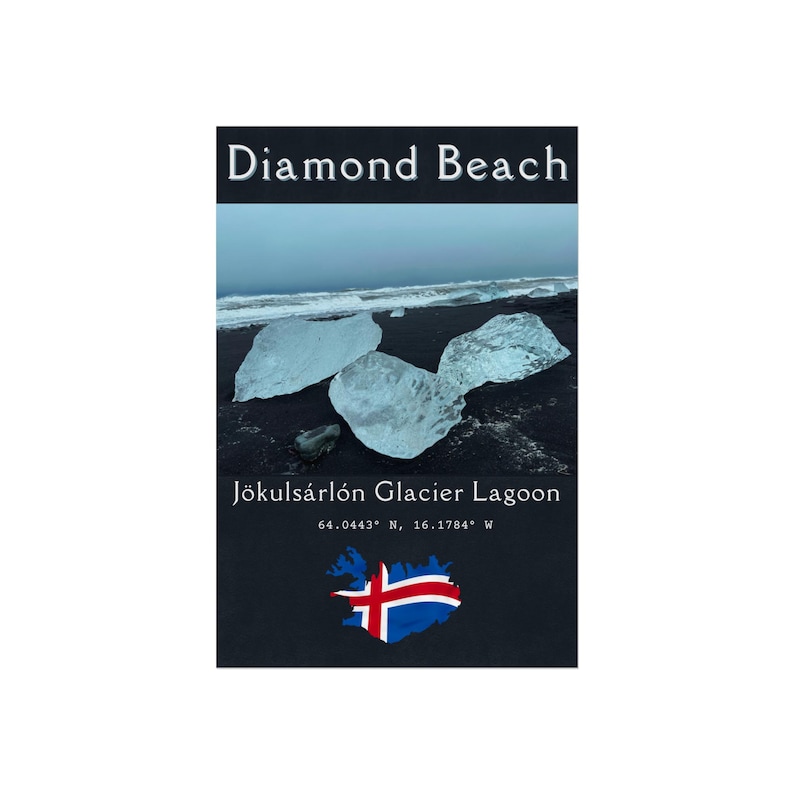
Diamond Beach Iceland Print
A Nordic-style poster of the same black sand and glacier ice we walked on — the way the beach feels on a gray morning when the surf is dragging an iceberg back out to sea.
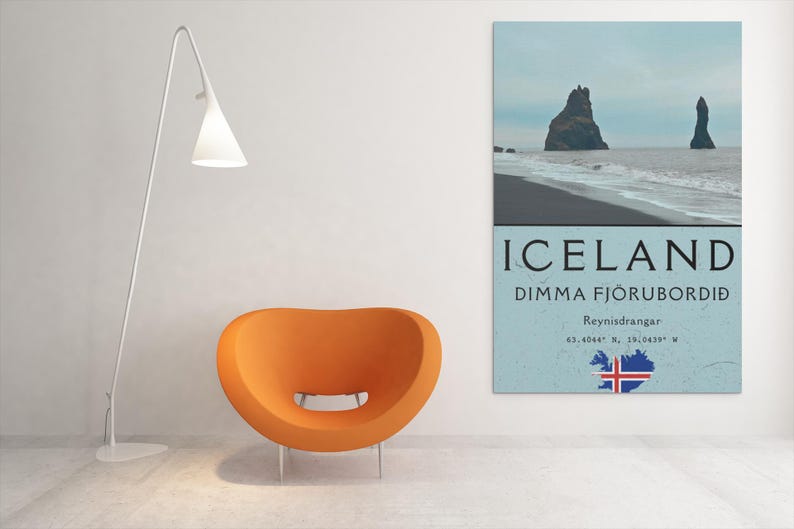
Jökulsárlón Glacier Lagoon Travel Poster
The lagoon that didn’t exist a century ago. Nordic coastal wall art for the body of water younger than your grandparents.
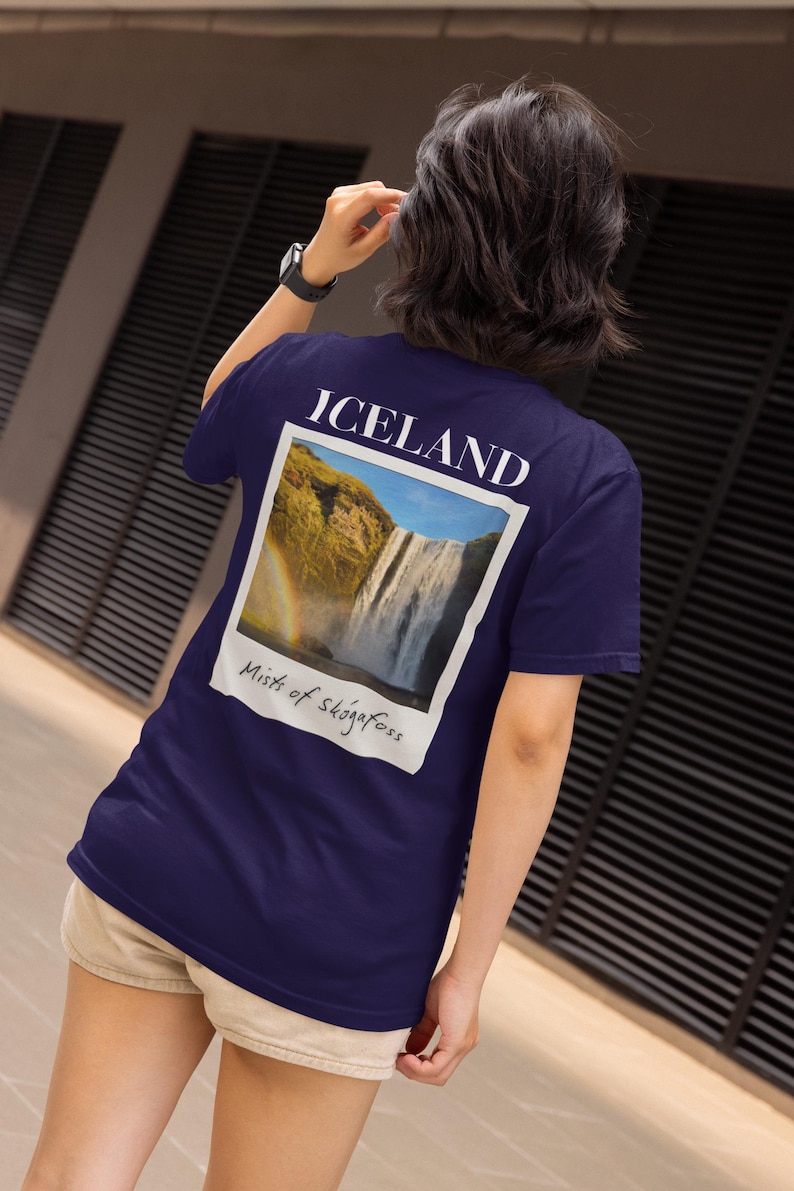
Skógafoss Iceland Waterfall T-Shirt
A polaroid of the waterfall that nearly knocked us sideways with its mist — printed on a soft tee. Wear the trip.
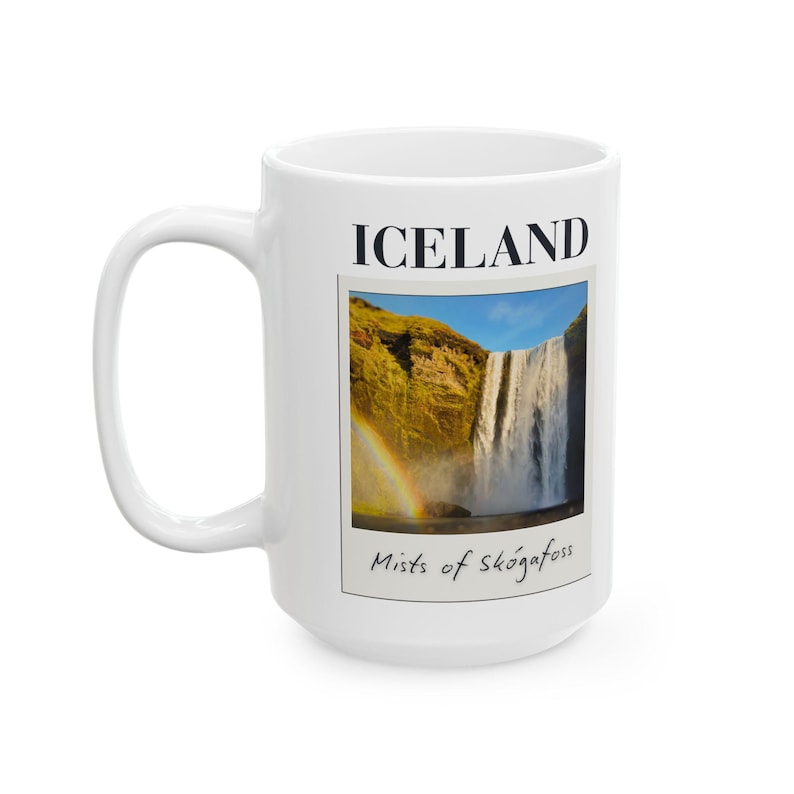
Skógafoss Iceland Coffee Mug
Your morning coffee, plus the waterfall that nearly knocked us sideways with its mist. The trip on a mug.
If you liked this one…
If Iceland pulled you in, the rest of our Iceland coverage will probably scratch the same itch. The Diamond Beach deep-dive covers the geological story behind the south coast’s most famous beach, and our Driving in Iceland guide walks through F-roads, weather, fuel logistics, and the small operational stuff that makes the difference between a great trip and a stranded one.
If you’re plotting your next trip somewhere completely different, our Venice Travel Guide covers what to actually see, eat, and do in the lagoon city. Closer to home, our St. Augustine Travel Guide is a good one for anyone who wants old forts, sea breezes, and the oldest continuously occupied European-founded city in the U.S.
More from the shopBrowse the full travel wall art collection — canvas prints and posters of Iceland’s south coast, Paris and Eilean Donan.

Ben & Nicole Mathews
We’re based in St. Augustine, Florida, sharing the places we’ve actually been — from our home turf to corners of the U.S. and abroad. Ben is an attorney and a retired Air Force JAG (22 years), and a private pilot, which is why aviation and military history shows up here too.