

Rainbow houses, handmade lace, a leaning bell tower, and the quietest lunch in the lagoon — here’s everything you need to decide if visiting Burano is worth the boat ride from Venice, and how to do it right.
You’ve seen the photos: a fishing village where every house is painted a different candy color, mirrored in a still green canal. That’s Burano, out at the northern edge of the Venetian lagoon, about 45 minutes from Venice by water — and the question everyone asks before visiting Burano is the honest one: is it actually worth half a day, or is it just a pretty Instagram stop?
We took the vaporetto out expecting a quick photo walk and ended up staying for hours. Here’s what Burano is really like, how to get there, the history behind the colors and the lace, where to eat, and whether it earns a place on your Venice itinerary.

How to Get to Burano from Venice
Visiting Burano means a short boat trip: it sits at the far northern edge of the lagoon, reachable only by water. Take vaporetto Line 12 from the Fondamente Nove stop on the north side of Venice; the ride is about 40–45 minutes and glides right past Murano and the cemetery island of San Michele. Boats run roughly every 30 minutes, more often in peak season. Your regular multi-day vaporetto pass covers it — no special ticket needed — or a single fare is about €9.50.
If you’re already on Murano, you don’t have to backtrack to Venice: catch Line 12 from the Murano “Faro” (lighthouse) stop and you’ll be in Burano in roughly half an hour. That’s exactly why most people pair the two islands in one day.
Insider Tip: Go first thing in the morning. The midday boats unload the day-trip crowds, and Burano is small enough that a hundred extra people change the whole feel of it. Early light is also far kinder for photos, and you’ll get the reflective canals almost to yourself.
Why Are the Houses in Burano So Colorful?
The postcard question — and the answer is better than you’d think. The local story goes that Burano’s fishermen painted their homes in bold, distinct colors so they could pick out their own house through the thick lagoon fog as they rowed home. A lighthouse you could live in. Others say the colors simply marked one family’s property line from the next. Whether it’s practical history or folklore passed down, the tradition stuck, and today it’s the soul of the island.

Did You Know? Those colors aren’t a free-for-all. To repaint your house on Burano today, you send a request to the local government, which responds by telling you exactly which colors you’re permitted to use for your specific plot. The rainbow is officially regulated — which is why no two neighbors clash and the whole island looks composed.
The result is a village that looks hand-tinted — deep reds beside cobalt blues beside buttery yellows, each one sharp against the water. Bring a camera, but also just stand still for a minute; photos don’t quite catch how saturated it is in person. And seek out Casa di Bepi, the island’s most famous house, covered in bold geometric patterns by a former resident who once ran Burano’s open-air cinema.
Burano’s Other Claim to Fame: Lace
Long before the colors made it famous, Burano was known across Europe for lace. While the men fished the lagoon, the island’s women hand-stitched impossibly fine needlepoint lace — punto in aria, “stitches in the air” — that ended up trimming the collars and altars of royalty. It’s painstaking work: a single piece could take months, traditionally passed between several women who each specialized in just one stitch.
Did You Know? Legend has it that Burano lace was so prized that Leonardo da Vinci visited to buy a piece for the main altar of the Duomo in Milan. True or not, by the 1600s Burano lace was a status symbol in courts across Europe — and when the craft nearly died out, a lace-making school opened on the island in 1872 to keep it alive.
You can still see it at the small Museo del Merletto (Lace Museum), housed in that historic lace school, where elderly Buranelle sometimes demonstrate the craft. Fair warning: real handmade Burano lace costs a small fortune — and most of the cheap “lace” in the souvenir shops is machine-made imports. If you want the genuine article, buy from a reputable shop, ask whether it’s handmade on the island, and expect to pay for the hours it took.
The Best Things to Do When Visiting Burano
Visiting Burano rewards wandering more than checklist-ticking, but a handful of things are worth seeking out:
- Walk the back canals. The main street (Via Baldassarre Galuppi) and the central square get busy; the quiet residential lanes one street over are where the color really sings and the crowds thin out.
- Find the leaning bell tower. The campanile of the San Martino church tilts visibly — Burano’s own little answer to Pisa — thanks to the soft lagoon ground beneath it.
- See Casa di Bepi. The island’s most photographed house, a riot of painted geometric shapes, tucked just off the main square.
- Cross to Mazzorbo. A wooden footbridge links Burano to its sleepy green neighbor Mazzorbo, home to the walled Venissa vineyard, where a nearly-extinct native grape is grown behind old convent walls.
- Visit the Lace Museum. Small but genuinely interesting, and the best place to understand what you’re looking at in the shop windows.

Where and What to Eat on Burano
Burano makes a wonderful lunch stop, and its food is genuinely local rather than tourist-trap. Two things to try:
- Risotto di gò — a creamy risotto made from the gò, a small goby fish caught in the lagoon. It’s the island’s signature dish and hard to find on mainland Venice menus.
- Bussolà buranello — buttery, ring- and S-shaped shortbread cookies originally baked dense so fishermen could carry them to sea. Grab a bag warm from a bakery for the boat ride back.
Sit-down seafood on Burano tends to be fresher and a touch cheaper than the equivalent near San Marco, and the canal-side tables are lovely. Just know that most restaurants cater to the lunch crowd and wind down by late afternoon.
Burano vs. Murano: Which Island Is Worth It?
If you only have time for one, here’s the honest split. Murano is for the glassblowing — watching artisans turn molten glass into art — and it’s closer to Venice, about ten minutes out. Burano is for the color, the lace, the food, and the slower, more village-like feel, but it’s farther, around 45 minutes. Our take? If you can swing it, do both in one day; they sit on the same vaporetto line and make a satisfying pair. If you truly have to choose, pick Murano for the craft and the shorter trip, Burano for the scenery and the calm.

We wrote up the glass factory experience in our OMG Murano Glass Factory post, and how to string the islands together in our Venice lagoon-islands day trip guide.
How Much Time Do You Need in Burano?
Two to three hours is the sweet spot — enough to walk the whole island, wander the back canals, see the Lace Museum, have lunch, and still catch your breath. Burano is small; you can loop it in under an hour if you’re rushing, but the whole point is not to rush. Pair it with a Murano stop and you’ve got a full, satisfying day in the lagoon without ever feeling hurried.
So, Is Burano Worth Visiting?
Yes — with one caveat. If you’re squeezing a single day into Venice and can’t spare the round-trip boat time, Burano can wait for a return trip. But if you have two days or more, it’s one of the most genuinely charming half-days in the lagoon, and a completely different mood from the grandeur of central Venice. It’s not a manufactured attraction; it’s a real working village that happens to be spectacularly pretty, with a craft tradition you can’t see anywhere else. We’d go back in a heartbeat.

Burano FAQ
Is Burano worth visiting?
Yes — visiting Burano is worth it if you have time for the round-trip boat ride. It’s a real, colorful fishing village with a lace-making heritage, good local food, and a much calmer feel than central Venice — a lovely half-day, especially paired with Murano.
How do you get to Burano from Venice?
Take vaporetto Line 12 from the Fondamente Nove stop; it’s about a 40–45 minute ride, and your standard vaporetto pass covers it. From Murano, catch Line 12 from the Faro stop for a shorter, roughly 30-minute hop.
How long do you need in Burano?
Two to three hours is ideal — enough to walk the island, explore the quiet back canals, see the Lace Museum, and have lunch without rushing. Many visitors pair it with Murano for a full lagoon day.
Why are Burano’s houses painted different colors?
Local tradition says fishermen painted their homes in bright, distinct colors so they could spot them through the lagoon fog. Today the colors are officially regulated — you must get permission for your assigned shade before repainting.
Can you visit Murano and Burano in one day?
Yes. They sit on the same vaporetto line (Line 12), so many visitors do both in a single day — glassblowing on Murano, then color, lace, and lunch on Burano.
Is Burano lace real?
Genuine handmade Burano needlepoint lace still exists but is rare and expensive. Most inexpensive “lace” in souvenir shops is machine-made. For the real thing, visit the Lace Museum or buy from a reputable shop and ask if it’s handmade on the island.
What food is Burano known for?
Risotto di gò, a creamy risotto made from a small lagoon goby fish, and bussolà buranello, buttery ring- and S-shaped butter cookies. Both are island specialties you won’t easily find in central Venice.
Nic’s Pick: The Bakery I Didn’t Expect to Love
I’ll admit I came to Burano purely for the photos — I wanted the rainbow-street shot like everyone else. What I didn’t expect was the little bakery smell that stopped me mid-stroll. We ducked in for bussolà, those buttery S-shaped cookies, still slightly warm, and I ended up buying two bags “for the boat.” One did not make it to the boat. Sitting on a quiet canal step with a cookie and all that color around us was the most peaceful half hour of our whole Venice trip.
Keep Exploring Venice
Planning the rest of your lagoon adventure? Start here:
- Venice Travel Guide: What to See, Eat & Do — our full first-timer’s guide.
- 2 Days in Venice: A First-Timer’s Itinerary — how Burano fits into a perfect 48 hours.
- Murano & Burano Day Trip — the best way to see both islands in a day.
- OMG Murano Glass Factory — Burano’s glassmaking neighbor.
- Getting Around Venice — vaporetto lines, passes, and tips.
Have you made the trip out to Burano? Tell us your favorite colorful corner in the comments.
Wear the trip. Take Venice home with our new Venice tee — plus a Tuscan companion for the rest of your Italy dreams. Printed on demand in the USA, free shipping, and 25% off right now:
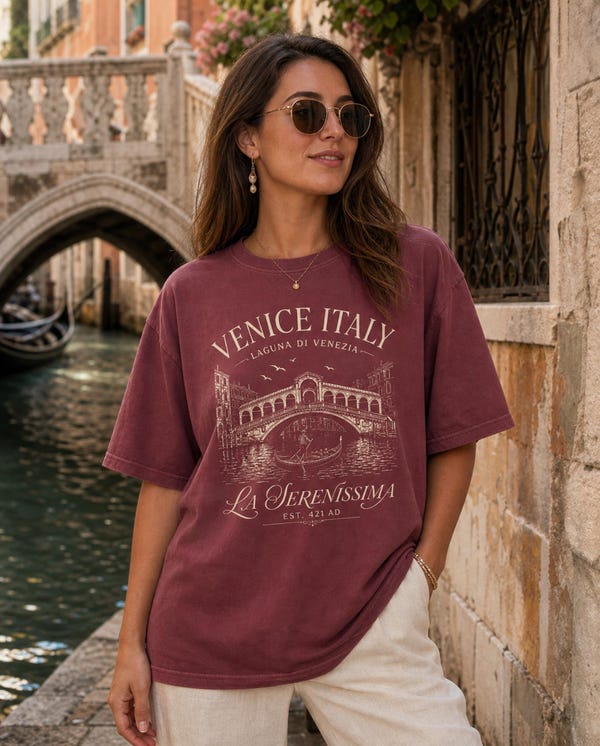

More from the shopBrowse the full travel collection — St. Augustine, Paris, Iceland, Venice and Tuscany on shirts, ceramic mugs and canvas totes, all original designs.

Ben & Nicole Mathews
We’re based in St. Augustine, Florida, sharing the places we’ve actually been — from our home turf to corners of the U.S. and abroad. Ben is an attorney and a retired Air Force JAG (22 years), and a private pilot, which is why aviation and military history shows up here too.