

We checked the forecast every night. We downloaded the aurora app. We drove away from city lights, pulled over on the Ring Road more times than I can count, and stood in the dark with our faces tilted up at clouds. We went to bed at two in the morning multiple nights in a row. And we did not see the northern lights.
October in Iceland, ten days, diligent effort — and nothing. The skies never fully cooperated. The clouds kept rolling in. The solar activity was present; the visibility was not. We came home without the photo. And that experience, as genuinely frustrating as it was, taught us more about how the northern lights actually work than any successful sighting probably would have. Here is everything we learned — including what we would do differently next time.

What the Northern Lights Actually Are
The northern lights — aurora borealis — are not weather. That was the first mental adjustment that helped us understand why they are so difficult to chase. They are a natural light display in Earth’s upper atmosphere caused by charged particles from the Sun colliding with oxygen and nitrogen atoms. When those particles rain down into the atmosphere, the collisions excite the gas molecules, which then release energy as light. Oxygen at higher altitudes produces red auroras; oxygen at lower altitudes produces the iconic green. Nitrogen produces blue and purple. What you are actually watching is the atmosphere glowing.
The charged particles come primarily from coronal mass ejections — explosive releases of plasma and magnetic field from the Sun — and from the steady stream of solar wind flowing outward from coronal holes. When the solar wind hits Earth’s magnetic field, it distorts it, funneling particles along the magnetic field lines toward the poles. Iceland sits at roughly 65 degrees north, squarely inside what scientists call the auroral oval — the ring-shaped zone around each magnetic pole where auroral activity is concentrated. On any given night in Iceland with minimal cloud cover and sufficient solar activity, you can theoretically see the northern lights. The two conditions almost never cooperate simultaneously.

The Three Things You Actually Need
After our October trip and a lot of post-trip research, the formula for seeing the northern lights comes down to three independent variables — and the brutal part is that all three have to align simultaneously. Fail any one of them and you see nothing.
Solar activity. The aurora runs on an 11-year solar cycle. At solar maximum, the Sun is throwing off coronal mass ejections frequently, and aurora activity intensifies dramatically. At solar minimum, quiet nights can go weeks without significant activity. Scientists measure geomagnetic activity with a scale called the KP index (0–9). In Iceland, you typically need a KP of 3 or higher to see the aurora; at KP 5 and above, the displays become dramatic enough to be visible even in areas with some light pollution. The Icelandic Meteorological Office publishes daily aurora forecasts that show both the predicted KP index and the cloud cover forecast — checking both at the same time is essential.
Darkness. You need at least 2–3 hours of genuine darkness — not just after sunset, but after astronomical twilight, when the sky reaches full darkness. In Iceland, this rules out late May through mid-July entirely; the midnight sun makes aurora hunting impossible during those months. The optimal season runs from September through March. October, when we visited, is solidly in season — we had 8–10 hours of darkness per night. That part worked. The other parts did not.
Clear skies. This is the one that defeated us. Iceland’s weather is famously unstable and cloud cover changes fast. A clear forecast at dinner can become full overcast by midnight. We learned to check cloud cover satellite maps rather than just weather apps — the actual cloud layer maps from vedur.is (the Icelandic Met Office) give real-time satellite imagery showing where the clear pockets are. On one night, we drove 80 kilometers east on the Ring Road trying to get ahead of a cloud system that was moving faster than we were.

October in Iceland: The Honest Odds
October is actually one of the better months to try. The nights are long enough — by mid-October you have roughly 12 hours of darkness — without the brutal cold and icy road conditions of November through February. The shoulder season crowds are smaller, the landscape has shifted into its copper and gold autumn tones, and the combination of dark skies and dramatic scenery makes even a failed aurora hunt a worthwhile night out. Our ice cave tour happened in October. Our drives along the Ring Road under gray skies happened in October. Iceland delivers even without the lights.
That said, the statistics are humbling. Even in peak aurora season with good solar activity, cloud cover in Iceland averages 70–80% of nights on the south coast. The north and east of Iceland — around Mývatn, Akureyri, and the East Fjords — tend to have more stable weather and clearer skies than the Reykjavík area and south coast, where we spent most of our time. If northern lights are your primary goal, positioning yourself in the north gives you meaningfully better odds. Our Ring Road itinerary kept us on the south coast for most of the trip, which in retrospect was the wrong choice for aurora hunting even if it was the right choice for everything else.

Where to Watch From
Light pollution is rarely the limiting factor in Iceland outside of Reykjavík itself. Within 20 minutes of the capital in any direction, you are in dark enough terrain that a strong aurora would be visible. The challenge is finding locations that combine dark skies with the cloud-free windows, accessible parking, and a view of the northern horizon. A few spots that came up repeatedly in our research and from locals:
Þingvellir National Park is an excellent choice — dark, vast, with the flat rift valley giving you a wide northern horizon and minimal light pollution. The fault canyons and lake make for dramatic foreground if you are shooting photography. It’s 45 minutes from Reykjavík and regularly included in guided northern lights tours. We were here for the Golden Circle by day; at night it would be spectacular.

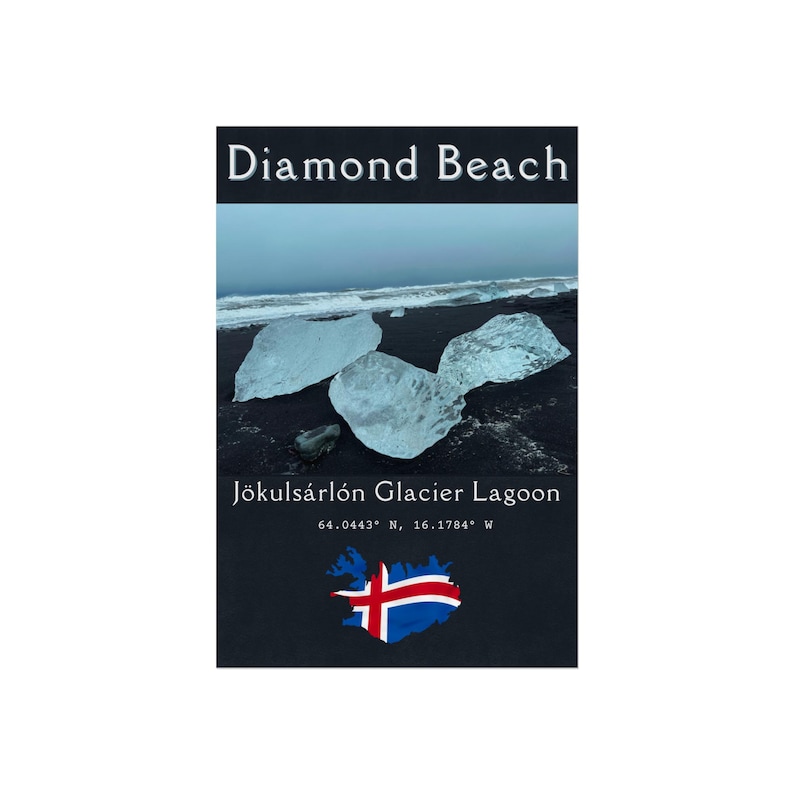
The Glacier Lagoon (Jökulsárlón) is widely considered one of the most spectacular aurora backdrops in Iceland — the floating glacier ice reflects the green light, creating a surreal mirror effect. It’s a long drive from Reykjavík (about 4.5 hours on the Ring Road), but tour operators run overnight aurora excursions there specifically because of how photogenic the combination is. If you have a car and flexibility, arriving in the late afternoon, watching the sunset on the lagoon, and staying for a night aurora attempt is one of the quintessential Iceland experiences.

Lake Mývatn in the north is the spot most Icelanders recommend for consistent aurora sightings. The north of Iceland sits at slightly higher latitude than the south coast, gets less of the South Atlantic weather systems, and has historically better clear-sky statistics. It’s also surrounded by geothermal pools, craters, and lava formations that make extraordinary foreground in aurora photos. The Mývatn area would have been a better base camp for us if northern lights had been the primary mission.

How to Actually Chase Them: What We’d Do Differently
Having spent ten days not seeing the northern lights, here is the playbook we would run on a return trip:
Stay longer than you think you need to. The single biggest thing that limits aurora sightings is a short trip window. With 5–7 nights, you might get 1–2 clear nights with decent solar activity. With 10+ nights, the odds improve dramatically. If your entire trip is built around seeing the lights, give yourself at least a week in the right season and accept that it might still not happen.
Stay mobile. The biggest mistake we made was not driving far enough, fast enough to get out from under cloud systems. Iceland’s weather moves horizontally across the island — what’s overcast in the south can be clear in the north or east on the same night. Having a car and being willing to drive 100 kilometers at midnight is not unusual for successful aurora hunters. Check the satellite cloud cover map at 10pm, identify the clear zones, and go.
Use multiple apps and cross-reference. The vedur.is cloud cover map, the Space Weather Live app for KP alerts, and a weather radar app running simultaneously. Set KP notifications for threshold 3 in Iceland. When a KP spike and a clear sky window coincide at the same location, move immediately — windows can close in an hour.
Stay up late. The aurora window in Iceland peaks between roughly 10pm and 2am local time. Going to bed at 11pm because you’re tired from a full day of hiking is how you miss it. We missed at least one potential window this way. October is exhausting — the days are physically demanding and the nights are cold — but if you’re there for the lights, you have to stay out for them.
Consider a guided tour for at least one night. Local aurora tour operators in Iceland do this every night in season. They watch the forecasts professionally, know the local weather patterns better than any app, have vehicles ready to drive at short notice, and go where the windows are. Many tours include a money-back-or-return guarantee if no aurora appears. For a night or two, this takes the logistics off your plate entirely.


What We Did Instead (And It Was Still Worth It)
Here is the part of this story that matters: we had an extraordinary trip anyway. The glacier ice cave was unlike anything either of us had experienced. Reynisfjara’s black sand beach in October — empty, cold, dramatic — was one of the best mornings of the entire trip. We stood at Gullfoss in a horizontal mist that soaked through every layer we had and felt absolutely present in a way that good weather tourism never quite achieves. Iceland’s currency is not sunshine. It is raw, atmospheric, geologically violent landscape — and that landscape delivers regardless of what the night sky does.
What the northern lights would have added is a specific, singular experience of light and sky that is hard to replicate anywhere else on earth. That is worth going back for. The trip was not diminished by not seeing them. It was, if anything, given a reason to return.

Why the Northern Lights Hit Different in Iceland
Most places where people go to see the northern lights — northern Norway, Finnish Lapland, northern Canada — have the lights as the destination. Iceland is different because the country competes with them. The glacier lagoon, the volcanoes, the waterfalls, the geothermal fields — any one of those would anchor a trip. The northern lights are a bonus that Iceland dangles in front of you every night in season, sometimes delivering, sometimes not, always making you stay up past midnight just to check.
That combination is what makes Iceland uniquely frustrating and uniquely compelling for aurora hunting. You are not just sitting in a field hoping for lights. You are in one of the most visually extraordinary countries on earth, with a full itinerary of things to do by day, and the possibility of something genuinely transcendent by night. We missed the transcendent. We’re already talking about going back.
Northern Lights Iceland FAQ
What months are best to see the northern lights in Iceland?
September through March gives you the longest dark windows. October and February are particularly good — long nights, reasonable temperatures (for Iceland), and statistically better clear-sky chances than deep winter. Late September and early October also catch the tail end of the equinox, when geomagnetic activity tends to spike, boosting aurora probability. Avoid June and July entirely — the midnight sun makes aurora hunting impossible.
Can you see the northern lights in October in Iceland?
Yes — October is solidly in season. Nights are 10–12 hours long by mid-October, which gives plenty of dark window. The limiting factor in October is weather: the south coast in particular can be heavily overcast. The north and interior of Iceland tend to have clearer skies. We tried hard in October and didn’t see them — but many visitors do. The odds improve significantly if you are willing to drive to find clear sky rather than waiting for it to arrive.
How do you know if the northern lights will appear?
Check two things simultaneously: the KP index forecast (vedur.is or Space Weather Live app) and the cloud cover satellite map (also vedur.is). You need KP 3+ and clear sky at the same location and time. Set push notifications on your aurora app for KP 3 threshold so you get alerted even if you are asleep. The Icelandic Met Office publishes a daily aurora forecast that combines both variables and tells you where and when conditions are best.
Where are the best spots to see the northern lights in Iceland?
Þingvellir National Park (45 min from Reykjavík), Jökulsárlón Glacier Lagoon (4.5 hours east), and the Lake Mývatn area (north Iceland) are the most consistently recommended. The key factor is not the specific location but finding clear sky — use cloud cover maps to identify where the clear windows are on any given night, then drive there. The north of Iceland (Akureyri, Mývatn, East Fjords) tends to have more stable weather than the south coast.
Is it worth booking a northern lights tour?
Yes, at least for one night. Guided tour operators watch the forecasts professionally and move quickly when conditions align. Many offer a money-back or return-trip guarantee if no lights appear. For self-drivers, a tour takes the forecasting and location decisions off your plate — you just show up and go where they go. It is especially useful on the first night in country before you have learned the local weather patterns.
What should you do in Iceland if you don’t see the northern lights?
Everything else. The glacier ice cave, the black sand beach, the waterfalls, the Golden Circle, the horses — Iceland delivers an extraordinary trip even when the sky doesn’t cooperate. The northern lights are the bonus, not the whole story.
The Bottom Line
We went to Iceland in October with northern lights high on the list. We checked forecasts, drove into the dark, stayed up late, and came home without the photo. And we would go back tomorrow. Iceland with overcast skies and no aurora is still Iceland — which means volcanic terrain, Atlantic weather, and a landscape so geologically dramatic it makes most places on earth feel politely tame by comparison.
The northern lights require patience, flexibility, and luck in a specific combination. Give yourself time, stay mobile, use the right tools, and accept that you might miss them. If you see them — especially over a glacier lagoon or a lava plain with a volcano in the background — it will be one of the great things you have ever witnessed. If you don’t, Iceland gave you plenty anyway.
Read next: Iceland Glacier Ice Cave: What It’s Actually Like to Stand Inside a 10,000-Year-Old Glacier
Keep Reading: More Iceland

ICELAND
The Golden Circle: Gullfoss, Geysir & Þingvellir
Iceland’s best one-day drive — geysers, a 1,000-year-old parliament, and Europe’s most powerful waterfall.

ICELAND
Iceland Glacier Ice Cave: Inside Vatnajökull
Standing inside a 1,000-year-old glacier with Troll Tours — even in hurricane winds, worth every step.

ICELAND
Diamond Beach: Why the Ice Is Ancient and the Lagoon Is Young
The glacier lagoon where the best aurora photos in Iceland are taken — and why the ice ends up on the beach.
More Iceland from BenThere Travel
Planning your Iceland trip? These posts cover the rest of the Ring Road and the highlights we remember most:
- Iceland Ring Road: A 10-Day Adventure Guide From a Couple Who Actually Drove It
- The Golden Circle, Iceland: Geysers, a 1,000-Year-Old Parliament, and Europe’s Most Powerful Waterfall
- Reynisfjara Black Sand Beach: Iceland’s Most Dangerous Beach
- Skógafoss: The Waterfall, the Viking Treasure, and the 527 Steps Most Visitors Skip
- Iceland Glacier Ice Cave: What It’s Actually Like to Stand Inside a 10,000-Year-Old Glacier
- Northern Lights in Iceland: What We Learned From Searching Every Night
- Iceland Travel Costs: What We Actually Spent and How to Budget Honestly
- Driving in Iceland: F-Roads, Gas Stations & Safety Tips
More from the shopBrowse the full travel wall art collection — canvas prints and posters of Iceland’s south coast, Paris and Eilean Donan.

Ben & Nicole Mathews
We’re based in St. Augustine, Florida, sharing the places we’ve actually been — from our home turf to corners of the U.S. and abroad. Ben is an attorney and a retired Air Force JAG (22 years), and a private pilot, which is why aviation and military history shows up here too.