

It couldn’t dogfight. It could barely defend itself. And it may have done more to win the Pacific than any fighter that gets the glory.
Every airplane we’ve covered so far — the Corsair, the Hellcat, the Dauntless — was built to fight. The Consolidated PBY Catalina was built to look. It was a slow, ungainly flying boat — a hull with wings bolted to a pylon overhead — that cruised at barely more than 100 miles an hour and could be shot down by almost anything it met. And on the morning of June 4, 1942, it won the most important naval battle of the war before the fighters ever left the deck.
Here’s the thing nobody tells you about the Pacific war: the hardest part wasn’t the fighting. It was finding the enemy across an ocean the size of a continent. The side that saw first, won. And more than any other airplane, the thing that saw first was the Cat.
Did You Know? “PBY” isn’t a name — it’s a code. “PB” for Patrol Bomber, “Y” for its maker, Consolidated. Everyone just called it the Cat.
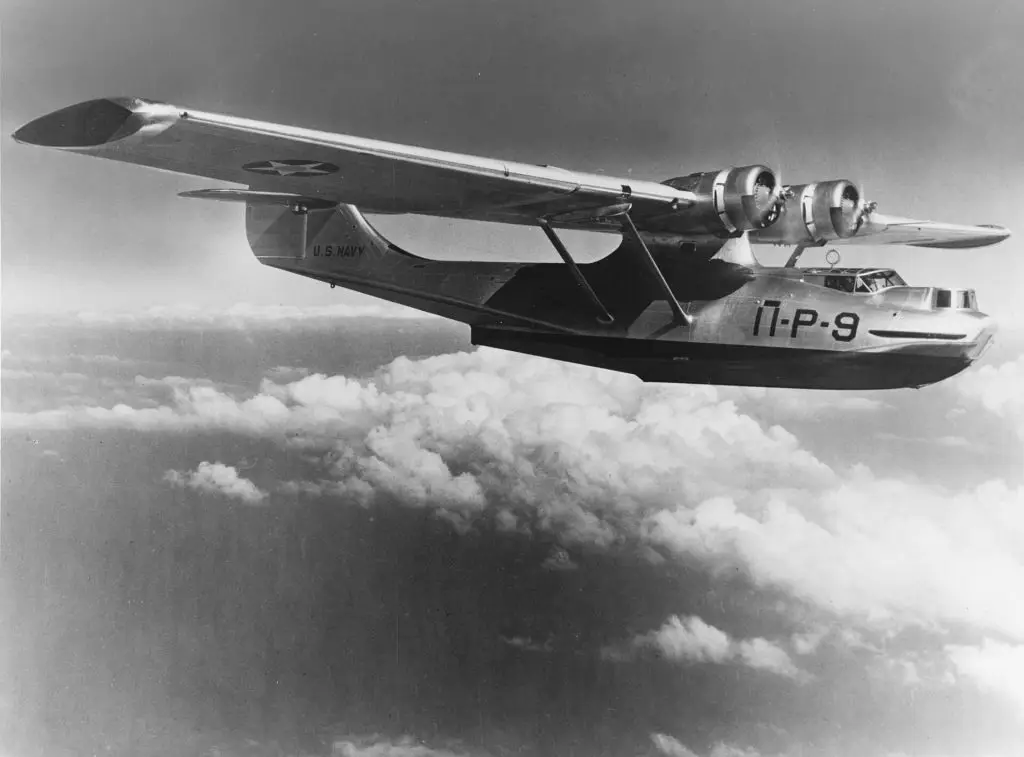
The Plane That Found the War
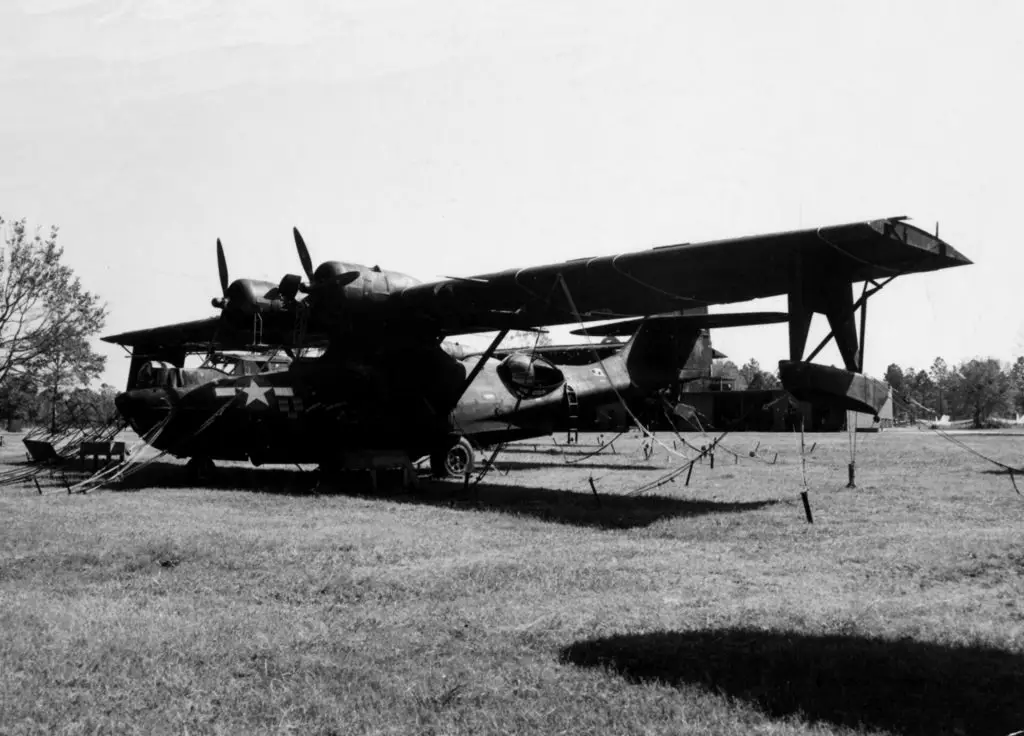
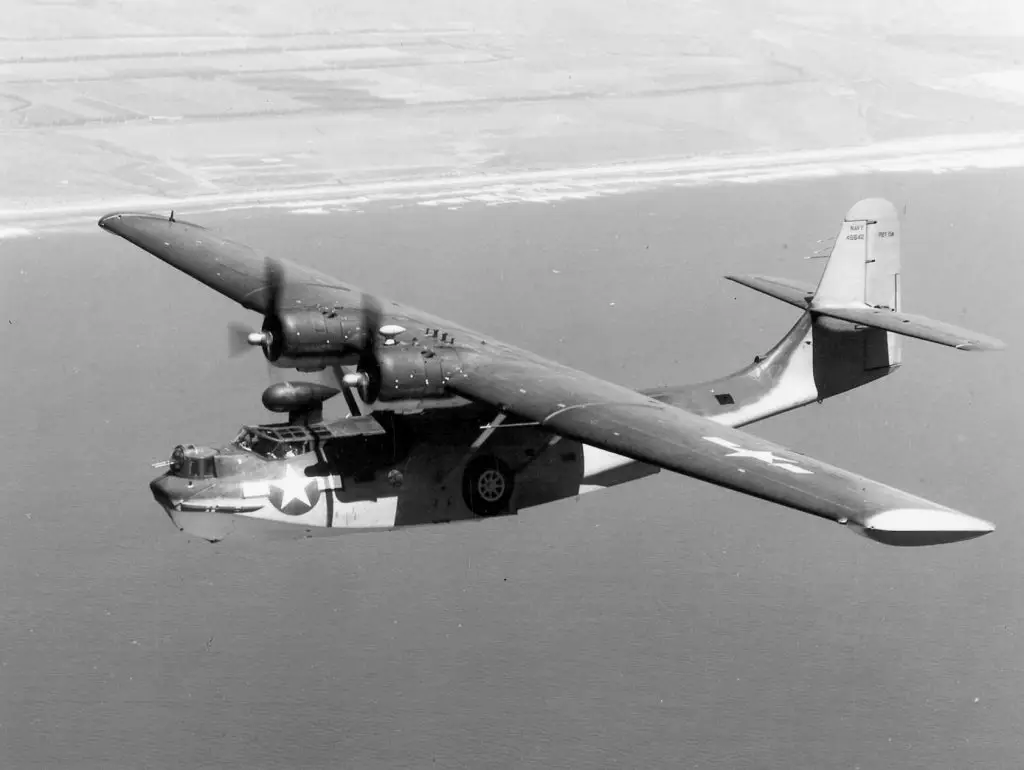
A PBY was less a warplane than a set of eyes with an enormous range. Two Pratt & Whitney radials, a 104-foot wing, and fuel for the better part of a day meant a single Catalina could sweep hundreds of miles of empty ocean and still come home. It could set down on open water to refuel from a submarine, pick up a downed pilot, or simply wait. The big teardrop blisters on each side of the hull gave the waist gunners — and the observers whose whole job was to watch the sea — a clean, wide view in every direction. It even carried early airborne radar, so it could find ships in the dark or through cloud.
What it couldn’t do was fight. Slow and lightly armed, a Catalina caught in the open by enemy fighters was usually a dead Catalina. So it worked the edges — dawn, dusk, weather, and night — where being unseen mattered more than being fast.
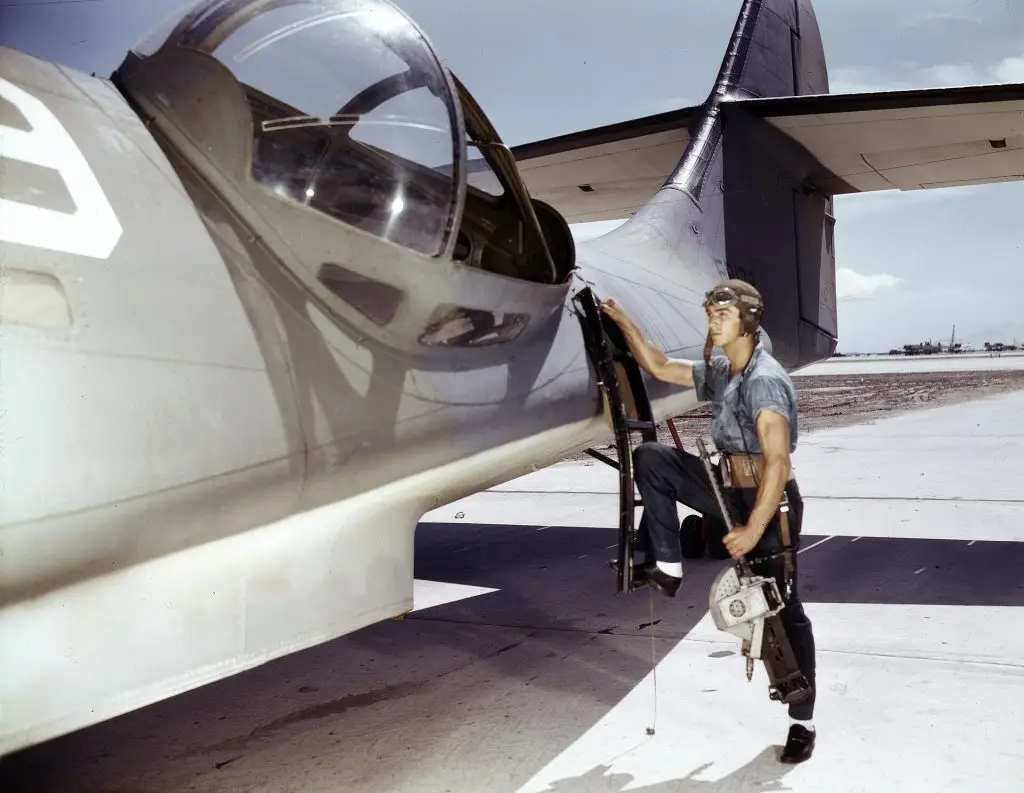
Did You Know? A Catalina could stay airborne for the better part of a day and cross well over 2,000 miles. It hunted by simply outlasting everything else in the sky.
Where the Cats Lived
So how did a flying boat get to the middle of an ocean the size of a continent? Not from a carrier — the Catalina was far too big for that, a 104-foot wing that could never fit a flight deck. It reached the remote Pacific a completely different way, and it’s one of the war’s great overlooked ideas.
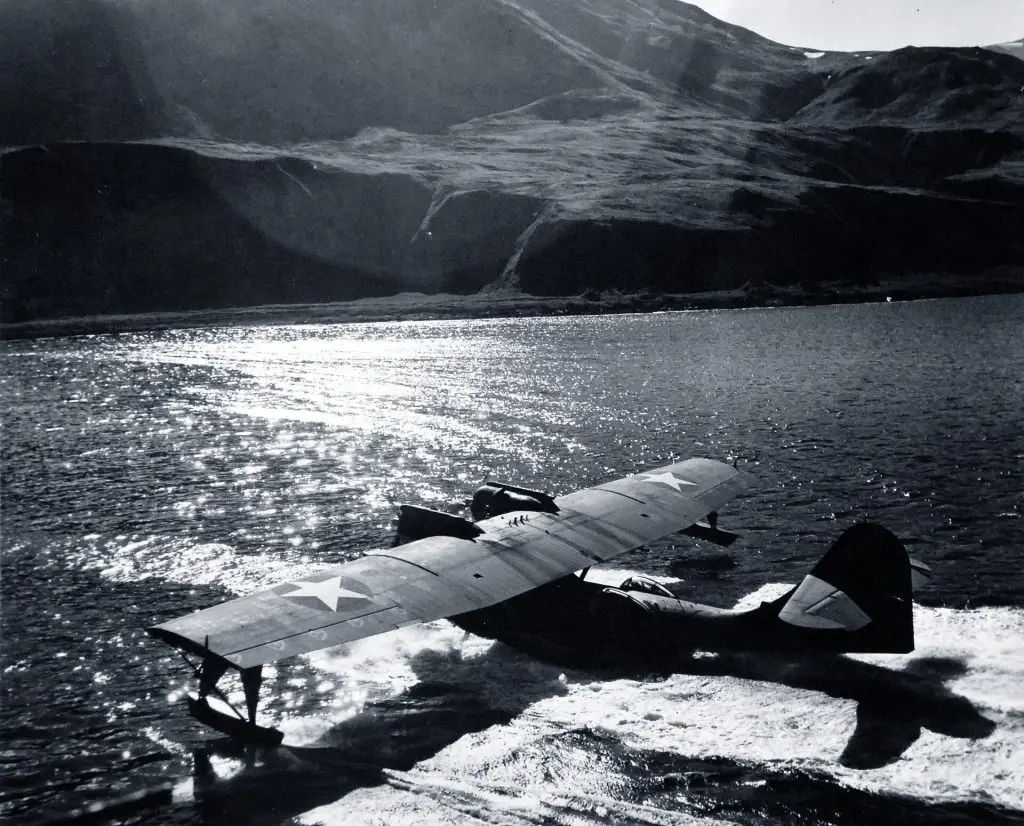
Some Cats flew from land — naval air stations like Pearl Harbor‘s Ford Island, and island strips where the amphibian PBY-5A could drop its wheels and use a runway like anything else. Others simply worked from protected water: a bay or a lagoon where a flying boat could land on the surface and tie up to a mooring buoy. But the thing that actually pushed the Catalina across the Pacific was the seaplane tender — a ship that was, in effect, a floating flying-boat base.
A tender would steam into some anonymous lagoon nobody had ever heard of, drop anchor, and become the squadron’s home: pumping fuel, hoisting bombs and torpedoes up to the planes, doing engine work with its cranes, feeding and bunking the crews, and laying out buoys for the Cats to moor to overnight. Some were big purpose-built ships like USS Curtiss and USS Tangier; others were old destroyers converted for the job. The Catalinas flew their patrols by day and came home to the tender riding at anchor.
And because the tender was a ship, the whole base was mobile. As the Marines and Army took the next island, the tender hauled up its anchor and moved the entire operation forward to the next lagoon — hundreds of miles closer to Japan — and the Cats started sweeping a fresh patch of ocean from there. That leapfrogging, plus the PBY’s own enormous range and all-day endurance, is how a slow flying boat covered a whole ocean. On the longest missions it could reach even further, because a Catalina could set down beside a submarine or a tender on the open sea and top off its tanks in the middle of nowhere — the same trick that let the “Dumbo” rescue crews reach men who went down far from any base.
Did You Know? The tender crews were solving the exact problem aerial refueling solves today — how to keep an aircraft on station far from home — just on the water instead of in the air. Draw that line forward and it ends at the modern aerial tanker, the reason a fighter or bomber can now fly a sortie that lasts a full day and night.
The Eyes at Midway
By June 1942 the U.S. knew, roughly, that a Japanese fleet was coming for Midway — but not exactly where, or when. So the Navy fanned out its Catalinas: thirty-two of them flew search patterns out of Midway, arcs of empty ocean hundreds of miles long. On June 3, one crew — a VP-44 Catalina under Ensign Jack Reid — spotted the Japanese occupation force first, the opening thread of the whole battle. That night the PBYs went back out and did something a flying boat was never meant to do: they made a torpedo attack in the dark, putting a fish into the tanker Akebono Maru — the first American aerial torpedo hit of the battle.
Then came the morning that decided it. Just before 6 a.m. on June 4, a Catalina flashed the message the American carriers had been waiting for — “Many planes heading Midway” — and minutes later another PBY, flown by Lt. Howard Ady, found the prize: the Japanese carrier striking force itself. That sighting gave Admiral Spruance the one thing he needed — a location — and he launched. A few hours later, four Japanese carriers were burning. The dive bombers dealt the blow; the Catalina told them where to aim.
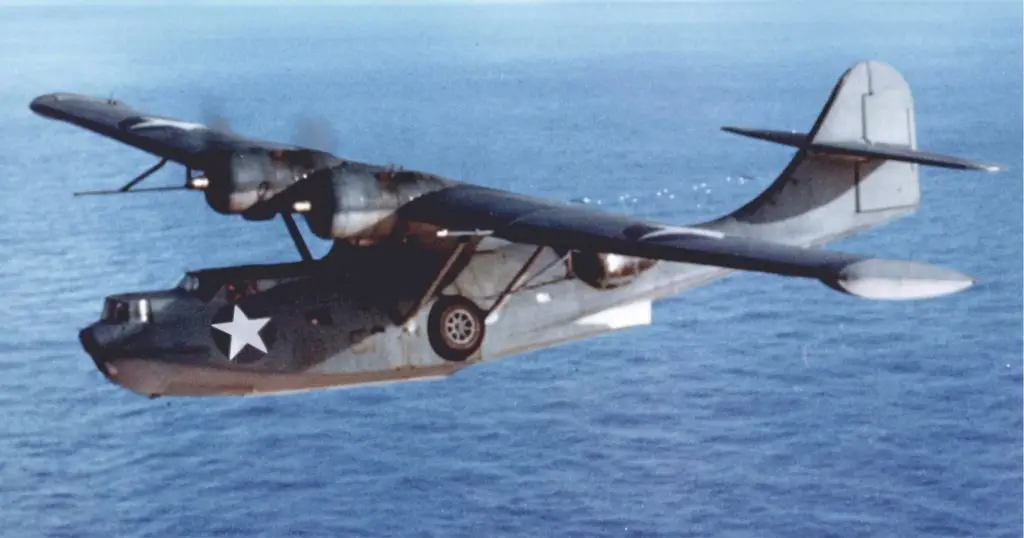
The Black Cats
Finding the enemy was the day job. After dark, the Catalina became something meaner. Starting in the Solomons in 1942, crews painted their PBYs flat black — with soap and lamp-black at first — killed their running lights, and went hunting at night. The “Black Cats” used radar to creep up on Japanese warships and supply barges, then bombed and strafed them from low altitude, night after night, steadily wearing down the enemy’s ability to move men and supplies between islands during the long grind of the island-hopping campaign. One squadron, VP-11, earned a Presidential Unit Citation for it. A blind spot the Japanese thought they owned — the dark — turned into a place where a slow flying boat could kill.
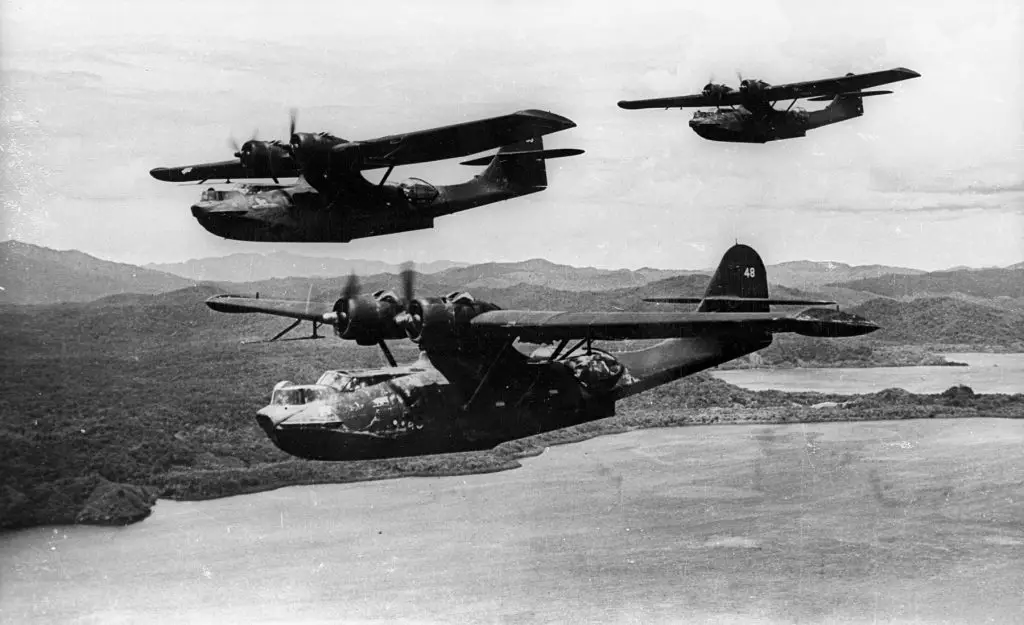
“Dumbo” — the Plane That Came Back for You
And then there was the role that made the Catalina beloved. Because a PBY could land on open water, it became the Pacific’s ambulance. Under the call sign “Dumbo,” Catalinas orbited near air strikes and naval battles, and when a plane went down, they came for the crew — setting a flying boat onto the open sea, sometimes under fire, to pull men out of the water. Thousands of airmen came home who otherwise wouldn’t have.
In February 1944, Lt. Nathan Gordon put his Catalina down on the open ocean again and again under Japanese fire off New Britain and hauled fifteen downed fliers aboard — and was awarded the Medal of Honor. And in the war’s last weeks, when the survivors of the USS Indianapolis were dying in the water, a PBY pilot landed against standing orders, took fifty-six men aboard, and — when the hull was full — lashed the rest to the wings and waited for the ships to come.
Did You Know? To save USS Indianapolis survivors in 1945, a PBY pilot landed on the open ocean against orders, packed 56 men aboard, and lashed some of them to the wings when the cabin filled up.
Everywhere Else
Midway and the Black Cats were only the headlines. Catalinas flew the freezing patrols of the Aleutians, hunted submarines in the Atlantic and Caribbean, and served with the British, Canadians, Soviets, and Australians. It was a British Catalina that relocated the German battleship Bismarck in May 1941 after she gave the Royal Navy the slip — a sighting that led straight to her sinking. By the end, more Catalinas had been built than any other flying boat in history — well over three thousand of them — because the job it did, seeing, never stopped mattering.
FAQ: The PBY Catalina
What does “PBY” stand for?
“PB” is the Navy’s code for Patrol Bomber, and “Y” was the manufacturer letter for Consolidated Aircraft, which built it. Most crews just called it the Cat.
Did PBY Catalinas fly from aircraft carriers?
No — the Catalina was a flying boat far too large for a carrier deck. It operated from land naval air stations (the amphibian PBY-5A could use runways), from protected lagoons and harbors, and above all from seaplane tenders — ships that anchored in remote lagoons and served as mobile, floating flying-boat bases, fueling and arming the Cats and leapfrogging forward as the campaign advanced.
What did the PBY Catalina do at the Battle of Midway?
Catalinas flew the long search patterns that located the Japanese fleet. A VP-44 crew spotted the invasion force on June 3, PBYs made a night torpedo attack that damaged a tanker, and on the morning of June 4 a Catalina radioed the sighting of the Japanese carriers — the report that let the U.S. launch the strike that sank four of them.
What were the “Black Cats”?
PBY squadrons that painted their aircraft flat black and worked at night, using radar to attack Japanese ships and barges after dark — especially in the Solomons during the island-hopping campaign.
How was the Catalina used for rescue?
Because it could land on open water, the PBY served as an air-sea rescue plane under the call sign “Dumbo,” pulling thousands of downed airmen from the sea — including, famously, survivors of the USS Indianapolis.
How fast was the PBY, and how far could it fly?
Slow — it cruised around 110 mph and stayed well under 200 flat out — but it was extraordinarily long-legged, with a range of well over 2,000 miles and the endurance to patrol for most of a day.
How many were built?
More than 3,300 — more than any other flying boat in history.
From the Shop: Our Own Black Cat
Speaking of black cats — our hand-drawn Lucky 13 design is WWII nose art of exactly the kind that rode into battle on Pacific warbirds, and it lands on more than a tee. Free shipping from our little studio in St. Augustine.



The Bottom Line
The Catalina never looked the part. It was slow, homely, and hopeless in a fight — the opposite of the sleek fighters that fill the highlight reels. But the Pacific war was decided as much by who saw first and who could reach farthest as by who was quickest in a turn, and at both of those the Cat was untouchable. It found the fleet at Midway, owned the dark as the Black Cats, and came back for the men in the water when nothing else could. Not bad for a boat with wings.
Keep Reading
- SBD Dauntless: the dive bomber that broke the Japanese fleet at Midway
- F4U Corsair: why they called the bent-wing bird “Whistling Death”
- F6F Hellcat: the Zero-killer that wasn’t copied from the Zero
- F-14 Tomcat: how the Navy’s swing-wing legend really worked
- P-51 Mustang: the 117-day dare that won the war in the air
More from the shopBrowse the full WWII aviation & nose art collection — tees, prints, glassware and gifts, all original designs.

Ben & Nicole Mathews
We’re based in St. Augustine, Florida, sharing the places we’ve actually been — from our home turf to corners of the U.S. and abroad. Ben is an attorney and a retired Air Force JAG (22 years), and a private pilot, which is why aviation and military history shows up here too.