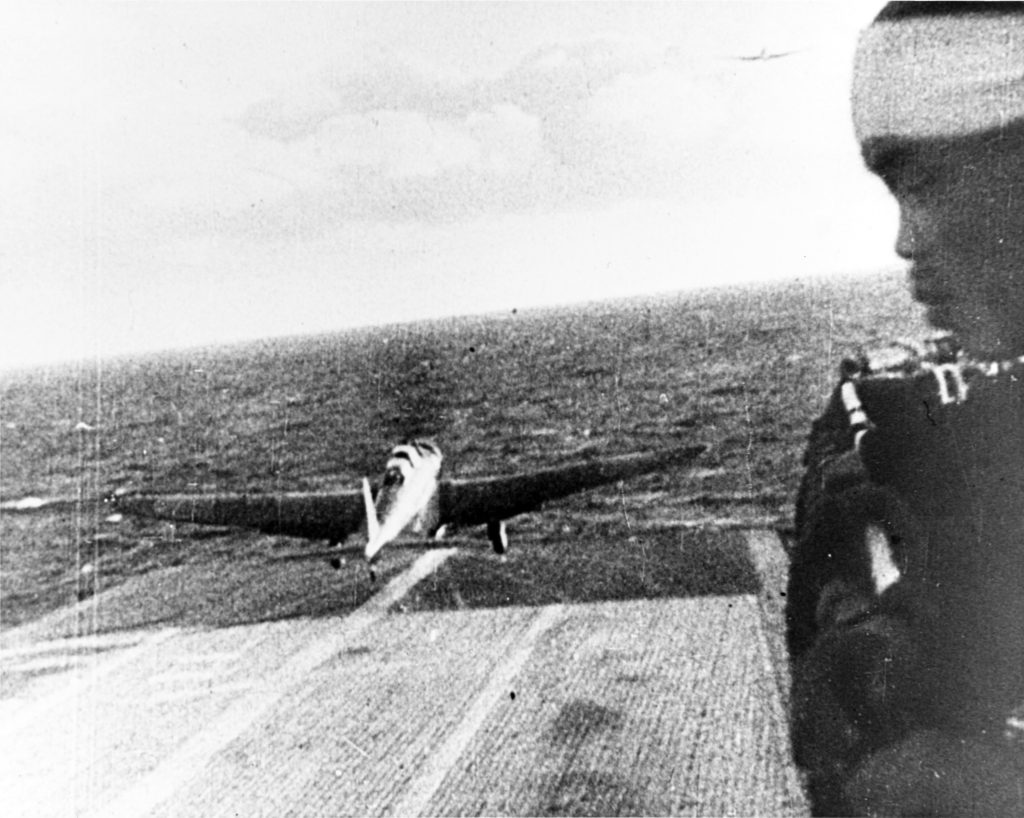

Three Japanese aircraft types did nearly all the damage on December 7, 1941. A handful of American fighter pilots got into the air against them anyway. And the warning that might have changed the morning came in by telephone to the post where I would be stationed fifty-three years later.
From 1994 to 1997 I was stationed at Fort Shafter, on Oahu, with the 25th Infantry Division. Fort Shafter is where the warning came in.
A little after 7 a.m. on Sunday, December 7, 1941, two Army privates named Joseph Lockard and George Elliott were running a mobile radar set at Opana, on Oahu’s northern tip. The set was new, the station was new, and the blip on their screen was the biggest either of them had ever seen: a mass of aircraft about 137 miles (220 km) north and closing. Elliott wanted to report it. At about 7:20 he got through to the Aircraft Information Center at Fort Shafter.
The officer on duty was a young fighter pilot named Kermit Tyler. It was only his second shift there. He had no radar training, only a switchboard operator for company by then, and a piece of information nobody else in the room had: a flight of B-17 bombers was due in from California that morning. He told them not to worry about it.
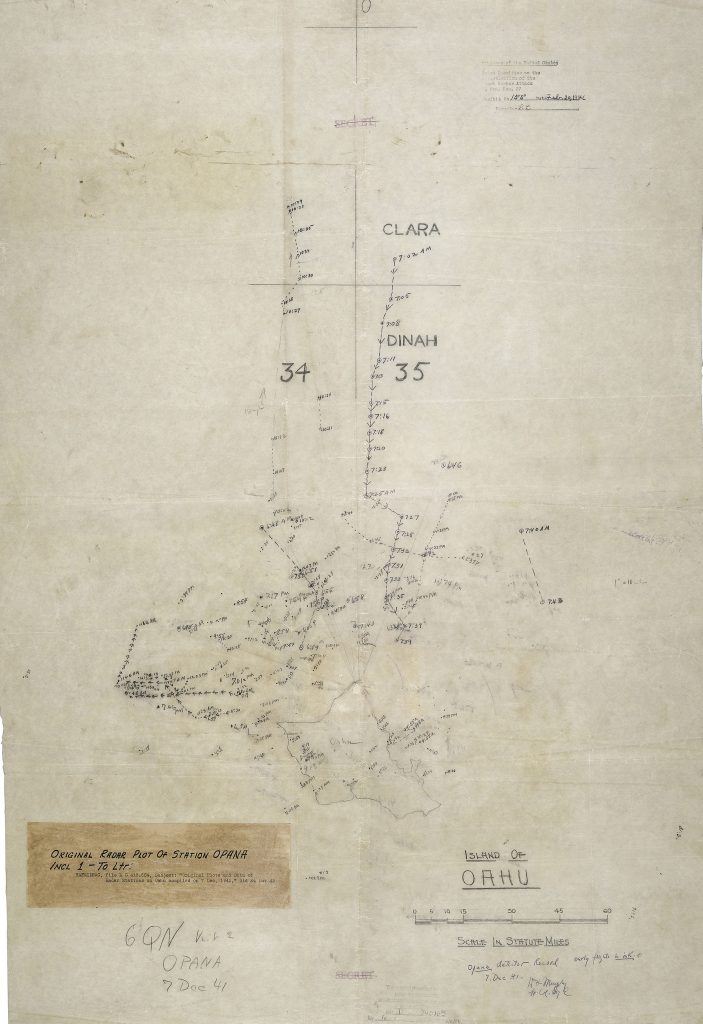
The first bombs fell at 7:55, about thirty-five minutes later.
Every inquiry since has landed in the same place, and I think it is the fair one: Tyler was a fighter pilot on his second shift in a warning system that existed mostly on paper. The failure was the system’s, not the lieutenant’s. He was never disciplined.
The other half of my connection is the division. The 25th Infantry Division was activated at Schofield Barracks on October 1, 1941, which made it just 67 days old that morning. Schofield sits next to Wheeler Field, Hawaii’s main fighter base, and as the Japanese pilots finished their strafing runs on Wheeler they swept low over Schofield’s quadrangles too. The division had its first casualties of the war before most of its soldiers knew who was shooting at them.
Did You Know? The 25th and its sister division, the 24th, were both formed out of the old Hawaiian Division on the same day in October 1941. That makes them the first U.S. Army divisions to come under fire in World War II.
This post is about the airplanes: the three Japanese types that did the damage, the American aircraft parked wingtip to wingtip waiting for them, the few that got into the air, and where you can stand next to the survivors today, in the 85th anniversary year.
Shop this design on Etsy
Pacific Pearl Nose Art Shirt
WWII nose art — the pin-ups, cartoons and lucky cats crews painted on the noses of their aircraft — redrawn for shirts, stickers, prints and glassware. Pacific Pearl is a Navy pin-up in the style squadrons carried across the Pacific after December 1941.
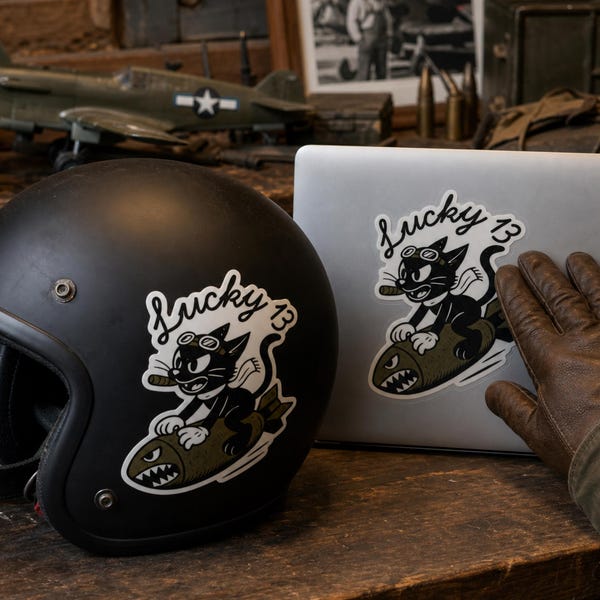
Our best seller. The Lucky 13 cat riding his bomb, the nose art bomber crews loved most, as a kiss-cut vinyl sticker for laptops, helmets and flight bags.
Lucky 13 Sticker →December 7, 1941, by the Numbers
Before the stories, the scale. These are the figures most historians and the National Park Service work from. A few of them (how many pilots got up, how many kills they were credited with) vary from source to source, and I’ve noted where.
Look at the last two Japanese lines together. Fewer than one attacking aircraft in twelve failed to come home. Most of the damage the defenders did, they did in the second wave, after the surprise was gone.
The Three Airplanes That Did the Damage
Japan’s carrier air groups in 1941 were the best-trained in the world, and they flew three types. Each had one job.
Nakajima B5N2 “Kate”: the battleship killer
The Kate was the largest aircraft on a Japanese carrier and, that morning, the most destructive. 143 of them flew. Forty in the first wave carried torpedoes for Battleship Row. Forty-nine more flew as level bombers, high above the harbor.
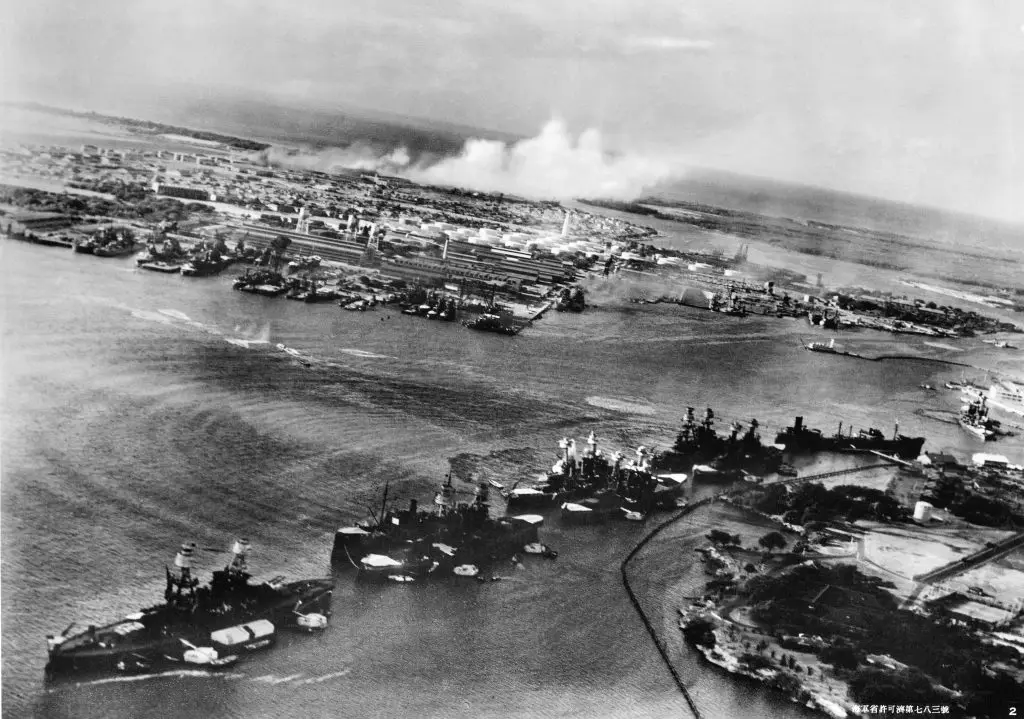
Both loads were improvised for Pearl Harbor. The harbor is only about 40 feet (12 m) deep, and a normal air-dropped torpedo of the day dove far deeper than that before leveling off. Japanese armorers bolted wooden fins to the tails of their Type 91 torpedoes so they would stay shallow, then break away on hitting the water.
The level bombers carried something even stranger: armor-piercing bombs made from 16-inch (41 cm) battleship shells, fitted with tail fins. One of them went through the deck of USS Arizona and set off her forward magazine.
Did You Know? The torpedo run was the most dangerous job of the morning. A torpedo bomber has to fly long, low and straight to drop, and five of the nine Japanese aircraft lost in the first wave were torpedo-carrying Kates.
Aichi D3A1 “Val”: the airfield burner
You can pick out a Val in any photo of the attack by its wheels. It was a dive bomber with fixed landing gear in streamlined spats, which looked old-fashioned even in 1941. Its designers decided retractable gear wasn’t worth the weight on an airplane built to spend its working life in steep dives.
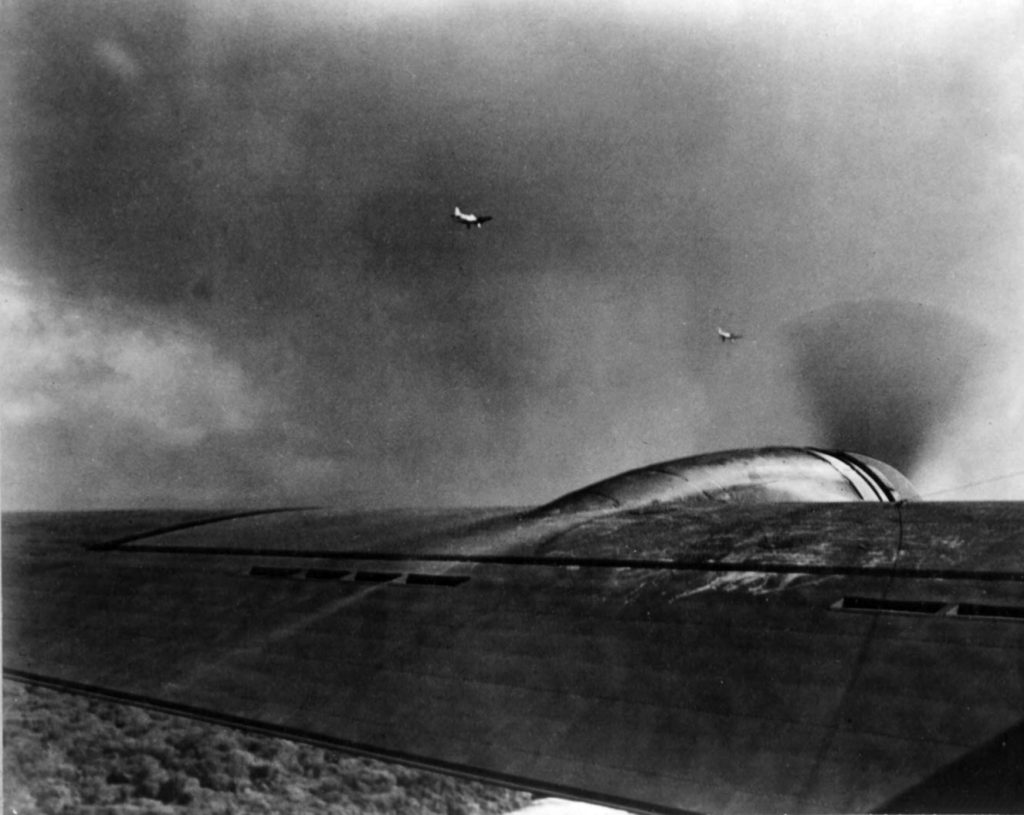
129 flew: 51 in the first wave and 78 in the second. Each carried one 550-pound (250 kg) bomb. In the first wave their targets were Oahu’s airfields: the hangars, the flight lines, and the aircraft lined up in neat rows. In the second wave they went after whatever ships were still worth hitting.
The Val paid for it. Fifteen didn’t come back, more than any other type, most of them in the second wave, when the gunners on the ground were awake.
Mitsubishi A6M2 Zero: the fighter that cleared the sky
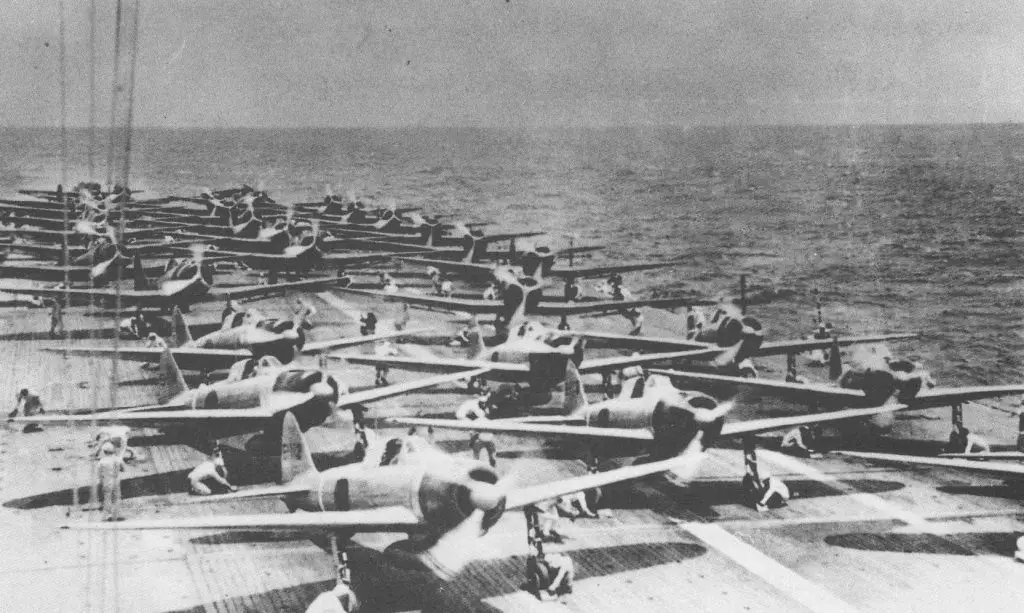
Seventy-eight Zeros flew: 43 in the first wave and 35 in the second. Their first job was to protect the bombers from American fighters. When almost none showed up, they went to their second job, which was strafing every parked airplane they could find.
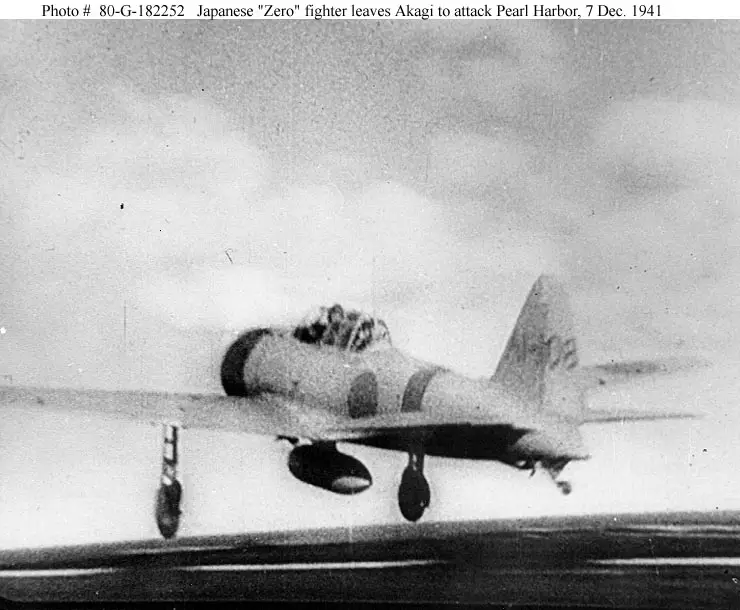
At the Marine air station at Ewa, a flight of Zeros strafed the field more or less unopposed for over twenty minutes. Nothing on the ground at Ewa had a chance to take off.
The Zero’s reputation was largely made in the months after Pearl Harbor. It was light, it turned beautifully, it carried two 20 mm cannon, and with a drop tank it could fly almost 2,000 miles (3,100 km). It paid for all of that with no armor and no self-sealing fuel tanks. That trade comes back in the comparison table below.
Plane Specifications: The Pearl Harbor Strike Force
Figures are for the variants that flew on December 7: the A6M2 Model 21, the D3A1 and the B5N2. Published numbers for Japanese aircraft vary more than they do for American ones, so treat speeds and ranges as close, not exact.
Read the bottom half of that table the way a gunner on the ground would. Nothing in the strike force carried armor or self-sealing tanks. Every airplane over Oahu that morning would burn if you hit it. The trouble was getting anything into the air to hit it with.
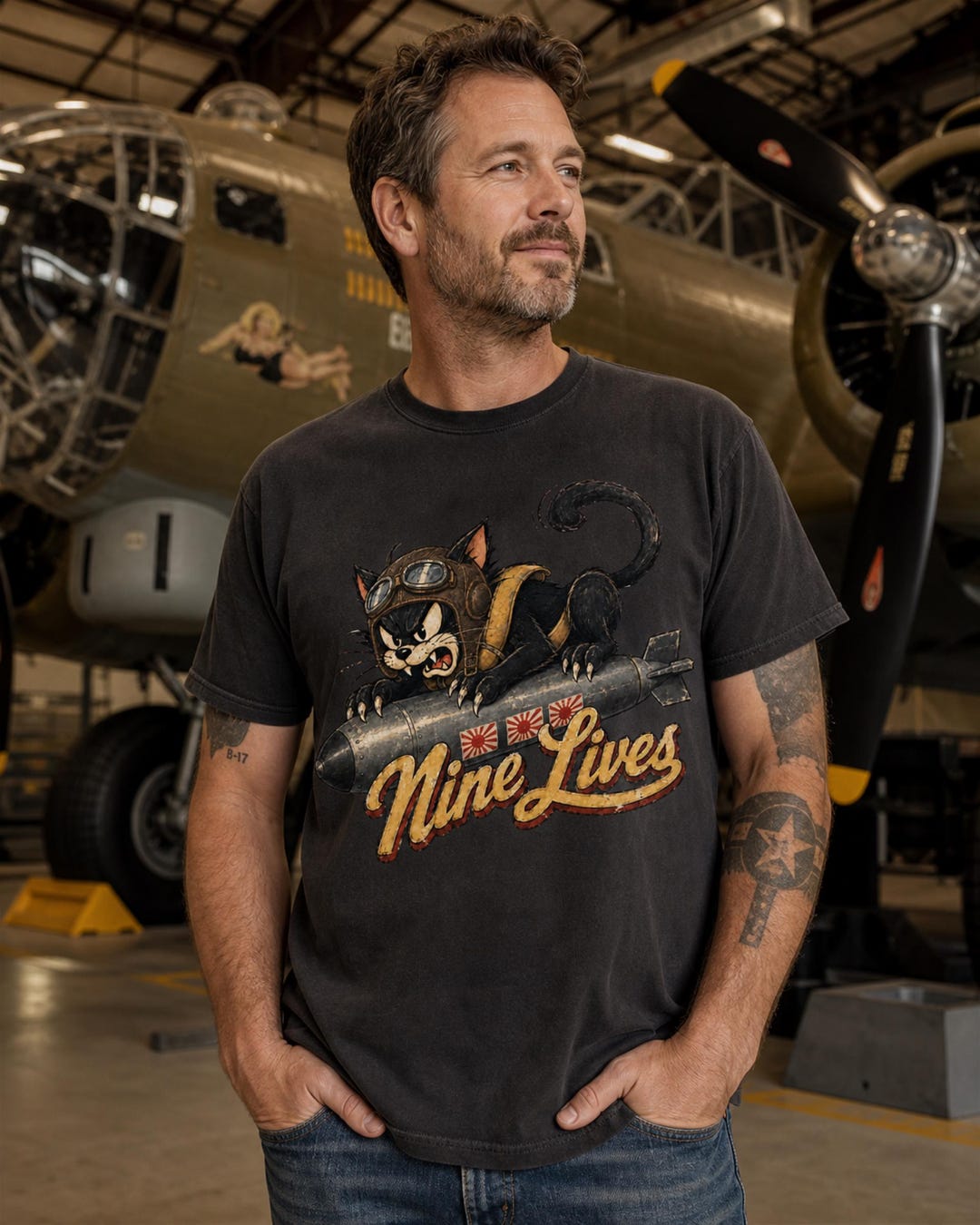
From the Shop
Nine Lives Nose Art Shirt
The black cat Pacific crews painted for luck, with more lives than any airplane over Oahu had that morning. Soft vintage-weight tee.
What Was Waiting on Oahu
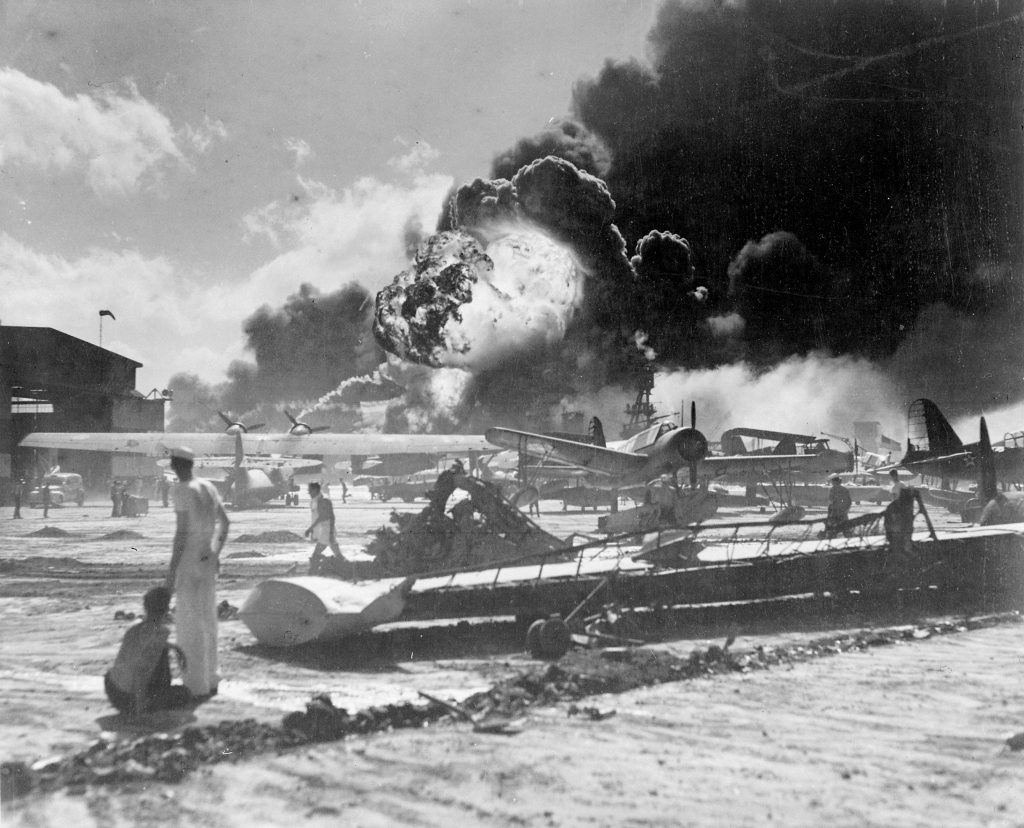
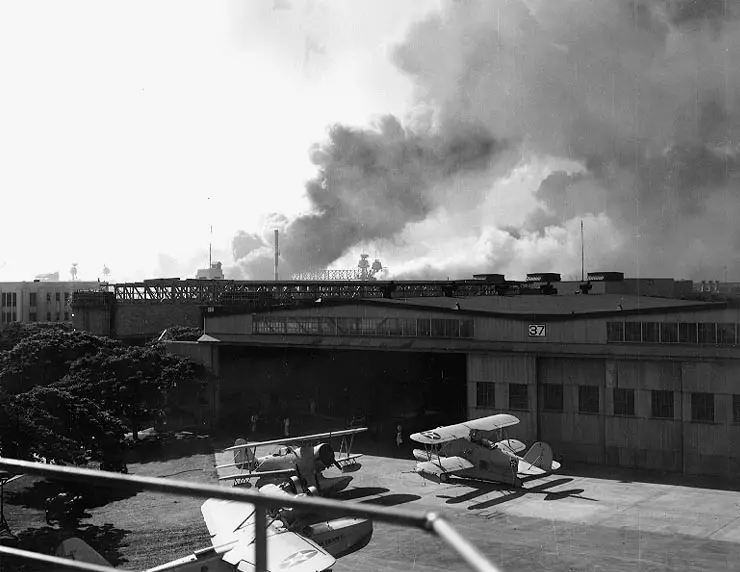
Oahu had roughly 400 military aircraft spread across seven fields. On the morning of December 7 most of them were parked in tight rows, wingtip to wingtip, in the open. That was deliberate. Commanders in Hawaii feared sabotage by local agents far more than an air attack from a fleet nobody had seen, and an airplane parked in a tight row is easy to guard.
It is also easy to destroy. A single strafing pass down a row could set a dozen airplanes on fire.
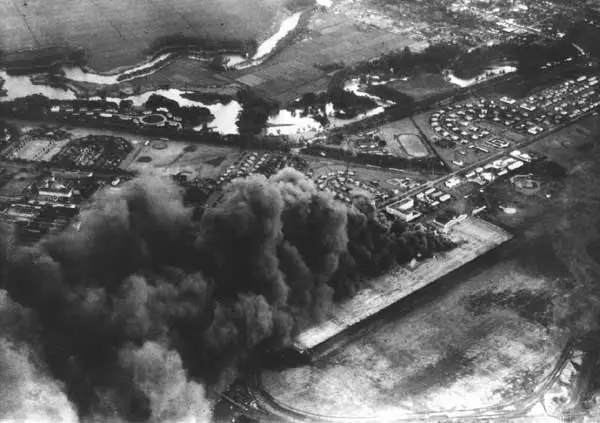
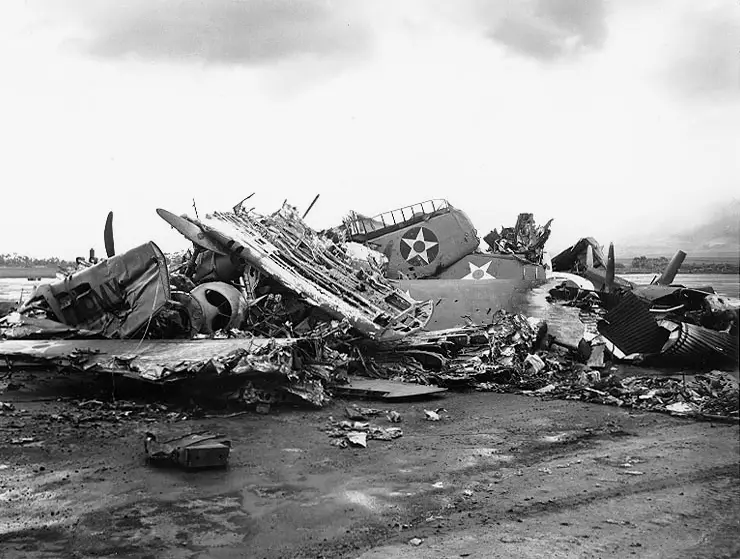
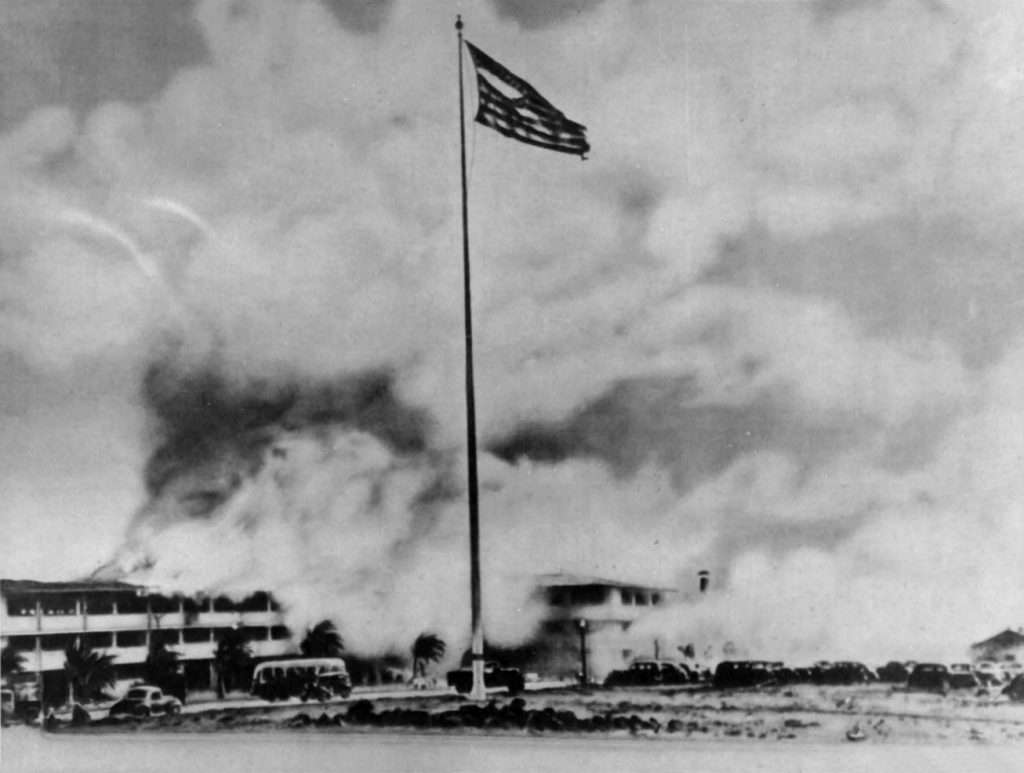
The Army’s Hawaiian Air Force alone started the morning with 231 aircraft. When it was over, only 79 were usable.
Fourteen Got Up
Here is the part of December 7 almost nobody knows. In the middle of all that wreckage, a handful of Army fighter pilots got into the air and fought back.
The usual count is 14 pilots, from Wheeler, Bellows and Haleiwa, flying about two dozen sorties in P-40s and the older P-36s. Some sources count as many as 19. Between them they were credited with about 10 Japanese aircraft confirmed, plus several probables. Remarkably, about half of those kills went to the P-36, a fighter the Army already considered obsolete.
Welch and Taylor
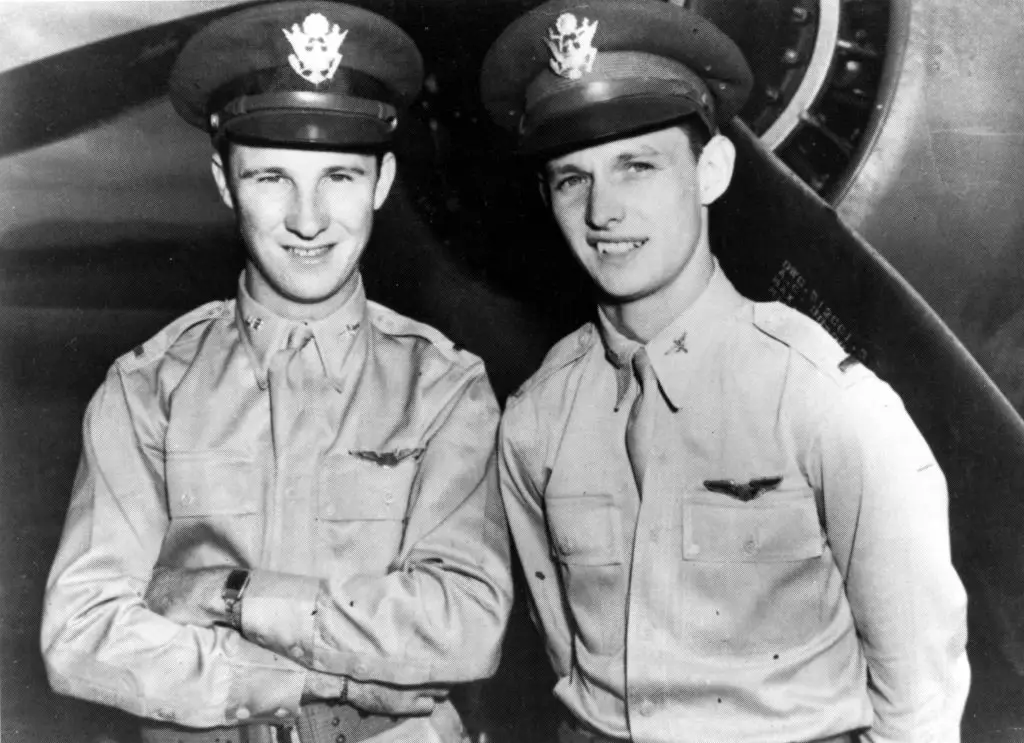
Second Lieutenants George Welch and Kenneth Taylor had been out all night at a Christmas dinner and dance in Waikiki that turned into a poker game. They were still in their evening clothes at Wheeler when the bombs started falling. Their squadron’s P-40s were not at Wheeler. They were at Haleiwa, a little grass strip on the North Shore where the squadron had gone for gunnery practice, and the attackers had largely left it alone.
One of them phoned ahead and told the ground crew to fuel and arm two P-40s. Then the two of them drove there in Taylor’s Buick, getting strafed on the way. When the crew chiefs passed along orders to disperse the planes rather than fly them, Welch said no in fairly direct terms.
They took off without orders, went straight at the Japanese aircraft working over Ewa, landed at Wheeler to rearm, and took off again into the second wave. Welch was credited with four kills and Taylor with two. Taylor was wounded. Both received the Distinguished Service Cross, among the first of the war. The story goes that Welch was put in for the Medal of Honor and turned down because he had taken off without orders.
Welch went on to fly the prototype of the F-86 Sabre after the war.
The P-36 pilots
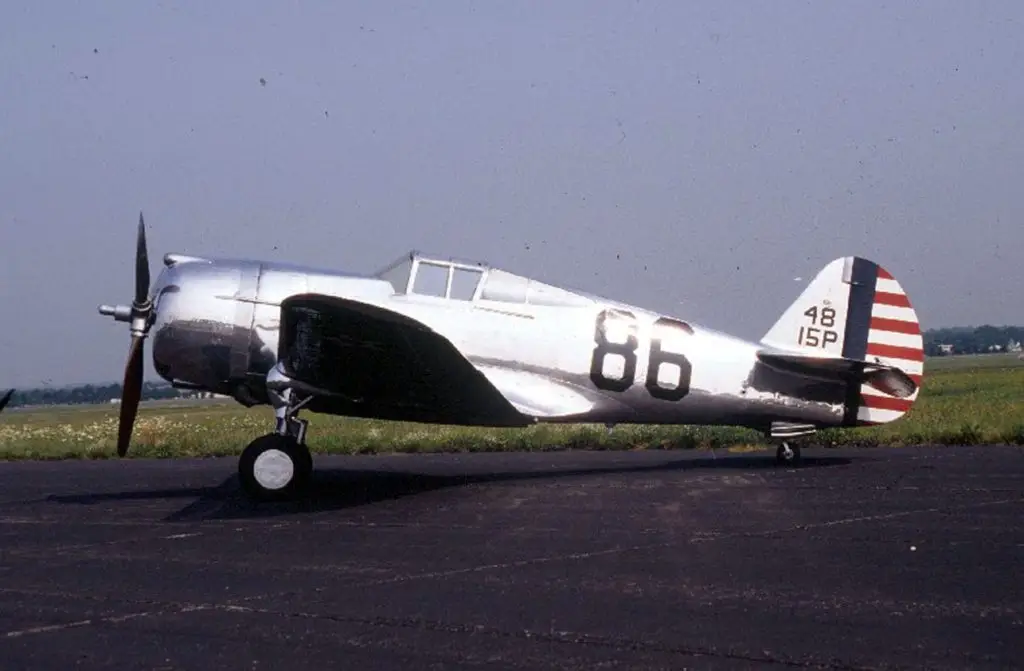
At Wheeler, four P-40s and two P-36s got off about thirty-five minutes after the attack began. Lieutenant Lewis Sanders led a flight of P-36s into a Japanese formation and shot one down. Lieutenant Philip Rasmussen got another. Lieutenant Gordon Sterling shot one down too, then was shot down himself over the water and killed.
Lieutenant John Dains flew sorties in both a P-40 and a P-36 that morning. He survived the Japanese and was shot down by American antiaircraft fire near Schofield Barracks, one of several Americans killed that day by their own side’s guns. Every gun crew on Oahu was firing at anything with wings by then.
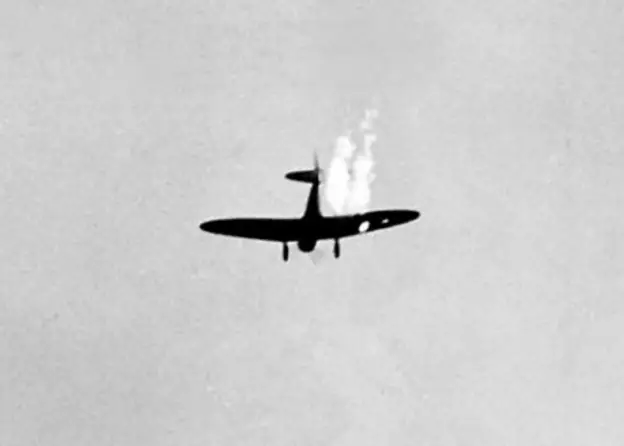
Little-Known Tally: Of the 78 Zeros that attacked, only 9 were lost, and 6 of those went down in the second wave. The airplane that took the worst of it was the dive bomber: 15 Vals never made it home. And of the 29 Japanese aircraft lost to all causes, about two-thirds went down in the second wave, after the gun crews and those fourteen pilots were awake. By some Japanese accounts, about 20 more aircraft got back to the carriers so badly damaged they were pushed over the side.
How the American Fighters Stacked Up
Here is what Welch, Taylor and the P-36 pilots took into the air against the Zero.
On paper the Zero beats both American fighters in a dogfight. It was 2,000 pounds lighter than the P-40 and turned inside anything the Army had. The P-36 carried two machine guns against the Zero’s two cannon and two machine guns.
But nobody over Oahu that morning was fighting the textbook fight. The Americans weren’t dueling the Zeros. They were going after bombers that were busy bombing: Vals pulling out of dives and Kates lined up on torpedo runs, flying slow, predictable paths. Against an unarmored airplane on a steady course, a P-40’s two .50-caliber guns did not need to win a turning fight. That is why the fighters’ kills were mostly bombers, and why the Val, not the Zero, took the heaviest losses.
Later in the war the lesson was formalized: don’t turn with a Zero, dive on it. That is the same lesson I covered in the P-40 and Flying Tigers post, learned over Burma two weeks later.
From the Shop
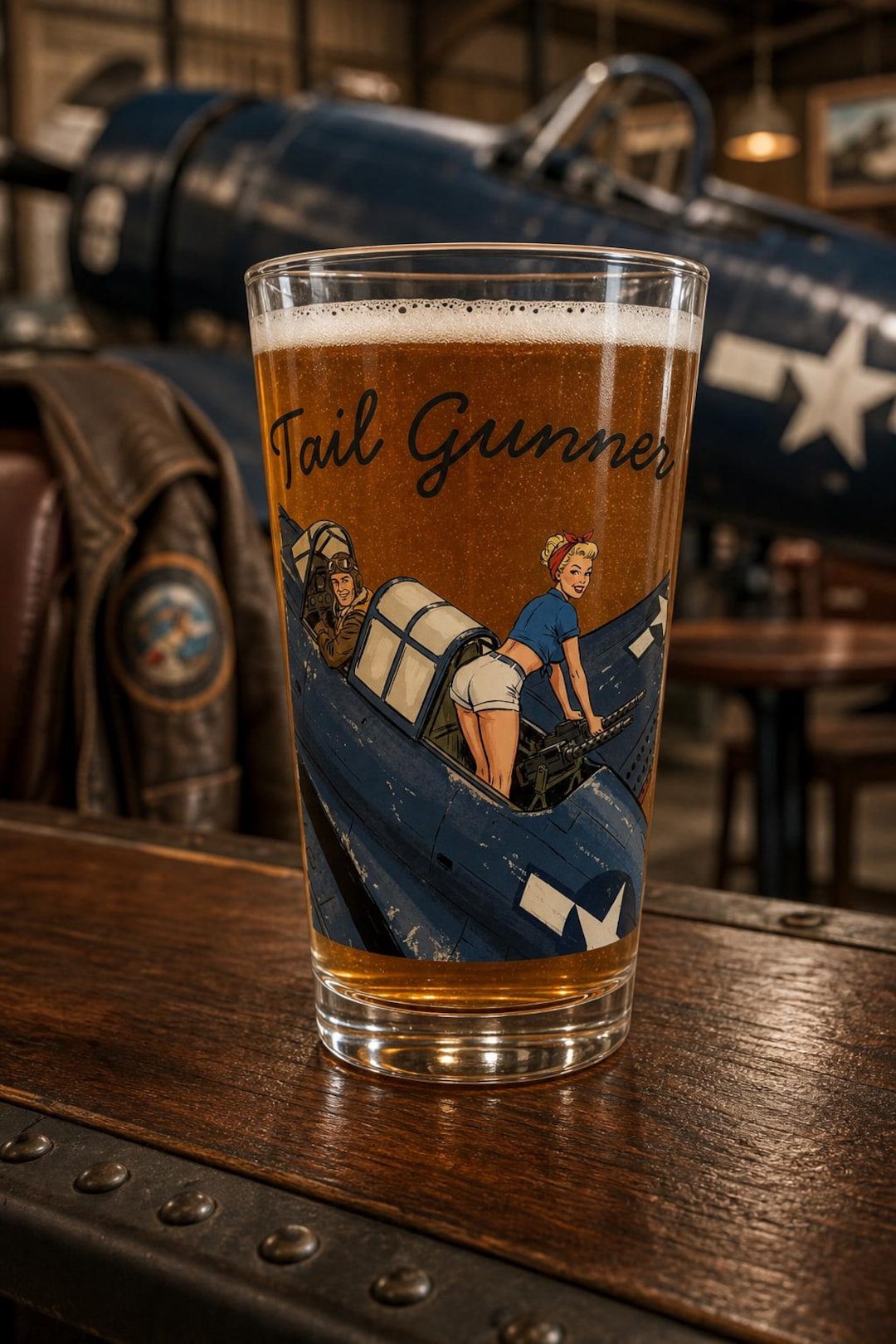
Tail Gunner WWII Navy Nose Art Pint Glass
Navy nose art for the loneliest seat on the airplane, wrapped around a 16 oz (473 ml) pint glass. For the shelf under the squadron patch.
The Airplanes That Flew Into the Middle of It
Two groups of American aircraft arrived over Oahu during the attack, by sheer bad timing, and neither had any idea there was a war on.
The B-17s from California
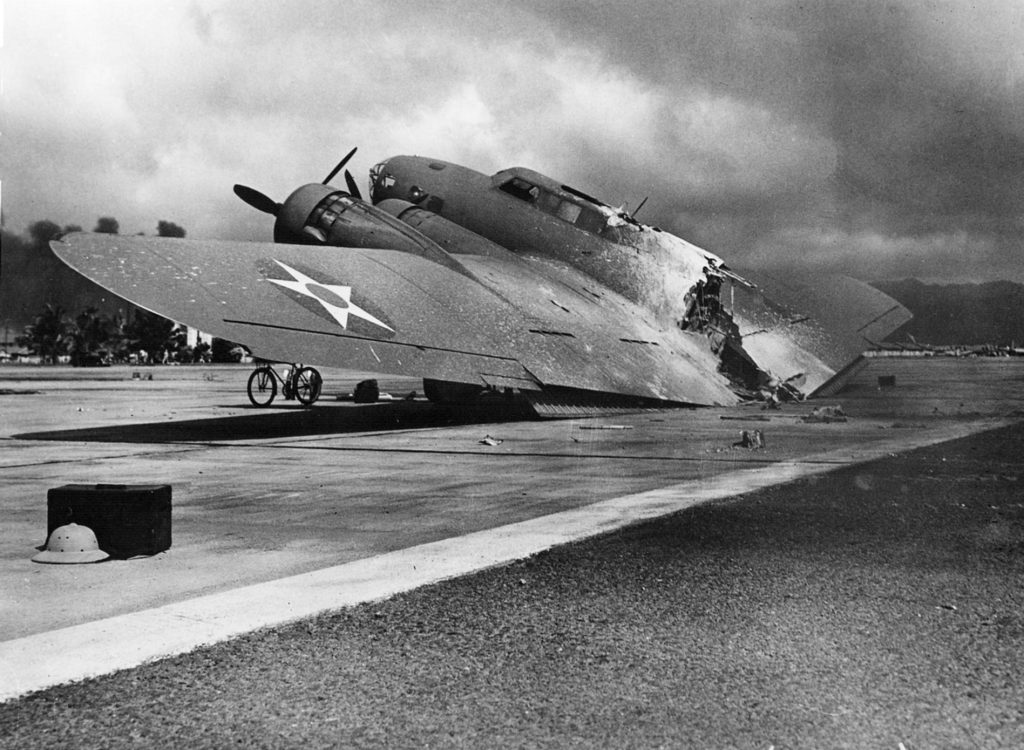
These were the bombers Kermit Tyler was expecting. Twelve B-17s had left Hamilton Field, north of San Francisco, the night before, bound for the Philippines by way of Hickam. To carry fuel for a 14-hour, 2,400-mile (3,860 km) flight, they flew without ammunition. Their guns were useless.
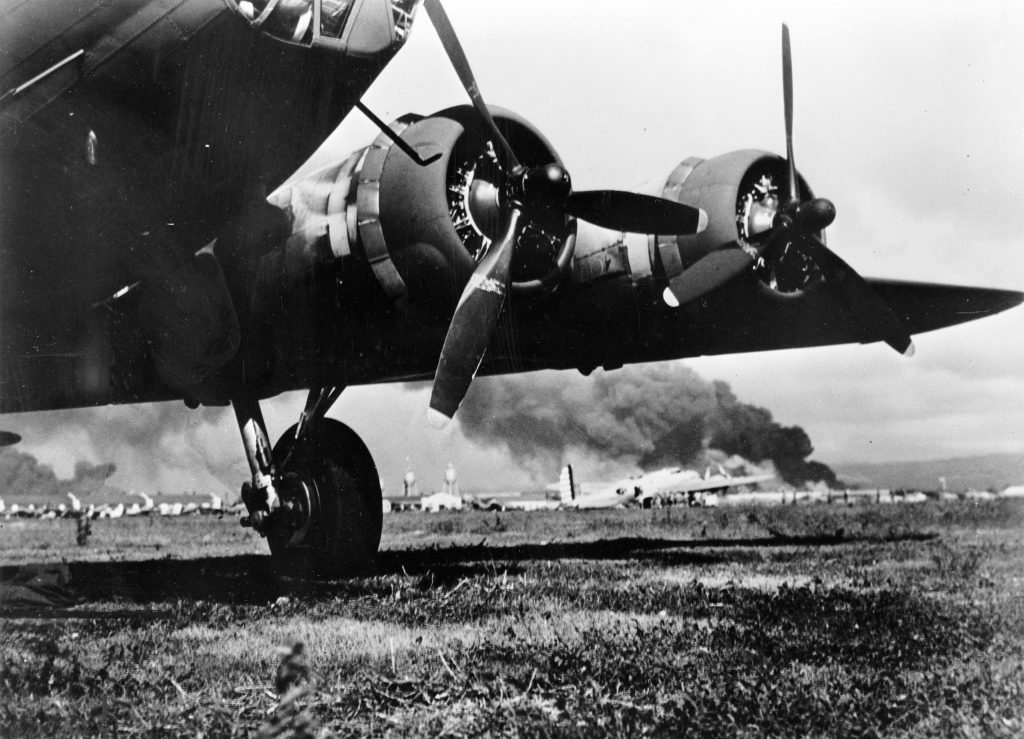
They arrived in the middle of the first wave. Crews who saw fighters coming up to meet them assumed it was an escort until the fighters opened fire. Eight landed at Hickam under fire. Two got into Haleiwa, one put down at Bellows, and one landed on the golf course at Kahuku. One was destroyed and several were badly damaged.
The Dauntlesses from Enterprise
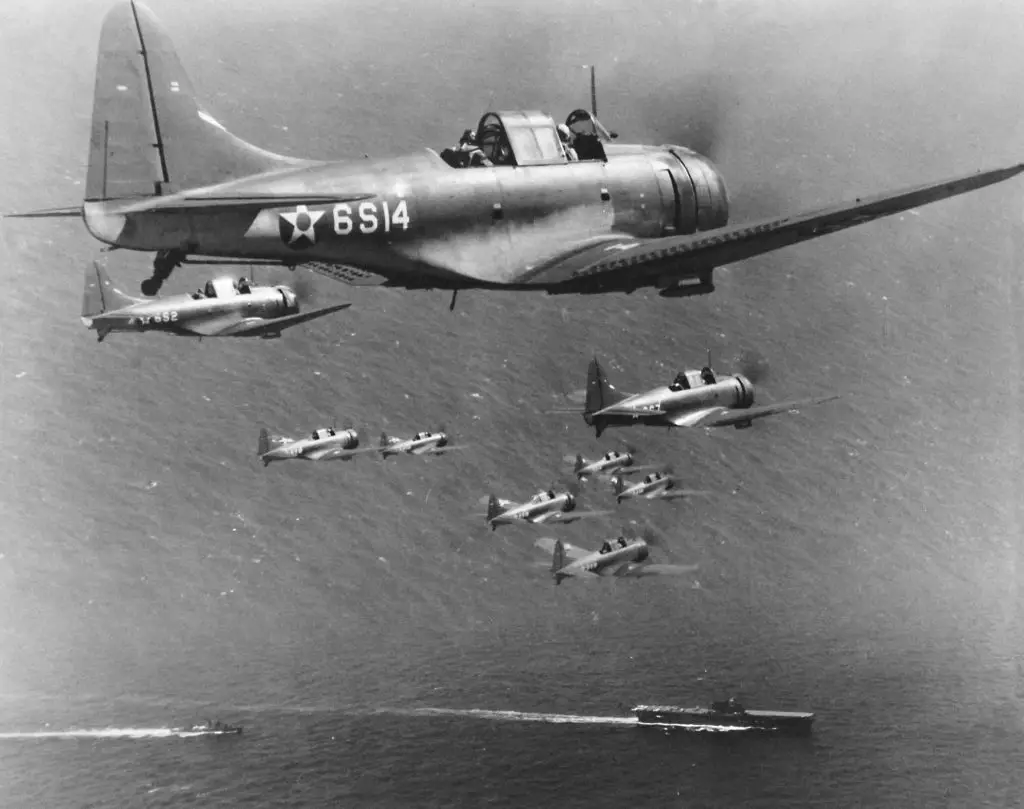
The carrier Enterprise should have been in Pearl Harbor that morning. Bad weather delayed her return from Wake Island, and at dawn she was about 215 nautical miles west of Oahu. She launched 18 SBD Dauntlesses to scout ahead and then land at Ford Island.
They reached Oahu at the same moment as the Japanese. Seven were shot down or crash-landed, and eight airmen were killed, some of them by Japanese fighters and some by American gunners who, by then, were shooting at anything overhead. The Dauntless gunners claimed two Japanese aircraft. Six months later the same type sank four of the six carriers that had launched this attack, at Midway.
Kaneohe: The Base That Was Hit First
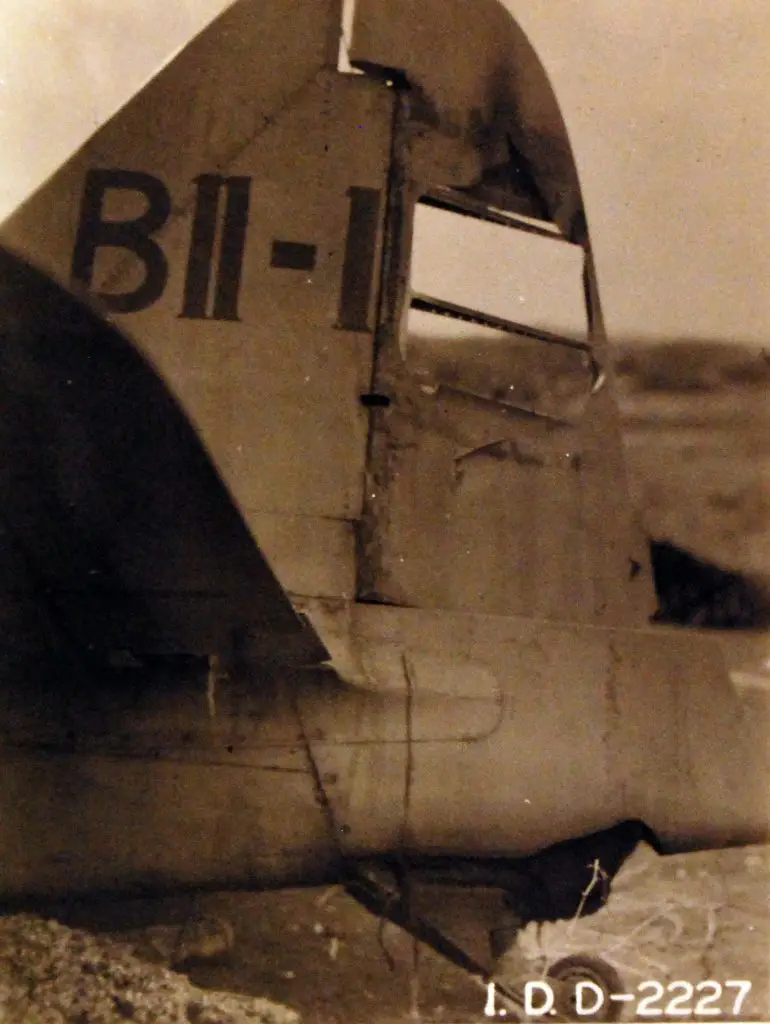
The battleships get the attention, but the first Japanese strike of the day hit a seaplane base on the other side of the mountains. At about 7:48 a.m., Japanese Zeros came over Naval Air Station Kaneohe Bay, and the second wave came back for more. Its PBY Catalinas were the long-range patrol planes that might have found the Japanese carriers, so the Japanese wanted them gone first.
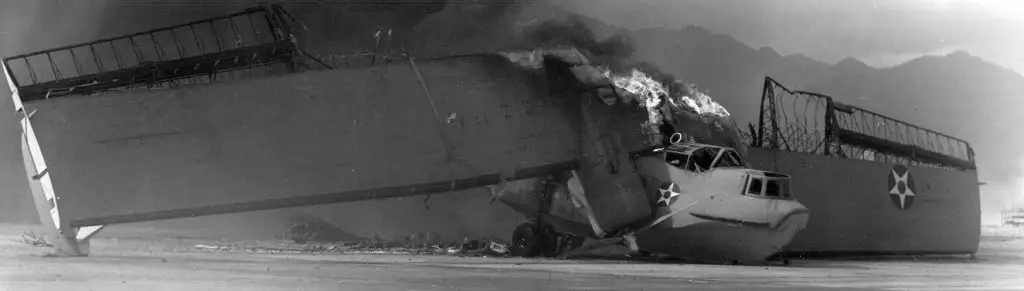
It worked. Of 36 Catalinas, 27 were destroyed and 6 damaged. Only the three already out on patrol escaped. (Our PBY Catalina post covers what the type went on to do.)
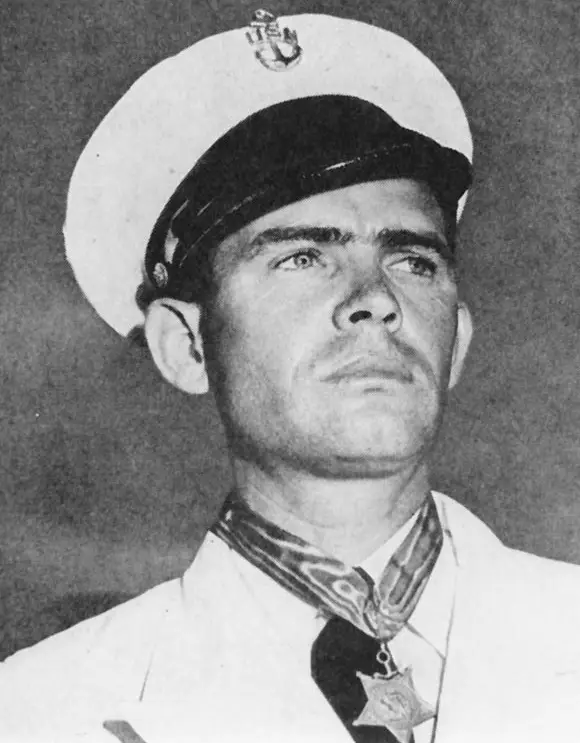
Chief Aviation Ordnanceman John Finn was at home when the shooting started. He drove to the hangars, pulled a .50-caliber machine gun on a training stand out onto an open parking ramp, and fired at strafing Zeros for the rest of the attack, wounded repeatedly. On September 14, 1942, Admiral Nimitz presented him the Medal of Honor aboard Enterprise. It was among the first Medals of Honor of the war, earned on its very first morning.
Lieutenant Fusata Iida, leading Soryu‘s Zeros over Kaneohe in the second wave, was hit by ground fire and crashed on the base. He was buried there, and today a marker stands where his aircraft came down: a memorial to an enemy pilot on an American military base, which may be the only one of its kind.
The Zero That Landed on Niihau
One of the strangest stories of the day began when a Zero from Hiryu, flown by Airman First Class Shigenori Nishikaichi, was damaged over Oahu and couldn’t make it back to the carriers. His instructions were to put down on Niihau, the small, privately owned island at the west end of the chain, which Japanese planners believed was uninhabited.
About 180 people lived there, with no telephone or radio. Nishikaichi crash-landed, was disarmed by a local resident, and for several days lived among islanders who didn’t yet know the war had started. When they found out, he recruited help from a Japanese-American resident, recovered a gun, and began threatening the island. On December 13, a Hawaiian rancher named Ben Kanahele, shot three times, and his wife Ella overpowered the pilot and killed him. His collaborator took his own life.
The wreckage of that Zero, still unrestored, is on display today at the Pearl Harbor Aviation Museum on Ford Island.
From the Shop
Sky Widow Nose Art Shirt
A femme-fatale pin-up in the naval aviation style that spread through Pacific squadrons once the war came to them.
Watch: The Attack as It Happened
This is real footage of the attack, shot that morning by Navy photographer Clyde Daughtry. The original film was lost, and this surviving copy is rough. Watch for USS Nevada underway and firing back, and the minelayer Oglala rolling over at her pier. It runs about five minutes.
Where to See Them Today, and the 85th Anniversary
December 7, 2026 is the 85th anniversary. If you’re going to Pearl Harbor this year or planning ahead, here is what I’d want to know.
Pearl Harbor Aviation Museum, Ford Island
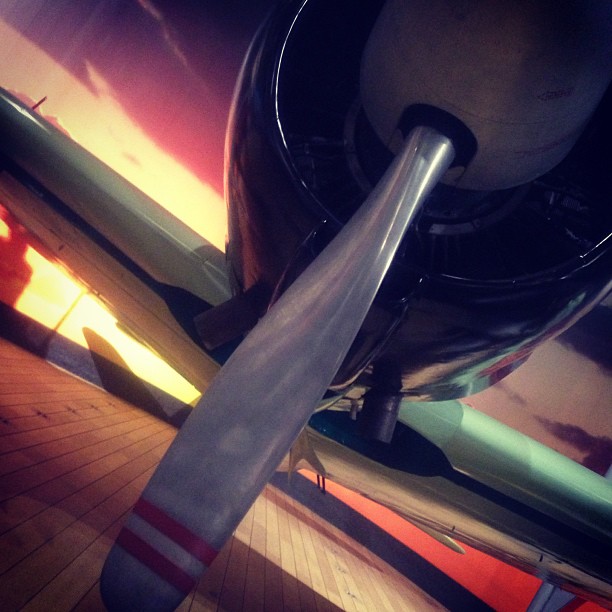
This is the place for the airplanes, and it’s on the actual battlefield. The museum occupies two hangars that were standing on December 7, Hangar 37 and Hangar 79. The collection includes the Niihau Zero’s wreckage, a restored Zero, part of a recovered B5N2 Kate, a P-40 and an SBD. Hangar 79 still has its blue glass windows riddled with bullet holes from the strafing runs, and it’s home to the B-17E “Swamp Ghost.”
- Tickets: $29.99 adults and $17.99 children 4 to 12, cheaper online. The Passport to Pearl Harbor, which covers the museum, the Battleship Missouri, the USS Bowfin submarine museum and an Arizona audio tour, is $99.99. It does not include the Arizona boat program, which is booked separately.
- Military discount: it’s for active duty and immediate family, bought onsite with ID. Retirees, check at the window.
- Getting there: you can’t drive onto Ford Island. Park at the Pearl Harbor Visitor Center and take the free shuttle.
USS Arizona Memorial
Free, but you need a reservation on Recreation.gov, which charges a $1 fee. Same-day walk-up tickets no longer exist apart from a limited standby line. A batch of next-day tickets is released each afternoon at 3 p.m. Arrive an hour early; boats leave on time.
The 85th anniversary, December 6 to 8, 2026
The National Park Service and Pacific Historic Parks will hold public commemorations at Pearl Harbor National Memorial and nearby sites from December 6 to 8, under the theme “Courage of Commitment.” The schedule opens with a sunset ceremony at the USS Utah Memorial on Ford Island on December 6. Expect crowds and early gates, and check the Pacific Historic Parks events page before you go.
Closer to home
You don’t have to fly to Hawaii. The National Museum of the U.S. Air Force in Dayton, Ohio, displays a P-36A painted as Lieutenant Rasmussen’s from that morning, and admission is free.
From the Shop
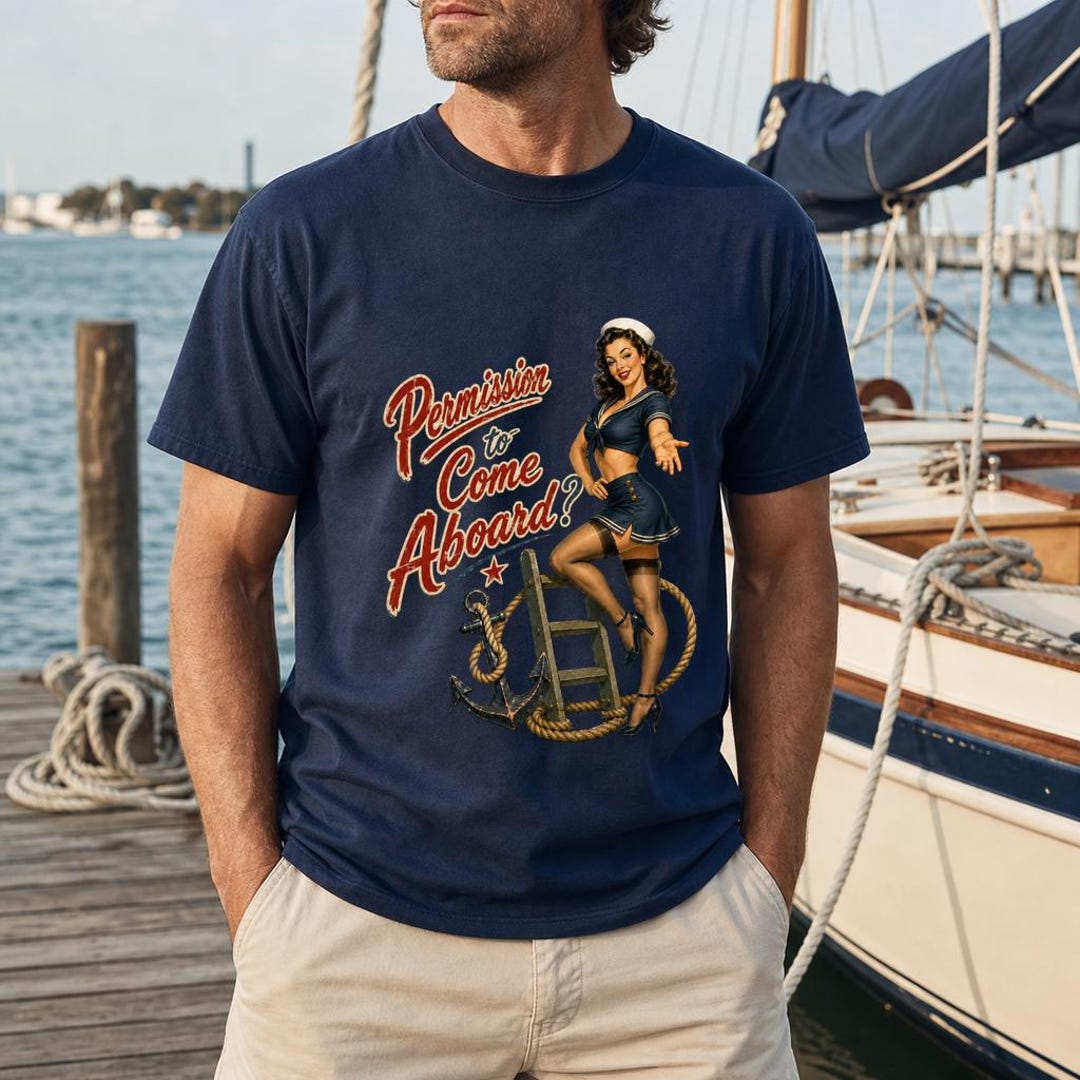
Permission To Come Aboard Shirt
Sailor pin-up nose art in the carrier-deck style of the Pacific war. A good one to wear to Ford Island.
Little-Known Pearl Harbor Aircraft Facts
- The radar worked. Opana picked up the first wave about 137 miles out, nearly an hour before it arrived. The failure was in what happened after the phone call.
- The first American fighter kills of the Pacific war were scored by pilots who took off without orders, from a grass strip the Japanese didn’t know about.
- About half the fighters’ kills went to the P-36, a type the Army was already replacing with the P-40.
- Only 9 of 78 Zeros were lost. The Val dive bombers took the worst of it, with 15 lost.
- The B-17s flying in from California were unarmed, to save weight for fuel.
- One B-17 landed on a golf course at Kahuku.
- One of the war’s first Medals of Honor went to a Navy ordnance chief firing a training-mount machine gun at Kaneohe, miles from Battleship Row.
- Billy Mitchell predicted it. After inspecting Hawaii in 1924 he warned that Japan would open a war with a surprise air attack on Pearl Harbor. (More in our B-25 Mitchell post.)
- The 25th Infantry Division was 67 days old, and was strafed at Schofield Barracks as the Japanese came off their runs on Wheeler.
Pearl Harbor Aircraft: Frequently Asked Questions
What planes attacked Pearl Harbor?
Three Japanese carrier types: the Mitsubishi A6M2 Zero fighter (78 aircraft), the Aichi D3A1 “Val” dive bomber (129) and the Nakajima B5N2 “Kate” torpedo and level bomber (143). They flew from six carriers in two waves totaling 350 aircraft.
How many American planes got off the ground at Pearl Harbor?
Very few. About 14 Army fighter pilots got airborne in P-40s and P-36s during the attack and flew about two dozen sorties, with some counts as high as 19 pilots. Twelve unarmed B-17s and 18 Navy SBD Dauntlesses also arrived in the middle of it, but they were flying in, not scrambling.
How many Japanese planes were shot down at Pearl Harbor?
Japan lost 29 aircraft to all causes: 15 Vals, 9 Zeros and 5 Kates. American fighter pilots were credited with about 10 of them; antiaircraft fire accounted for most of the rest.
How many Zeros were shot down at Pearl Harbor?
Nine of the 78 Zeros were lost, six of them in the second wave. One came down at Kaneohe Bay, and one force-landed on Niihau, where its wreckage was later recovered.
How many American aircraft were destroyed at Pearl Harbor?
188 destroyed and 159 damaged. Most were caught on the ground, parked in tight rows to guard against sabotage.
Who were Welch and Taylor?
Second Lieutenants George Welch and Kenneth Taylor drove to the Haleiwa airstrip, took off in P-40s without orders, and were credited with six Japanese aircraft between them, four for Welch and two for Taylor. Both received the Distinguished Service Cross.
Did radar detect the attack on Pearl Harbor?
Yes. The Opana radar station picked up the first wave about 137 miles out. The report reached the Information Center at Fort Shafter around 7:20 a.m., where the duty officer assumed it was a flight of B-17s due from California.
Where can I see Pearl Harbor aircraft today?
The Pearl Harbor Aviation Museum on Ford Island displays a Zero, the Niihau Zero wreck, part of a Kate, a P-40 and an SBD in hangars that survived the attack. The National Museum of the U.S. Air Force in Dayton displays a P-36A painted as one flown that morning.
The Bottom Line
Pearl Harbor is usually told as the story of the battleships, and it was the battleships that died. But it was decided in the air, by three Japanese aircraft types that were, that morning, the best carrier aircraft in the world, flown by the best-trained carrier crews in the world, against an air force parked in neat rows to stop saboteurs.
The part I keep coming back to is the fourteen. Nobody ordered them up. Two of them did it after an all-night poker game, in a borrowed car, from a grass strip nobody had bothered to bomb. They didn’t change the outcome. They did prove, inside two hours of the war starting, that these airplanes could be shot down. Everything that happened at Midway six months later grew out of that.
If you go for the 85th, start at the Aviation Museum and put your hand near the glass in Hangar 79. Then go stand on the Arizona. You’ll understand the morning better in that order.
Keep Reading
- P-40 Warhawk and the Flying Tigers: The Story Behind Aviation’s Most Famous Shark Mouth, the fighter Welch and Taylor flew, and what it did in Burma two weeks later.
- SBD Dauntless: The “Slow But Deadly” Dive Bomber That Won Midway, the type that flew into the attack and then sank four of these carriers.
- PBY Catalina, the patrol plane Japan most wanted destroyed on the ground.
- B-25 Mitchell, named for the general who predicted Pearl Harbor, and the bomber that hit back four months later.
- B-17 Flying Fortress, the bomber that arrived unarmed in the middle of it.
- How to Read WWII Nose Art, the art crews started painting on their airplanes once the war began.
Were you, or someone in your family, stationed on Oahu? Tell us where in the comments.
More from the shopBrowse the full WWII aviation & nose art collection: tees, prints, glassware and gifts, all original designs.

Ben & Nicole Mathews
We’re based in St. Augustine, Florida, sharing the places we’ve actually been — from our home turf to corners of the U.S. and abroad. Ben is an attorney and a retired Air Force JAG (22 years), and a private pilot, which is why aviation and military history shows up here too.