
We rented a house across the street from St. Augustine’s Old Jail and heard the hangings every night. I assumed the tour made them up. The old newspapers say otherwise.
For four nights late in 2009, I lay awake in a rented house on San Marco Avenue listening to what sounded like a man being hanged.
Shouting. A crowd. A heavy thud. Then quiet. I had moved down a week ahead of Nicole and the kids, signed a lease on a lovely old house with French doors, and — as far as I could tell — put my family across the street from something terrible.
It was the ghost tour. Every night a trolley pulled up to the St. Augustine Old Jail and staged an execution in the yard. For years afterward it was our favorite dinner-party story, and I told it like a joke. I also assumed the tour’s “eight hangings” was the kind of number guides round up for effect.
This October I finally checked, the way I’d check a case file. I was wrong about that part. The hangings happened, newspapers from the time put them in the jail yard I used to look at every morning, and the men have names. Here’s what the record actually shows — and what to know if you visit.
The House Across the Street From the Old Jail
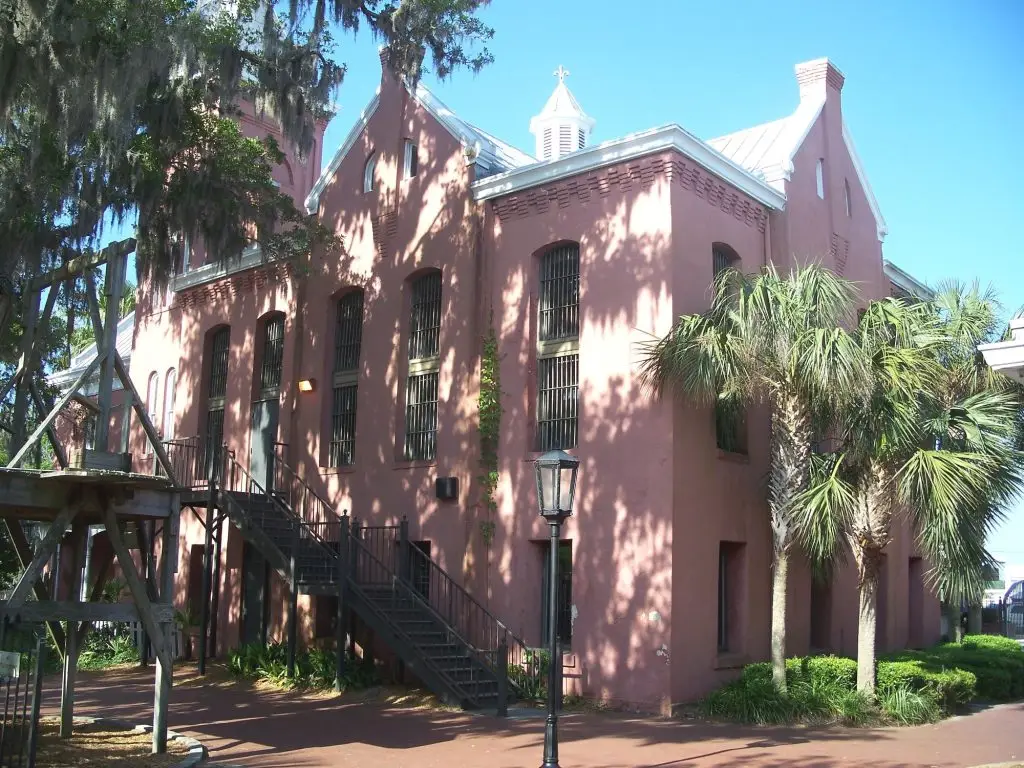
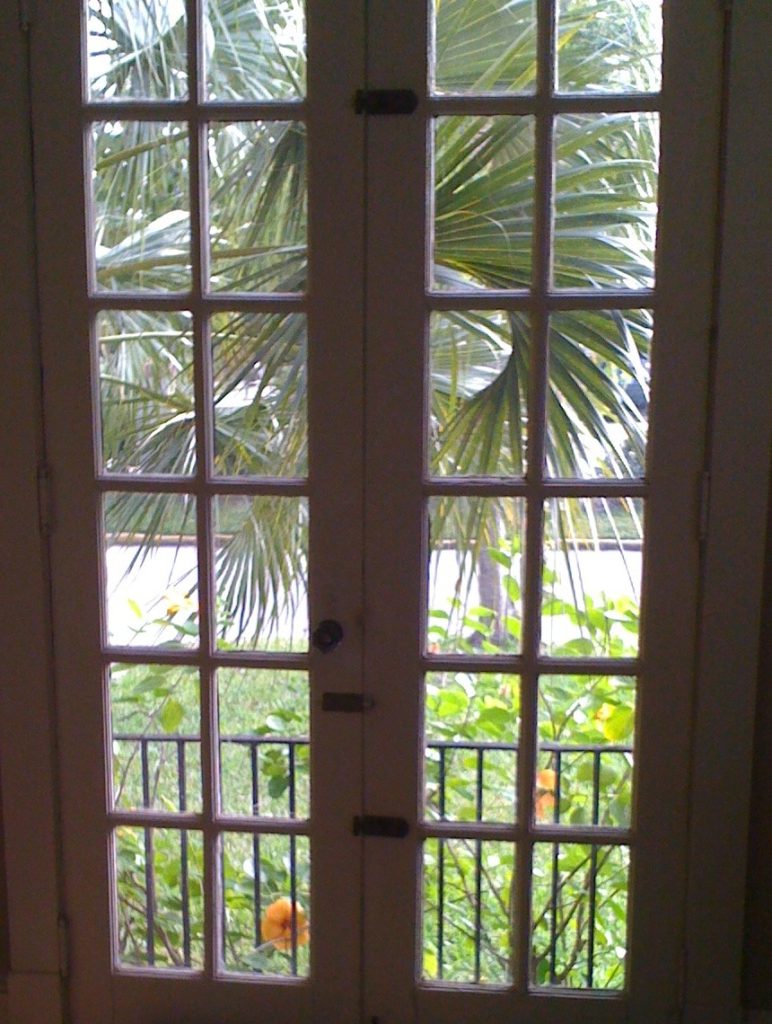
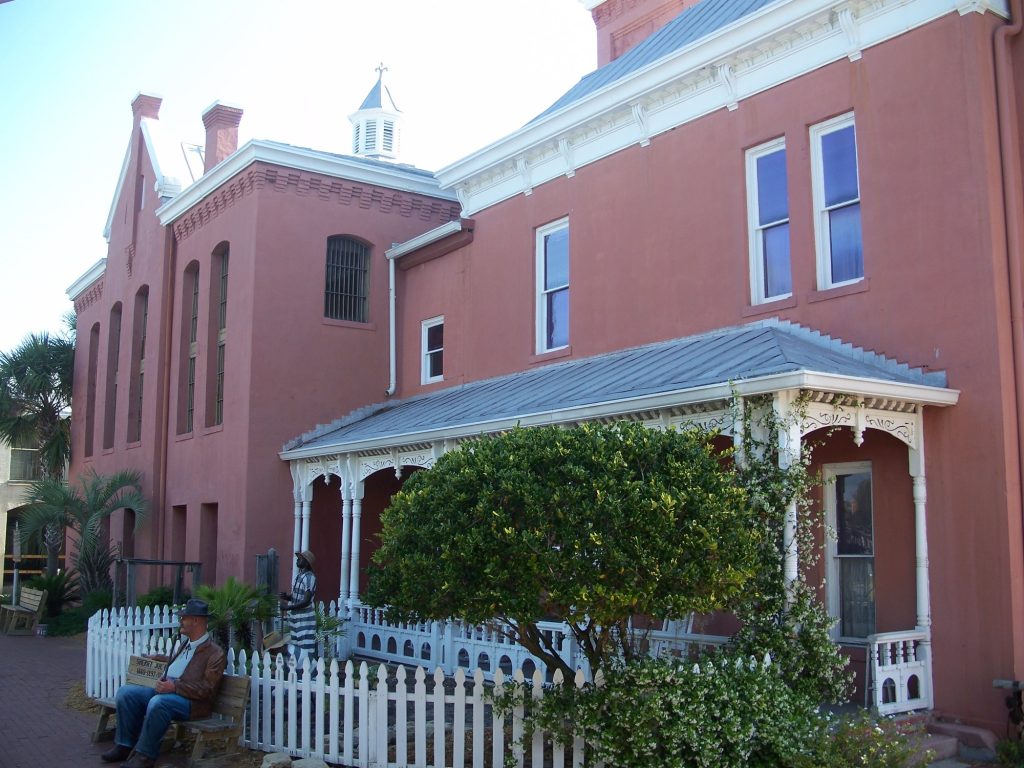
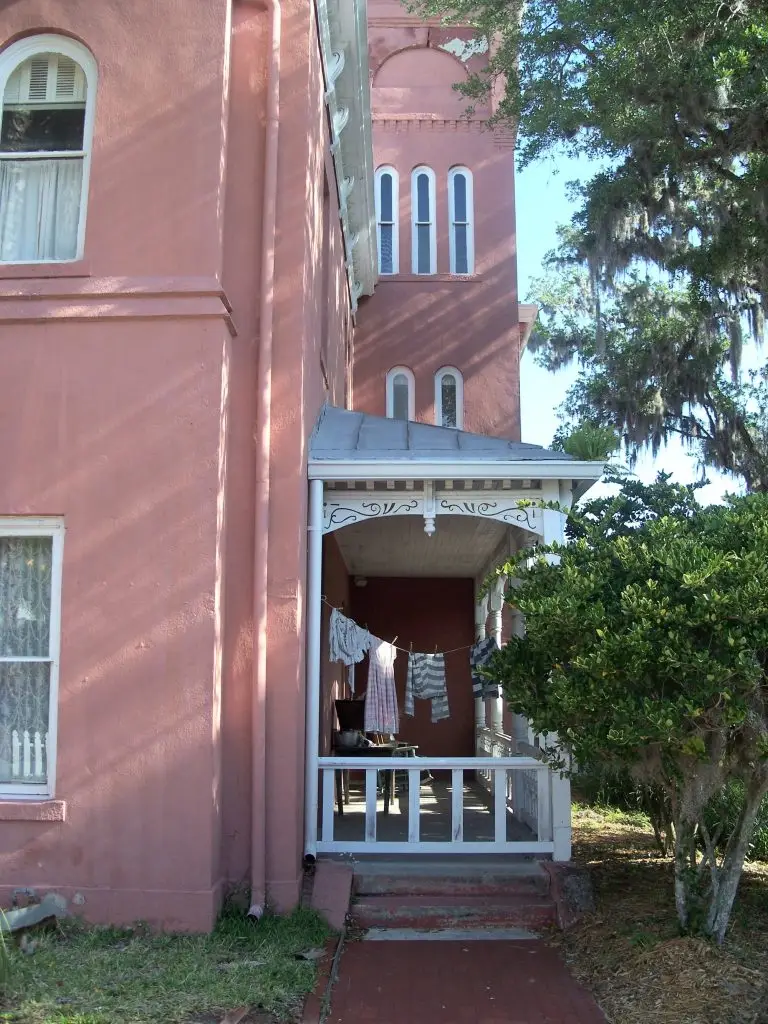
The house sat on San Marco Avenue, and its French doors looked directly across the street at the jail. I didn’t think twice about that when I signed the lease. It’s a handsome building — salmon-pink stucco, a little tower, a deep porch — and if you didn’t know better you’d take it for a wealthy family’s Victorian home. That, it turns out, was the whole point.
It took me four nights to work out that the noise was a show. Nicole and the kids arrived the next week, and for the next couple of years, whenever a visitor heard it and asked, in that careful voice people use, what on earth that was, we’d say: “Oh, that’s the hangings.” And go back to dinner.
I told the short version of this in our St. Augustine Halloween guide, and the Old Jail gets a spot in the Ghosts & Legends section of our St. Augustine travel guide. Nicole has her own story about that house, and she tells it better than I do — it’s further down.


Why the St. Augustine Old Jail Looks Like a Mansion
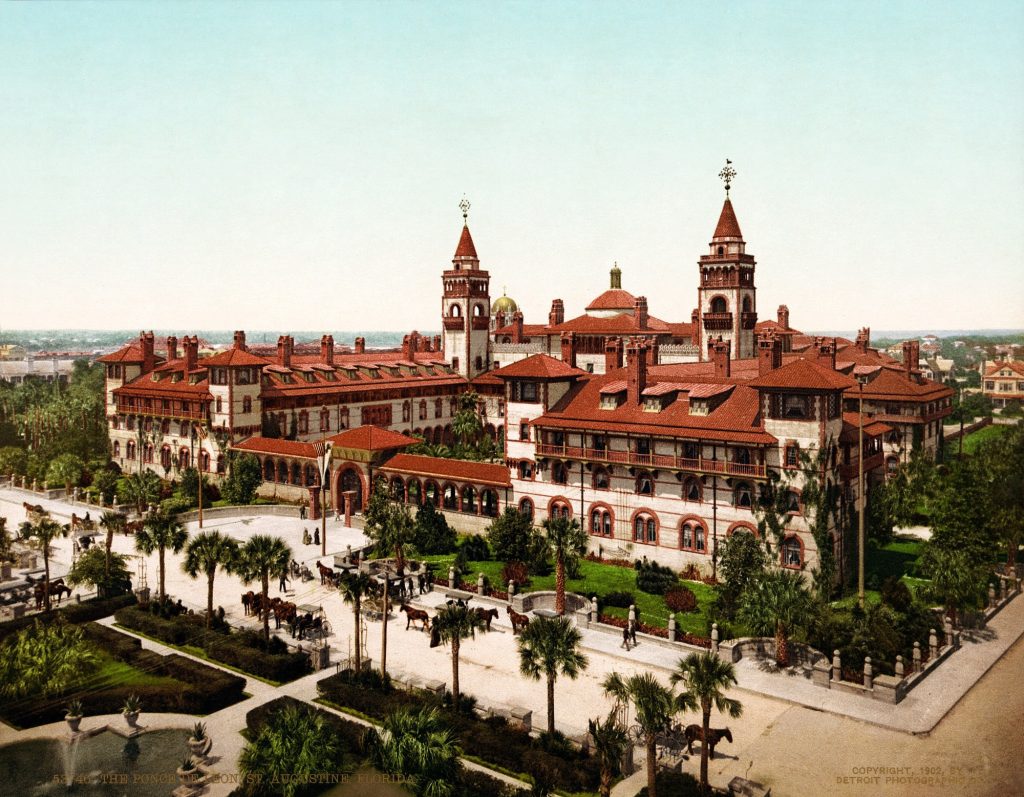
Until 1891 the county jail stood on Cordova Street, directly across from Henry Flagler’s brand-new Hotel Ponce de León — the grandest hotel in Florida. In 1889 a grand jury described the old jail as a local nuisance where it stood. That October, Flagler offered to pay for a new one somewhere else.
The county took the deal. According to the building’s National Register nomination, Flagler put $10,000 toward construction and bought the old jail and its lot for another $2,500. The prisoners moved about a mile north to San Marco Avenue, comfortably out of sight of the hotel guests.
The county hired the Pauly Jail Building and Manufacturing Company of St. Louis as both architect and contractor. Work started in August 1890 and wrapped up early in 1891: a Romanesque Revival building in stucco over brick, cells in one wing and the jailer’s home in the other. From the street, the barred windows are the only giveaway.
Inside was another story. The state historical marker out front says the jail held up to 72 inmates, as many as four to a cell, with no indoor plumbing until 1914.
Did You Know? A 1921 survey of Florida county jails, prepared for the American Prison Association, found that St. Augustine spent $5.25 a week on each prisoner’s upkeep — the most of any jail in the study. It was also the only county where the commissioners, not the sheriff, wrote the jail rules.
Sheriff Joe Perry Lived Upstairs
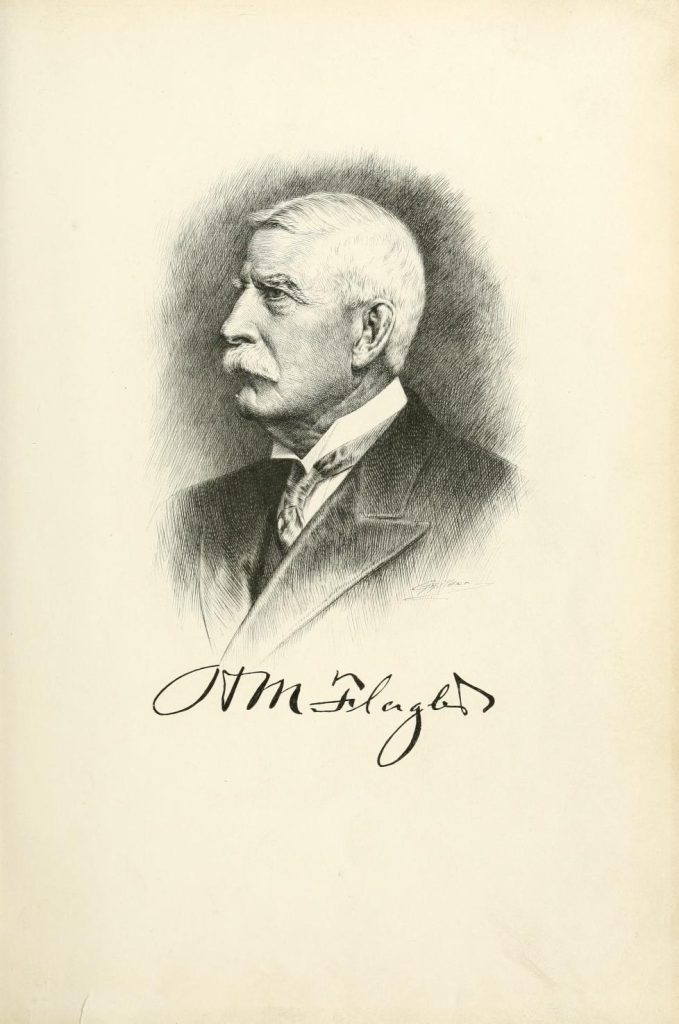
For almost every year that matters to this story, the man in charge was Sheriff Charles Joseph “Joe” Perry. According to the St. Johns County Sheriff’s Office, he served from 1889 to 1897 and again from 1901 until he died in office on February 7, 1919, at 56. He and his family lived in the residential wing, one wall away from the cells.
Perry is the star of the attraction today. The tour puts him at 6’5″ and 300 pounds; the sheriff’s office’s own history says 6’6″. Either way, he was a working lawman. In March 1911 he led the posse after Deputy Guy White and a civilian he’d deputized, Abe Schneider, were shot dead while searching prisoners at the little jail in Espanola, then part of St. Johns County. Three suspects were caught that night. The deputy’s killer was never hanged — according to a local history, the Carlton brothers convicted in the case got life sentences, and all three had been pardoned by 1926.
Under Perry, the county also carried out its own death sentences. In Florida, until 1924, that was the sheriff’s job.
So, Were There Really Eight Hangings at the Old Jail?
The attraction says it plainly: eight men were executed on the gallows on the property. The night tours call them “eight documented hangings.” Nobody tells you where the documents are.
Two kinds of records answer the question. The first is the national execution file compiled by the historian M. Watt Espy, which lists, by name and date, the men executed for each county. The second is the newspapers of the day, which covered Florida hangings in uncomfortable detail and which the Library of Congress has digitized in its Chronicling America archive.
The Espy-based list shows nine men hanged for St. Johns County between 1901 and 1912 — every one of them during Joe Perry’s second stretch as sheriff, while the Old Jail was the county jail:
| Name | Date hanged | Case |
|---|---|---|
| James Kirby | August 2, 1901 | Murder of Julius Eskew |
| Robert Lee | August 2, 1901 | Same case |
| Andrew “Sim” Jackson | February 9, 1906 | Murder of his wife, Alice |
| Charles “Charlie” Powell | February 28, 1908 | Murder of John Rogers |
| George Hawkins | July 2, 1909 | Murder of Charles Joseph |
| Letten Parker | April 30, 1911 | No details recorded |
| Tom White | May 31, 1912 | Murder of Simon Silverstein |
| Eugene Baxter | May 31, 1912 | Same case |
| Steve Johnson | May 31, 1912 | Murder of George Williams |
A second database, DeathPenaltyUSA, lists only six of them. “Eight” sits right in between. Whoever first put that number on a tour script didn’t pull it out of thin air. And every man on the list was Black, or in one case recorded as mixed race.
Then I went to the newspapers.
Sim Jackson, February 1906
The tour tells you Sim Jackson killed his wife with a straight razor and was hanged in 1908. The Ocala Evening Star reported him “hanged at St. Augustine last Friday” in February 1906 — two years earlier. I couldn’t confirm the razor.
The Gainesville Daily Sun filled in the rest: Andrew Jackson, better known as Sim, “was hanged in the yard of the county jail at St. Augustine.” The execution was public and “witnessed by probably one thousand people.” Jackson, the reporter added, seemed “one of the least concerned of all present.”
A thousand people. On the lawn I used to look at over my morning coffee.
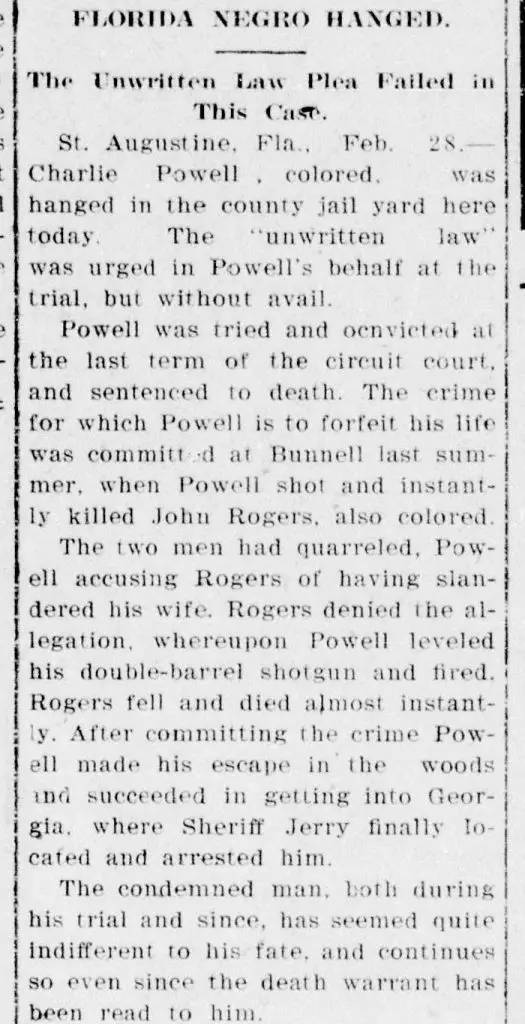
Charlie Powell, February 1908
Charlie Powell is the prisoner the actors play, and the one whose ghost, according to the attraction, haunts the area near the gallows. The tour’s version: he beheaded a man who’d been spreading rumors about his wife.
The wire story that ran the day before his execution tells it differently. Powell and John Rogers quarreled at Bunnell in the summer of 1907. Powell accused Rogers of slandering his wife, Rogers denied it, and Powell “leveled his double-barrel shotgun and fired.” He ran for the woods, made it into Georgia, and the sheriff tracked him down there. At trial his lawyers argued the “unwritten law” — the old notion that a man defending his wife’s honor shouldn’t hang for it. It didn’t work.
On February 28, 1908, the follow-up was one line long: “Charlie Powell, colored, was hanged in the county jail yard here today.”
That was the sentence I was looking for. In 1908, the county jail was the building across from our French doors.
Three Men, One Scaffold, 1912
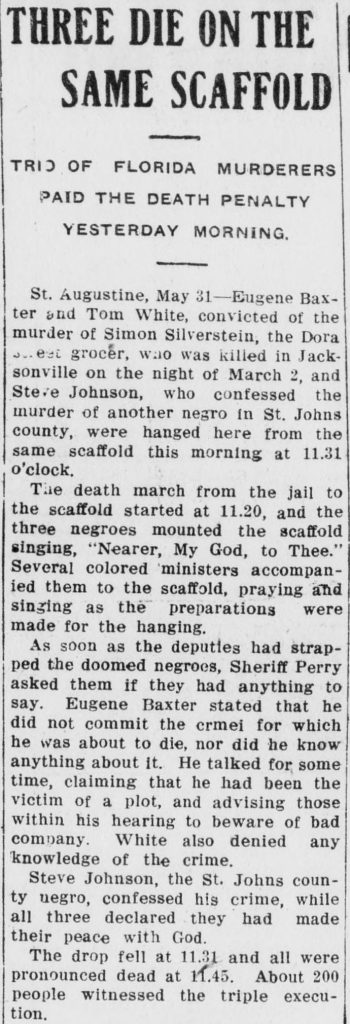
The last hangings in St. Johns County came on May 31, 1912, and there were three at once. Tom White and Eugene Baxter had been convicted of killing Simon Silverstein, a Jacksonville grocer; their trial had been moved to St. Augustine from Duval County. Steve Johnson had confessed to a killing at Dinner Island, now part of Flagler County.
The Brunswick News carried the account the next morning. “The death march from the jail to the scaffold started at 11:20,” it reported, and the three men climbed the scaffold singing “Nearer, My God, to Thee.” Sheriff Perry asked whether they had anything to say. Baxter said he hadn’t committed the crime and knew nothing about it. White denied it too. Johnson confessed. “The drop fell at 11:31.” About 200 people watched.
What the Record Doesn’t Settle
Five of those nine men are placed at the jail by the papers of their own day — two in the jail yard by name, three at the end of a short “death march” from the cells. I couldn’t find accounts for the other four, and the databases disagree about three names. Letten Parker’s listed date, April 30, 1911, fell on a Sunday, which is odd when every other hanging on the list happened on a Friday.
So, was it eight? Somewhere between six and nine, depending on whose list you trust — and at least five of them, in the newspapers’ own words, at the Old Jail. The tour has the number roughly right. It has a lot of the details wrong.
Who the Ghost Tour Leaves Out
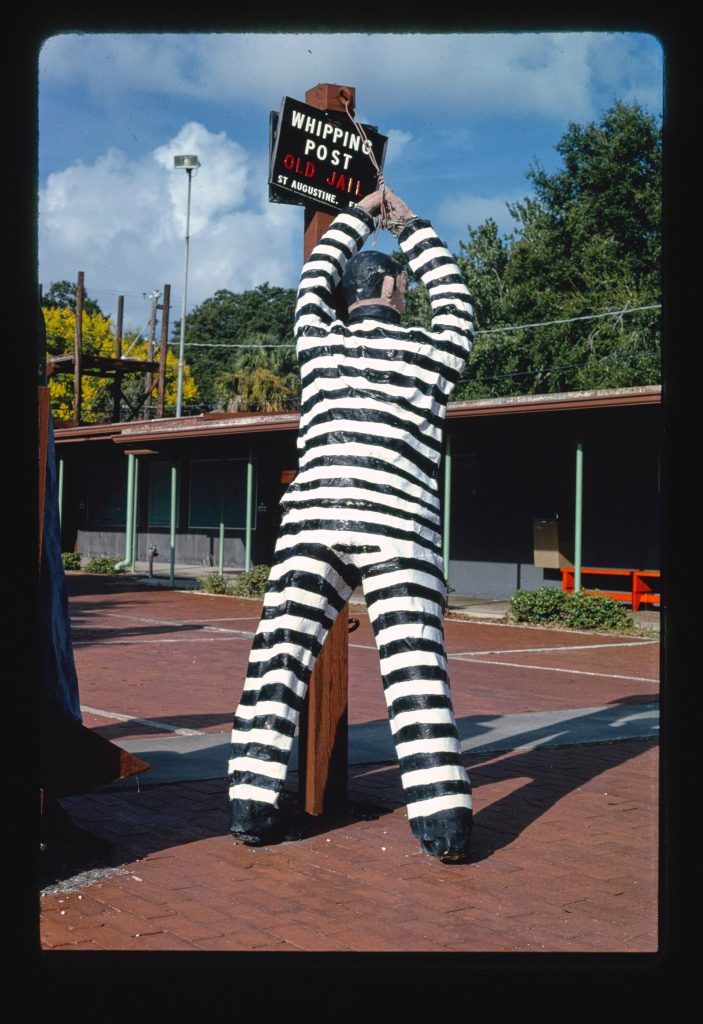
Here’s what stayed with me once I had the names. Every man hanged at the Old Jail was Black, in the Jim Crow South, at a time when Black defendants could not count on equal justice. Eugene Baxter’s last words were that he was innocent. Nobody can retry his case now, and I won’t pretend I can. But I’d rather know his name than hear his execution played for laughs.
The record has one more name worth knowing. In June 1897, Isaac Barrett was in the sheriff’s wagon near Orangedale when a mob of hooded men took him and hanged him from a tree near the St. Johns River. It is the only lynching in St. Johns County that the Equal Justice Initiative has documented, and local historians have worked to make sure he is remembered.
Why the Gallows Went Quiet After 1912
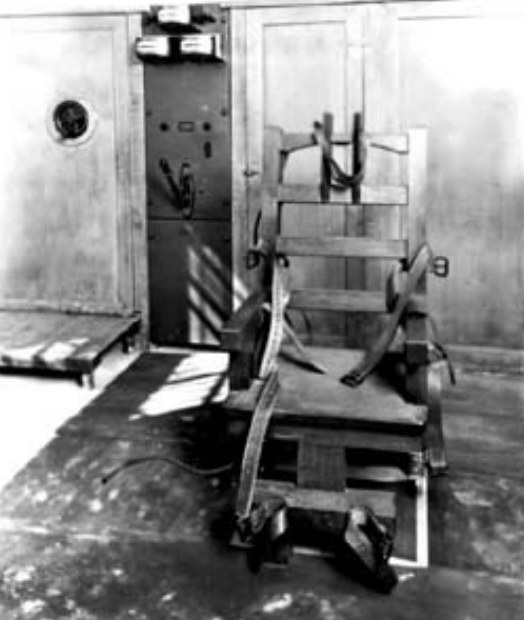
The 1912 triple hanging was the last in St. Johns County. The law caught up eleven years later: Chapter 9169 of the Laws of Florida, approved May 7, 1923, abolished hanging as of January 1, 1924, and took executions out of the county jails and put them under the state. Florida’s electric chair was first used on October 7, 1924. The gallows in the Old Jail yard sat idle for the last 41 years the building held prisoners.
The jail closed in 1953 when the county opened a new one. A local businessman, H.L. McDaniel, bought the empty building and turned it into a tourist attraction. It went on the National Register of Historic Places in 1987, and Historic Tours of America — the Old Town Trolley company — restored it after Hurricane Irma and rededicated it in September 2018.
One detail I can’t shake: the National Register nomination describes the building in detail and never mentions a gallows at all. I couldn’t find any record of when the one in the yard today was built.
The Old Jail Ghost Stories, and Where They Come From
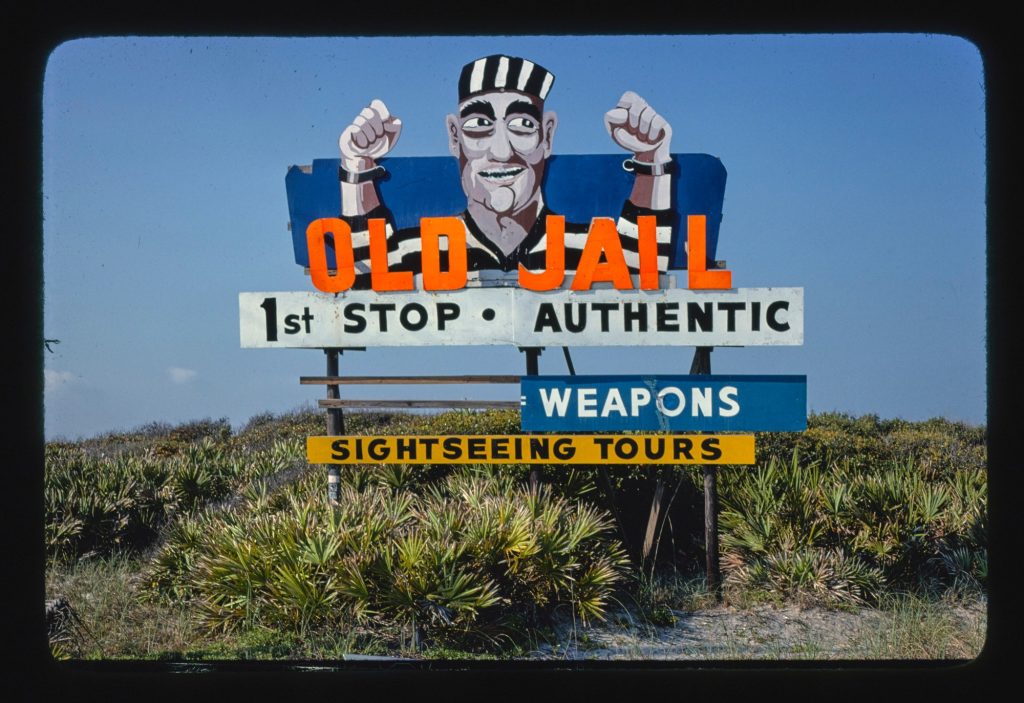
Nearly every ghost story you’ll hear about the Old Jail traces back to the company that runs it, which is worth knowing before you pay for a paranormal investigation. Ghosts & Gravestones promises the footsteps of long-gone inmates, the smell of boiling molasses, the barking of the sheriff’s long-dead dogs and a little girl’s voice in the family quarters. Stephen Mitchell of Historic Tours of America told News 6 in 2022 about a dark figure the staff call “the Crawler.”
I can’t tell you what’s in that building at midnight. I can tell you the scariest thing I found was a list of nine names, and that the real Charlie Powell used a shotgun, not an ax.
Nic’s Pick: The Ghost Story Nobody Sells Tickets To
I’ll be honest with you — of all the ghost stories in this town, the only one I really believe is mine. One evening in that house across from the jail, Ben left for the gym and I stayed home. A few minutes later I saw someone moving through the house. I was sure it was Ben, so I kept calling out, asking why he hadn’t left yet. Nobody answered. He was already gone. I still can’t explain it, and I’ve stopped trying. Every tour in St. Augustine will sell you a ghost story. My favorite one came free with the rent.
Visiting the St. Augustine Old Jail: Is It Worth It?
- Where: 167 San Marco Avenue, St. Augustine, FL 32084. Free parking on site.
- Day tour: About 30 minutes, departing every 15 minutes from 9 a.m., first come, first served. From $18; kids under 4 free. Costumed “deputies” book you in, and “Sheriff Joe Perry” walks you through the cells and out to the gallows. (Official site)
- Holiday hours: Closes at 3 p.m. on Easter, Thanksgiving and Christmas Eve; closed Christmas Day.
- Old Jail After Dark: A 2½-hour paranormal investigation with ghost-hunting gear, nightly from midnight to 2:30 a.m., groups of 12, ages 13 and up. Expect to pay roughly $80 to $100 a person depending on where you book.
- Ghosts & Gravestones: The 80-minute night trolley tour, from about $31, includes after-hours entry to the Old Jail. Rated PG-13.
- Military: Veterans get in free on Veterans Day, November 11, 2026, with a military ID or DD214 at any Old Town Trolley booth (family members don’t qualify). Active-duty and retired personnel can buy discounted tickets in advance at the NAS Jacksonville and Mayport base ticket offices.
Is it worth it? The daytime tour, yes. For about $18 and half an hour, you get inside one of the strangest buildings in Florida — a jail dressed up as a mansion so a hotel’s guests wouldn’t have to look at it. Go knowing the script mixes real history with tour embellishment; you now know which parts are which. The After Dark investigation is a lot of money for theater. If you’re curious, Ghosts & Gravestones gets you inside after hours for about a third of the price. And if you served, go on November 11 — it’s free.
While you’re on San Marco Avenue, the Fountain of Youth is a short drive north, and our St. Augustine with kids guide has the free and cheap stops nearby.
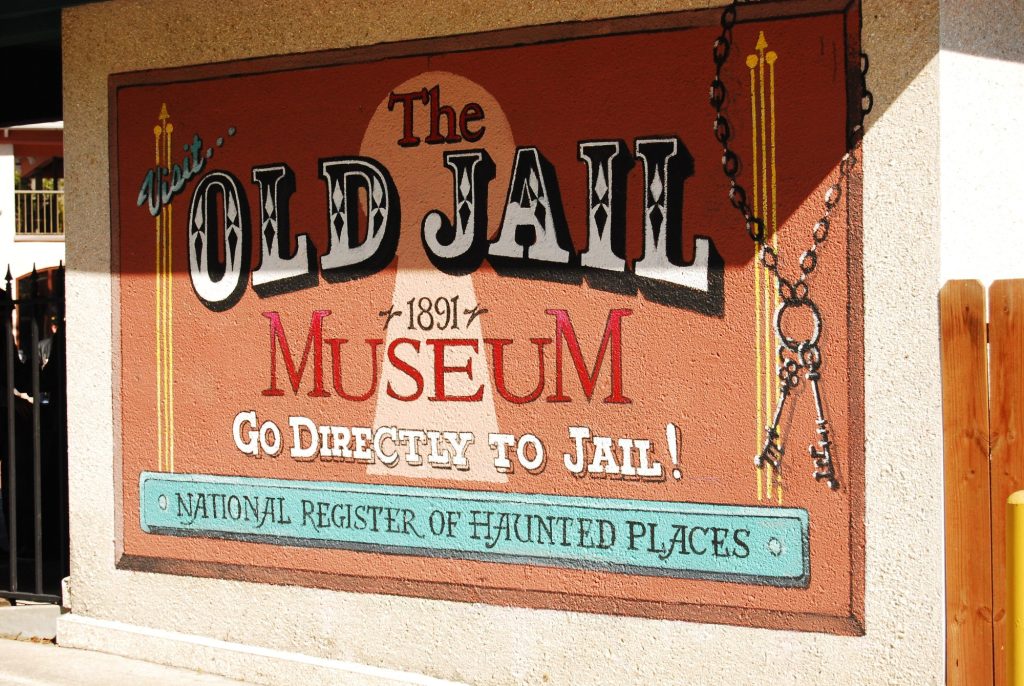
St. Augustine Old Jail FAQ
Were people really hanged at the St. Augustine Old Jail?
Yes. Newspapers from the time report Sim Jackson (1906) and Charlie Powell (1908) hanged in the county jail yard, and three men hanged together in 1912 after a “death march from the jail to the scaffold.”
How many people were hanged at the Old Jail?
The attraction says eight. National execution records list between six and nine men hanged for St. Johns County from 1901 to 1912, all while the Old Jail was the county jail.
When was the last hanging in St. Augustine?
May 31, 1912, when Tom White, Eugene Baxter and Steve Johnson were hanged together. Florida abolished hanging effective January 1, 1924.
Who built the Old Jail, and why does it look like a house?
The Pauly Jail Building and Manufacturing Company of St. Louis built it in 1890–91. Henry Flagler put $10,000 toward it to get the county jail away from his Hotel Ponce de León, and it was designed to look like a residence; the sheriff’s family really did live in one wing.
Is the St. Augustine Old Jail haunted?
The company that runs it says so, and sells paranormal investigations on that basis. We can’t verify ghosts. We can verify that men were hanged there.
How long is the Old Jail tour?
The daytime tour takes about 30 minutes and costs from $18. Old Jail After Dark runs about two and a half hours.
From the Shop
Keep Exploring St. Augustine
- The Ultimate St. Augustine Travel Guide — the Old Jail, the lighthouse and the rest of our Ghosts & Legends section.
- Halloween in St. Augustine 2026 — every confirmed date, plus the ghost tours that earn the money.
- St. Augustine Lighthouse Ghosts — the Pittee girls, Joseph Andreu’s fall, and who actually died there.
- Nights of Lights 2026–27 — dates, parking and the nights a local would avoid.
- Fountain of Youth — hours, tickets and whether it’s worth it.
Have you taken the Old Jail tour — or heard the hangings from San Marco Avenue yourself? Tell us in the comments.
Header image: The Old St. Johns County Jail — Ebyabe / Wikimedia Commons (CC BY-SA 3.0). Newspaper quotations from the Library of Congress’s Chronicling America archive; execution dates from the M. Watt Espy file as compiled on Wikipedia and DeathPenaltyUSA; building history from the jail’s National Register of Historic Places nomination (1987).

Ben & Nicole Mathews
We’re based in St. Augustine, Florida, sharing the places we’ve actually been — from our home turf to corners of the U.S. and abroad. Ben is an attorney and a retired Air Force JAG (22 years), and a private pilot, which is why aviation and military history shows up here too.